Marina Cramer - Roads
Здесь есть возможность читать онлайн «Marina Cramer - Roads» весь текст электронной книги совершенно бесплатно (целиком полную версию без сокращений). В некоторых случаях можно слушать аудио, скачать через торрент в формате fb2 и присутствует краткое содержание. Город: Chicago, Год выпуска: 2017, ISBN: 2017, Издательство: Academy Chicago Publishers, Жанр: Историческая проза, на английском языке. Описание произведения, (предисловие) а так же отзывы посетителей доступны на портале библиотеки ЛибКат.
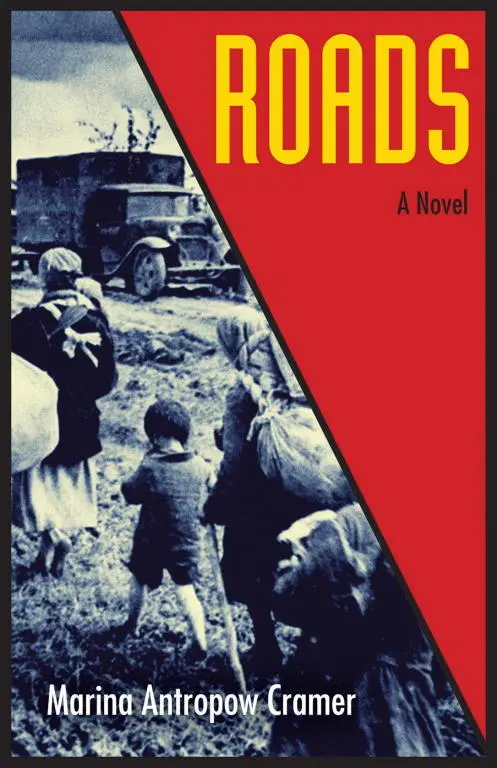
- Название:Roads
- Автор:
- Издательство:Academy Chicago Publishers
- Жанр:
- Год:2017
- Город:Chicago
- ISBN:978-1-61373-558-9
- Рейтинг книги:5 / 5. Голосов: 1
-
Избранное:Добавить в избранное
- Отзывы:
-
Ваша оценка:
Roads: краткое содержание, описание и аннотация
Предлагаем к чтению аннотацию, описание, краткое содержание или предисловие (зависит от того, что написал сам автор книги «Roads»). Если вы не нашли необходимую информацию о книге — напишите в комментариях, мы постараемся отыскать её.
By winter 1945, Allied air raids destroy strategic sites; Dresden, a city of no military consequence, seems safe. The world knows Dresden’s fate.
Roads
Roads — читать онлайн бесплатно полную книгу (весь текст) целиком
Ниже представлен текст книги, разбитый по страницам. Система сохранения места последней прочитанной страницы, позволяет с удобством читать онлайн бесплатно книгу «Roads», без необходимости каждый раз заново искать на чём Вы остановились. Поставьте закладку, и сможете в любой момент перейти на страницу, на которой закончили чтение.
Интервал:
Закладка:
The Sunday Mass was a long service, interminable when he was small, attending with Zoya, surrounded by kerchiefed women in dark dresses, thin candles filling the room with a smoky hypnotic haze, the priest chanting ancient Slavonic words he could not understand. He didn’t know what time it was, but surely, if he hurried, he could reach the church before the service ended.
The church doors were wide open. Filip ran up, panting, and stood outside listening while his breathing returned to normal. He heard singing, the high female voices underlaid with a single harmonizing bass line, the man’s voice so deep it seemed to ignite a reciprocal resonance in his own body. How could these people, who had lost everything, still sing?
It was a modest gathering, thirty or so people, most of them women. All were thin, shabbily dressed, their heads covered with a variety of simple scarves or kerchiefs. The few children he saw looked scrawny, legs protruding from their short pants and dresses like twigs on a sapling. It struck Filip for the first time that refugee life must be impossibly difficult for children, whose small bodies and need for care made them especially vulnerable. It seemed miraculous that any of them survived at all.
On the men’s side, to the right, he saw just four, three of them bent with age, standing with caps in hand in nearly identical reverential poses. The younger man was on crutches. There had been many younger men in the camps, both in the German Arbeitslager and in the American DP facilities. Were they still wandering, like himself, looking for loved ones, for a way to start a new life in a strange place? How many had gone back, willingly or by force? Maybe they were lying low, afraid to tempt fate by drawing unwanted attention to themselves, or maybe, among the young ones who had grown up in Soviet Russia, church was simply not a place they would go. What would bring me here but the hope of finding my family? he thought.
He scanned the women’s backs. Some were stooped, many heads bent low. They crowded in; their small number did not fill the available space. They stood like wary animals, gazelles ready to flee or defend one another from attack by banding together. Their motley clothing—flowered dresses, skirts in shades of blue, gray, or brown, dingy white blouse collars, frayed sweaters—made them look pitiful and, without seeing the faces, indistinguishable from one another. Their feet were a study in how much footwear can fall apart before becoming completely unwearable.
One woman did stand out. Taller than the rest, she wore a long black coat, her short hair covered with a gauzy beige scarf. When she turned halfway, as if in response to his questioning gaze, he recognized Ksenia’s stern profile.
Filip stepped back outside. The sight of his mother-in-law, the knowledge of her presence there, just a few steps away, filled him with relief. He could relinquish his responsibility for Ilya. He would soon be reunited with Galina. At the same time, he was anxious; there would be a reckoning, and he would fall short of everybody’s expectations. His life was about to undergo another monumental change, a bend in the road around which he could see nothing but impenetrable fog.
Ksenia was among the last to leave the church. Filip, from his vantage point at the bottom of the stone stairs, scanned the women’s faces filing past him for the one he wanted to see. The women glanced at him, some curious, others expressionless; they talked to each other in low voices or walked alone, silent and self-absorbed. How weary they looked, how plain! He looked for Galya’s quick lively eye, anticipated her ready smile, hungered for her loveliness. She was not there.
At last, his mother-in-law emerged, in conversation with a short, bearded man in a worn black cassock; on his chest, he wore a carved wood Orthodox cross suspended from a heavy brass chain. The visiting priest , Filip guessed, here on his monthly circuit. Father Stefan, the deacon, followed close behind, his own robes unadorned, and locked the doors.
Ksenia looked up when Filip stepped forward. He stood tongue-tied, uncertain what to say or do. So much had happened since February, since their separation, since Dresden. The usual pleasantries seemed insultingly banal. The fact that each of them was alive and standing was proof enough of their relative well-being. Embracing was completely out of the question.
Ksenia recovered first. “Filip,” she said. She removed her scarf and dropped her arms to her sides. “I am glad to see you.” She used the familiar t’y form of address.
“And I you, Ksenia Semyonovna,” he replied, taking refuge in formality with an uneasy smile. “We have been looking for you, you and Galina, that is. How fortunate…” He trailed off, losing all confidence under her steady gaze.
“She is not here. Katya, the baby, was awake most of the night, teething.” She volunteered nothing more, stood waiting for him to speak. Filip’s mind flooded with questions: How did you survive? What did you endure? Where are you staying, how do you live, what does my daughter look like?
Instead, he blurted out, remembering his mission and his burden, “Ah, you must come, Ksenia Semyonovna. Ilya Nikolaevich is very sick. I don’t know what to do.” He sketched out the symptoms, told her about the infirmary.
“I have heard of this infirmary. Galina and I will meet you there this afternoon.” Ksenia nodded and turned away, striding toward the main road.
Filip stood rooted. What had he expected? With his own mother, there would have been tears and kisses, sympathetic exclamations, tender solicitude. Comfort. This woman, the grandmother of his child, froze him with her hardness, her stoic endurance as incomprehensible to him as Ilya’s infernal optimism. But things had never been warm between them and were not likely to change. Galina, and curiosity about Katya, were the only reasons he did not now walk away, strike out on his own in the other direction.
He headed back to the infirmary, his conflicted mind a jumble of relief, anticipation, and dread.
5
GALINA WAS BONE THIN. When they embraced, Filip could feel her ribs under his fingers through the cloth of her loose dress. He closed his eyes, absorbing the warmth of her, her hips hard as stone against his own diminished body. Her face, framed by a fringe of rough-cut hair, was exquisite in an ethereal way, the cheekbones sculpted, the eyes large and serious, ringed with fatigue but luminous and alive. “You are so beautiful,” he whispered, echoing the words spoken just a few years ago, both of them schoolchildren showered with spray from the breaking waves of the Black Sea, cocooned in the purity of their innocence.
She wept, silently, intensely, without sobbing. With a visible effort, she pulled herself together and stepped away from him, wiping at the damp spot on his shirt with a fragile-looking hand. “I left Katya with my friend Marfa,” she said, before he could ask about the child. “She finally fell asleep and I didn’t want to wake her. Where is my father?”
“Yes.” Ksenia, standing a few paces away, moved closer to the young couple. She held a small cloth-wrapped bundle. “Where is Ilya?”
The tall nun recognized Filip. “He drank a little broth yesterday. Nothing today, only water. If only the doctor could come sooner…” She opened the door and stood aside while they filed into the room. “There may be some danger of contagion, we believe. Please be careful.”
“Papa!” Galina exclaimed, too loud for the small, neat room. She knelt by the bed, pressing her cheek to Ilya’s dry hand. “ Papochka ,” she said, softly now. “I have missed you so.”
Ilya stirred, turned his head in her direction. “Galya,” he breathed. “ Dochenka . My daughter. Don’t cry.” Gently, he freed his hand and placed it on her head, stroking her hair, barely aware of his own tears. “And your mother?”
Читать дальшеИнтервал:
Закладка:
Похожие книги на «Roads»
Представляем Вашему вниманию похожие книги на «Roads» списком для выбора. Мы отобрали схожую по названию и смыслу литературу в надежде предоставить читателям больше вариантов отыскать новые, интересные, ещё непрочитанные произведения.











Обсуждение, отзывы о книге «Roads» и просто собственные мнения читателей. Оставьте ваши комментарии, напишите, что Вы думаете о произведении, его смысле или главных героях. Укажите что конкретно понравилось, а что нет, и почему Вы так считаете.