Marina Cramer - Roads
Здесь есть возможность читать онлайн «Marina Cramer - Roads» весь текст электронной книги совершенно бесплатно (целиком полную версию без сокращений). В некоторых случаях можно слушать аудио, скачать через торрент в формате fb2 и присутствует краткое содержание. Город: Chicago, Год выпуска: 2017, ISBN: 2017, Издательство: Academy Chicago Publishers, Жанр: Историческая проза, на английском языке. Описание произведения, (предисловие) а так же отзывы посетителей доступны на портале библиотеки ЛибКат.
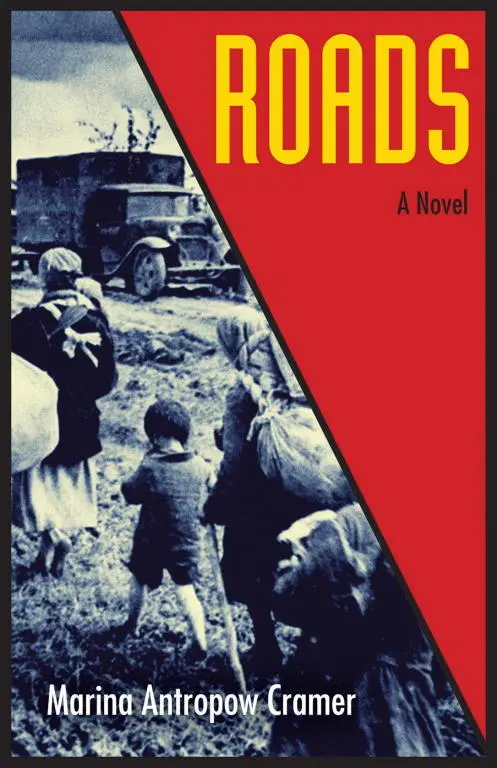
- Название:Roads
- Автор:
- Издательство:Academy Chicago Publishers
- Жанр:
- Год:2017
- Город:Chicago
- ISBN:978-1-61373-558-9
- Рейтинг книги:5 / 5. Голосов: 1
-
Избранное:Добавить в избранное
- Отзывы:
-
Ваша оценка:
Roads: краткое содержание, описание и аннотация
Предлагаем к чтению аннотацию, описание, краткое содержание или предисловие (зависит от того, что написал сам автор книги «Roads»). Если вы не нашли необходимую информацию о книге — напишите в комментариях, мы постараемся отыскать её.
By winter 1945, Allied air raids destroy strategic sites; Dresden, a city of no military consequence, seems safe. The world knows Dresden’s fate.
Roads
Roads — читать онлайн бесплатно полную книгу (весь текст) целиком
Ниже представлен текст книги, разбитый по страницам. Система сохранения места последней прочитанной страницы, позволяет с удобством читать онлайн бесплатно книгу «Roads», без необходимости каждый раз заново искать на чём Вы остановились. Поставьте закладку, и сможете в любой момент перейти на страницу, на которой закончили чтение.
Интервал:
Закладка:
“I know.” Filip nodded. He was a collector; he had kept the worthless claim stub from the Dresden train station. Now this piece of personal memorabilia could help verify his story. He and Ilya had burned their Soviet passports in the woods after escaping the American DP camp, leaving nothing behind to identify them as Russian citizens, but they had left without their false papers. Time to make myself a new history. Why not?
It was even easier than the first time. The young GI at the American processing center for displaced persons barely glanced at him, his head bent low over the single-page application form. Filip had practiced several useful Serbian phrases, but need not have worried; the soldier was no linguist. He conducted the interview in English larded with bits of bad German. Clearly, this boy knew nothing of Slavic languages, and his superiors seemed to have little interest in cooperating with Stalin’s repatriation orders.
At the line for occupation, he had his answer ready. “Electrician,” he said, with barely a tremor at the lie. The soldier wrote it down. Within a week Filip had a temporary work permit to go with his new passport.
What he needed now was the work.
It was harder to come by than he had expected. Even with the wandering and hiding days behind them, refugees performed only the most menial jobs. Filip soon realized that his lack of reliable electrical knowledge would not be put to the test; those in a position to hire skilled workers gave overwhelming preference to citizens of their own country. What could he do? He couldn’t continue to depend on his wife and mother-in-law for support.
But even without a useful trade he felt at home, here in Germany, on Regensburg’s medieval streets. Home, he now understood, was the space you created around yourself, filled with people who wished you well. A sheltering place from which came strength, confidence, endurance. Galina, returning from her morning’s cleaning work, would pick up Katya. Marfa insisted on looking after the child, letting Ksenia rest, while Filip looked for work. It was a comfortable routine, practical and predictable, serving everyone’s needs without placing an undue burden on any one person.
Sometimes they ate a meal of leftovers from the tavern, reheated on the tiny wood stove in their room. More often they walked to the edge of town, their daughter bouncing happily in her cast-off baby carriage with the bent wheels, to the cafeteria where Ksenia now worked, where the food was hot, simple, cheap, and good. No more scavenged scraps or frostbitten vegetables. No begging or bartering. They put their coins down like everyone else and received soup, bread, tea.
More than just a dining hall, the restaurant was at the heart of Regensburg’s refugee community; part social club, part meeting hall, it had become a vital hub in the rapidly expanding communication network that helped people find work, housing, and news of loved ones. It was owned by a prerevolutionary Russian émigré couple in their sixties, with German citizenship, who had operated their modest establishment since well before the war, serving traditional Russian dishes to nostalgic expatriates and their Bavarian neighbors.
Filip grew increasingly curious about Marfa. “Why is she so… so absent?” he asked Galina. It was a Sunday afternoon in October. They had left Katya with her grandmother and walked into town, enjoying the chill in the air softened by brilliant sunshine, strolling with no special purpose. “It’s impossible to have a conversation with her, the way her eyes are always somewhere else. The only one she really looks at is Katya. What happened? Was she violated?”
“Not raped, no. Seduced and abandoned, by a Nazi officer.” Someone like Franz , they both thought, but neither spoke the words out loud. “There was a baby. Tolik.”
“Where is the baby now?” Filip stood in front of a bookshop window and looked longingly at the tidy shelves visible in the darkened interior. When was the last time he had read anything more than a newspaper? He had a bit of money in his pocket, but Regensburg was a Catholic city and took the Lord’s day seriously. The shop was closed.
“She lost him in the Danube crossing. Poor little Tolik. Marfa tried to rescue him, but the currents were too strong. She almost drowned. We held her back, Mama and I, pulled her out half-dead herself.” Galina spoke without emotion, as if recounting the passing of an ordinary day. But she stared at the books stacked on a counter just inside the shop door with unseeing eyes.
Filip was silent. He had heard about the Danube crossing from Ksenia and Galina; the moonless night, the wild stormy weather, the merciless river currents that spun and roiled around people desperate enough to take a chance on death by drowning, just to be free. Why had they not mentioned Marfa’s child? Either they thought him completely insensitive or the subject was still too painful, the memory too raw.
He reached for Galina’s hand; they continued down the main street, walking in step with one another. “Listen,” Galina exclaimed, as if eager to move on to other topics. “Mama says the restaurant owners have received news of work. Many men are needed.”
“What kind of work?” Filip asked cautiously. If many were needed, it could not be especially desirable. “Where?”
“In Belgium, just across the border. The men are to go first, start working, and get settled. The families are to follow in a separate transport a few weeks later.” She gave a little skip, catching up to his longer stride.
“In Brussels? That sounds like construction work. I’m not much good at that, but there may be other opportunities, in a city…” He envisioned himself at a desk or drafting table, apprenticed to an engineer, an architect. He would need to learn French, but that was not a problem.
“Not Brussels. In the country, with housing provided. Anyone can sign up, as long as he’s able-bodied.”
“I’m not able-bodied; I’m able-minded.” Filip smiled ruefully at her. “Able-minded but undereducated, therefore completely useless.”
“Don’t say that!” She freed her hand from his, grasped both his arms at the elbows, and shook him like a disobedient child. “Everything is changing. We must take what we can, for now. Soon we will have choices. I just know it! You can go to university, find a good starting position, be what you want to be.” She spoke earnestly, her voice wavering on the verge of tears.
Galina’s hands slid down his coat sleeves, found his, and held them, her fingers warm against his smooth palms. Filip looked at his wife. She had inherited her father’s optimism and her mother’s practicality, he realized, blended with a sweetness all her own and a seemingly inexhaustible reserve of hope. He loved her.
They crossed the street, Galina’s hand tucked under his arm, and headed back toward their lodging. “Mama says we should try to get as far as possible from the Soviets,” she continued in a calmer tone. “That’s why I brought up the work in Belgium.”
Filip could not deny the logic of such a plan. “What kind of work is it, then?”
She bent her head, studied their feet moving along the cobbled street as if absorbed in counting their steps. “Coal mining.”
8
HE WAS STILL as handsome as Satan, his sunken cheeks accentuating the flashing eyes, the tawny warmth of his smoothly shaved face set off by shoulder-length hair slick as raven’s feathers.
They met him by chance, in the cafeteria. He looked a little less scruffy than the others, his unrumpled clothes less dusty, the one tear in his shirt neatly patched. Standing behind him in the soup line, they recognized his profile when he removed his leather cap and ran a hand through his hair, scanning the room as if looking for someone.
Читать дальшеИнтервал:
Закладка:
Похожие книги на «Roads»
Представляем Вашему вниманию похожие книги на «Roads» списком для выбора. Мы отобрали схожую по названию и смыслу литературу в надежде предоставить читателям больше вариантов отыскать новые, интересные, ещё непрочитанные произведения.









Обсуждение, отзывы о книге «Roads» и просто собственные мнения читателей. Оставьте ваши комментарии, напишите, что Вы думаете о произведении, его смысле или главных героях. Укажите что конкретно понравилось, а что нет, и почему Вы так считаете.