Marina Cramer - Roads
Здесь есть возможность читать онлайн «Marina Cramer - Roads» весь текст электронной книги совершенно бесплатно (целиком полную версию без сокращений). В некоторых случаях можно слушать аудио, скачать через торрент в формате fb2 и присутствует краткое содержание. Город: Chicago, Год выпуска: 2017, ISBN: 2017, Издательство: Academy Chicago Publishers, Жанр: Историческая проза, на английском языке. Описание произведения, (предисловие) а так же отзывы посетителей доступны на портале библиотеки ЛибКат.
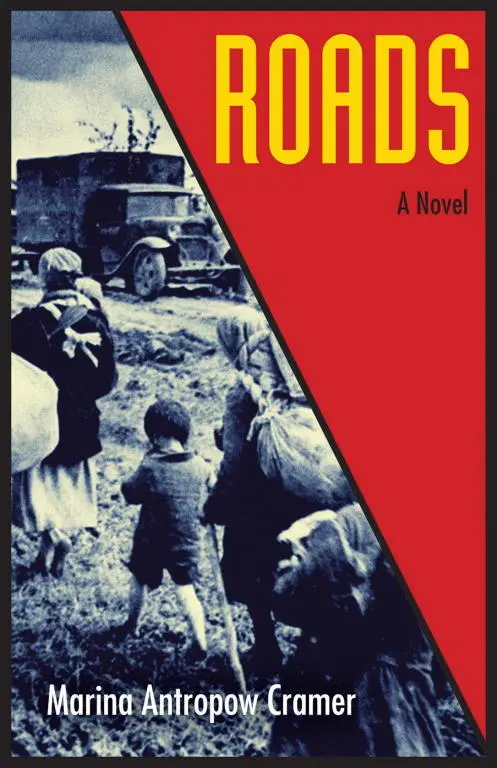
- Название:Roads
- Автор:
- Издательство:Academy Chicago Publishers
- Жанр:
- Год:2017
- Город:Chicago
- ISBN:978-1-61373-558-9
- Рейтинг книги:5 / 5. Голосов: 1
-
Избранное:Добавить в избранное
- Отзывы:
-
Ваша оценка:
Roads: краткое содержание, описание и аннотация
Предлагаем к чтению аннотацию, описание, краткое содержание или предисловие (зависит от того, что написал сам автор книги «Roads»). Если вы не нашли необходимую информацию о книге — напишите в комментариях, мы постараемся отыскать её.
By winter 1945, Allied air raids destroy strategic sites; Dresden, a city of no military consequence, seems safe. The world knows Dresden’s fate.
Roads
Roads — читать онлайн бесплатно полную книгу (весь текст) целиком
Ниже представлен текст книги, разбитый по страницам. Система сохранения места последней прочитанной страницы, позволяет с удобством читать онлайн бесплатно книгу «Roads», без необходимости каждый раз заново искать на чём Вы остановились. Поставьте закладку, и сможете в любой момент перейти на страницу, на которой закончили чтение.
Интервал:
Закладка:
He listened with growing apprehension to the pair’s approaching footsteps. Krista must have stumbled; he heard her cry out and fall. He heard Sashka curse, pull her up, and slam her back against the oak. “Hold on there, Fräulein, let’s just tie those pretty hands together, shall we? That’s better.”
Filip caught his breath when he heard Krista spit at the soldier and unleash an unintelligible stream of invective, a hysterical mix of pleading, cursing, and sobs. “ Molchi , dura ,” the soldier said, muffling her protests with a hand over her mouth. “Shut up, you fool. Ai ! This one’s a biter!” he called out to his waiting companions.
“Sashka, you animal. Dovol’no . Enough. Let’s go,” the older one replied.
“Mama,” Filip whispered while the soldier raped the girl, quickly and efficiently, on the other side of the tree. “Why is this happening to me again?”
He was back in Yalta, three years ago, frozen with fear and indecision, unable to defend Galya, his dearest friend, from an attack that seemed, at the time, as imminent as this one. The attack had not come; she had walked away unhurt. He could not remember why. But the paralyzing inertia, the complete inability, like now, to move or speak—that came back to him so intensely he had to dig his fingers into the bark of the tree to keep from falling.
When he recovered his senses, the men were gone, leaving an echo of bawdy soldiers’ ditties reverberating on the placid afternoon air. The sounds of heedless birdsong, of crickets chirping and the humming of bees seemed like an obscenity; surely, the only appropriate response to what had just happened here, at the side of the road, in daylight, was silence.
He considered his options. Should he wait until she collected herself and left? No one would ever know he had been there. No one but himself. No, that was wrong. She might need help after her ordeal; he was not made of stone. And there was still the matter of the missing wallet.
“Krista,” he said, coming around to her side of the oak. He glanced furtively at her disheveled hair, noticed the imprint around her mouth where the brutal dirty hand had pressed against her face. “Krista, I…” He averted his eyes from her crumpled dress and its missing buttons, the angry bruises on her neck and breast.
“You! How long… Did you know… Why are you here?” She looked up at him with red-rimmed but tearless eyes. Crouched at the base of the tree she looked small, feral.
“I could not… could not…” It was too much to explain. “You don’t understand.”
She struggled to get to her feet, ignoring his extended arm, pushing herself up from the ground with both hands. She rubbed at the fresh tie marks around her wrists. “No, I do not understand. Anyone, a stranger, could have at least made some noise, it might have been enough to scare them off. But you… We danced. We talked together. I even let you kiss me. And you just stayed there, hiding?”
Filip tried to take her elbow to steady her, but she slapped at his hand and pushed past him, furious, out of the woods. He saw how the back of her dress was slashed and torn, bloody from where Sashka had rammed her against the tree’s rough bark. I am so sorry. I should have done something , he thought, but could not say it.
She picked up her bicycle and started walking with it along the road. “Look what they do,” she said, pointing to the wheel twisted beyond repair. “Your countrymen. Just out of malice. Why did you come, anyway? To collect your honey? For your sick Vater ?”
“Honey?” He had forgotten all that, forgotten about Ilya and all those other complications yet to be faced. “No. I… last night… I lost my wallet.”
She kept walking, one hand holding the front of her dress closed, the other steering the bicycle along its crooked course. Filip followed a few steps behind, not really knowing why.
“Well, I am very sorry you lost your wallet,” she said finally, turning to face him. “I thought you were a decent person, intelligent and kind. But you are only a coward. Even if I had your wallet, I would not return it to you.” She walked on, limping a little, struggling to keep the bicycle’s good wheel on the road.
Filip stood a while, watching her stiff gashed back recede slowly, then turned back in the direction of the shed. “He’s not my Vater . My father does not sell trinkets in the street. My father would know what to do,” he muttered, kicking at a stone in his path, feeling his anger and frustration rise.
The stone arced, bounced once, and rolled into the weeds at the side of the road. Filip bent down, picked it up. It was an ordinary gray-brown stone, hot from the sun; it fit perfectly in his hand. He looked at it, studied it, as if intent on deciphering a cryptic message carved into its crevices and striations. He pulled his arm back and threw the stone into the woods, nearly falling over with the force of the effort. He stooped, picked up another and another, flinging each one with all his strength, running along the road, giving in to the frenzy with a mindless, mirthless obsessiveness fed by dumb fury.
When he stopped, bent over, panting, hands on his knees, his shirt plastered to his skin with foul-smelling perspiration, he felt empty, his mind mercifully blank. Filip passed a gritty hand over his face and laughed, picturing what he must look like: a crazed man with a dirt-streaked face, in unwashed clothing, stumbling along a country road with nothing to his name but his name. He heard a car approaching and hid in the woods, sitting motionless behind a clump of blackberry bushes until the sound of the motor died away in the distance.
2
FILIP SAT IN the woods a long time, long after the noise of the motor faded away and the air filled with bird sounds and the conspiratorial stirring of leaves above his head. He watched a trio of crows follow one another from tree to tree, their iridescent feathers glinting in filtered sunlight, looking for—who knew what crows looked for? Food, or smaller birds to intimidate with their shameless audacity. All the trees seemed alike to him, and maybe the crows thought so, too. They rested only a moment before lifting off for the next perch, stopping now and then for a brief raspy consultation. All at once, they were gone, taking to the sky above the treetops with raucous cawing cacophony. So we creep from one hiding place to the next , he thought, each one identical to the last, meaningless, and no closer to the answers we need. How will we know when the end of the road is in sight?
It was hunger that finally got him moving; he had eaten nothing since the night before and knew that their own supplies were probably depleted. He got up, stretched, stamped his feet to ease the stiffness in his legs. It looked like midafternoon, the sun still high but starting to arc westward, the way he needed to go to rejoin Ilya. Time to move on , he thought. No point staying here, wherever here was. Regensburg lay to the northwest, a city, with a chance to meet more refugees, hear the gossip, find out how others were managing to survive. If he could only get his father-in-law back on his feet.
Avoiding the road, he followed an overgrown footpath, weaving between stands of evergreens interspersed with large deciduous trees. He found a stream, washed the grime from his face and neck, drank deeply with cupped hands. He remembered to fill the flask, wiped it on his shirt before returning it to his pants pocket. It would not last them more than the night, with Ilya’s feverish state, but the country was verdant and water was easily found.
More easily than food.
He had no money and nothing to barter but the offer of work. And what could he do? His experience building scenery for the theater group seemed like a lifetime ago; it was of no practical use to him now. Woefully clumsy at repairs, reluctant to get his hands dirty, uneasy around farm animals, he had little to offer in exchange for a meal. Unlike Ilya, who was resourceful, skilled with tools. And humble. Filip had watched him go, cap in hand, approach a farmhouse and come away a short time later with a piece of bread, some cheese, an egg, or a capful of apples. “I nailed up the shutters,” he would say, or, “The henhouse roof had a hole in it,” or, now and then, “Some people are just kind. They wanted nothing done, so I made them a pin with their son’s name. He is still missing.”
Читать дальшеИнтервал:
Закладка:
Похожие книги на «Roads»
Представляем Вашему вниманию похожие книги на «Roads» списком для выбора. Мы отобрали схожую по названию и смыслу литературу в надежде предоставить читателям больше вариантов отыскать новые, интересные, ещё непрочитанные произведения.




Обсуждение, отзывы о книге «Roads» и просто собственные мнения читателей. Оставьте ваши комментарии, напишите, что Вы думаете о произведении, его смысле или главных героях. Укажите что конкретно понравилось, а что нет, и почему Вы так считаете.