Marina Cramer - Roads
Здесь есть возможность читать онлайн «Marina Cramer - Roads» весь текст электронной книги совершенно бесплатно (целиком полную версию без сокращений). В некоторых случаях можно слушать аудио, скачать через торрент в формате fb2 и присутствует краткое содержание. Город: Chicago, Год выпуска: 2017, ISBN: 2017, Издательство: Academy Chicago Publishers, Жанр: Историческая проза, на английском языке. Описание произведения, (предисловие) а так же отзывы посетителей доступны на портале библиотеки ЛибКат.
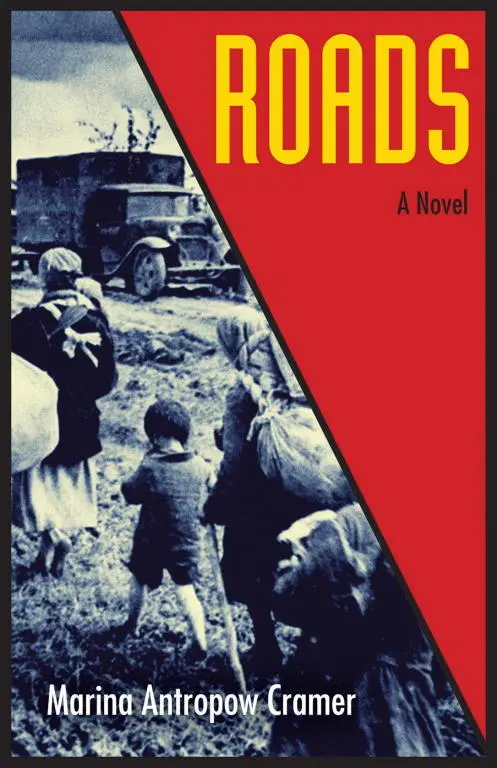
- Название:Roads
- Автор:
- Издательство:Academy Chicago Publishers
- Жанр:
- Год:2017
- Город:Chicago
- ISBN:978-1-61373-558-9
- Рейтинг книги:5 / 5. Голосов: 1
-
Избранное:Добавить в избранное
- Отзывы:
-
Ваша оценка:
Roads: краткое содержание, описание и аннотация
Предлагаем к чтению аннотацию, описание, краткое содержание или предисловие (зависит от того, что написал сам автор книги «Roads»). Если вы не нашли необходимую информацию о книге — напишите в комментариях, мы постараемся отыскать её.
By winter 1945, Allied air raids destroy strategic sites; Dresden, a city of no military consequence, seems safe. The world knows Dresden’s fate.
Roads
Roads — читать онлайн бесплатно полную книгу (весь текст) целиком
Ниже представлен текст книги, разбитый по страницам. Система сохранения места последней прочитанной страницы, позволяет с удобством читать онлайн бесплатно книгу «Roads», без необходимости каждый раз заново искать на чём Вы остановились. Поставьте закладку, и сможете в любой момент перейти на страницу, на которой закончили чтение.
Интервал:
Закладка:
That was all long ago, or seemed like it. Before the flight from their homeland, where, he felt, it had been possible to live in relative safety, not like this furtive animal existence. He had come to terms with the German presence, had learned their language. But no, they had to go right into the thick of it, shunted from labor camp to work detail, not knowing whether the bombs they dodged were Russian, German, American, or British. He was sick of it—the hunger, filth, humiliation, disease—and through it all, the peculiar numbing boredom, and the stupid perpetual discomfort.
“I should have stayed in Yalta,” Filip muttered. “Taken my chances.” But the family had insisted on leaving and Galya was going with them, carrying his child.
He stepped outside and sat down on a tree stump. His head hurt from too much cheap wine, but at least the Fräulein had been a fine one, resting her plump arms on his shoulders, whirling with him, faster and faster, propelled by the driving polka tempo. What was her name?
Gretchen? No, they can’t all be Gretchens, just as we are not all Ivans. Anna? Sophie? No matter. There were others. The tavern had been full, the dancers spilling out into the yard, where it was cool and lit only by the lamplight streaming out the open door. It had been a relatively calm night, with only two or three fights breaking out over who got which girl, none of the fights involving him. There were enough girls.
Still, he hated not remembering her name. After Anneliese, whose mute kindness had left a permanent imprint on his heart, there had been others. Hilda of the dancing eyes, her mouth hungry for kisses and chocolate; plain, serious Stella, whose cool hands took him into new realms of previously unimagined pleasure. Barely twenty years old and now free of camp restrictions, he was full of restless energy. Whenever he could detach himself from Ilya, he was his own man.
These stops in his personal odyssey were more memorable to him than the nameless towns, the places they had passed through since leaving the American camp; stops leading him back to Galya, of course. Of course to Galya, his wife.
And who knew where she was? The country was awash with bands of wandering refugees prompted to keep moving by hastily enacted municipal decrees: you may stay within the village limits only forty-eight hours or a day or, in rare cases, one week. Filip chafed under the obligation to stay with Ilya, but had to admire the older man’s survival instinct, his ability to earn a little money and find food, while quietly gathering information. He knew it was better to stay together, that finding one person would require an extraordinary stroke of luck. Two people , he reminded himself, not one. Galina and Ksenia were certainly together; nothing short of death could make Ksenia abandon her daughter, of that he was sure. Two women, then, and a newborn child.
Well, this was what happened in war. Galina must understand. He was not a monk. Should they find each other again, he would come to her a full-grown man, free of nervous boyish fumbling, of the false starts and abrupt endings that had marked their intimacy, such as it was, since their clumsy wedding night. He smiled to remember that innocent shame and trepidation, that perfect ignorance.
He tried to imagine Galina’s eyes clouded with desire, like Stella’s, her head thrown back in abandon, or giggling with mischief, like Hilda. He hadn’t known women could be so different one from another, so surprising. Now he knew.
He heard Ilya cough inside the shed and call to him. Filip stubbed his cigarette out carefully on the sole of his shoe, dropped the butt into his shirt pocket, and went in. The older man was sitting on his blanket, his legs stretched out in front of him in a childlike pose; the cuffs of his ill-fitting pants revealed a swath of pasty skin above his bunched socks. Desperate to lose the conspicuous German uniforms, they had settled gladly for the first pieces of clothing that came to hand, even if Filip’s new shirt had been liberated from an unattended clothesline, the two good wool uniforms left, neatly folded, on the ground in exchange.
Ilya’s face was ashen except for two clownish spots of fever on his cheeks. “Is there any water left?”
Filip checked the flask, emptied the contents into a tin cup, and watched Ilya drink with infuriating slowness. My God, how much longer until we find someone, anyone? How long do I have to carry this old man?
“Where is your ring?” Ilya cut into his thoughts, pointing to the wedding band on his own hand. Filip stared at him in momentary confusion, recovered his wits, and reached into his pants pocket. How stupid not to have taken it out of his wallet and put it back on his finger after the dance. How careless.
He felt around, thrusting his hand deep into first one pocket, then the other, expecting to find his horseshoe-shaped leather pouch within the folds. The wallet was not there. “ Chort voz’mi ,” he swore. “Devil take it. I put it here…”
“Did you sell it? Are we out of money?”
“No, I did not sell it.” Filip, sounding like a petulant boy, discarded without thinking the only reasonable excuse for taking the ring off his finger. “Stay here,” he said. He snatched up the flask and walked back toward the road. “There’s a couple of potatoes left from last night, maybe a little cheese. I’ll be back soon with more water.” He turned and ran, not caring who saw him, back toward the village, the tavern, hoping to remember the way to the plump girl’s house.
Her name, it suddenly struck him, was Krista.
Approaching the village, he replayed the previous evening’s events. This was the road, these the farms, some with freshly ploughed patches among the charred fields. This idyllic section of Bavarian countryside had received its share of Allied bombing, evidenced by cratered roads and the rubble of destroyed buildings. Yet something was growing, the green shoots vivid and vulnerable amid the stubble of burned crops. He knew nothing of agriculture, could not guess if these were wheat, rye, or ordinary meadow grass. Still, it was a sign, if one believed in signs.
Soon the houses came thickly, some standing apart, with fenced yards and fruit trees, others attached each to the next in rows of five or six, each unit set off from its neighbor by a different shade of pastel paint—sky blue, beige, pink, yellow, peach—all under identical green tile roofs. Signs of bomb damage were everywhere, but it was clear that repairs had begun: boarded windows, yards swept clean of debris and broken tiles, usable bricks, glass, and timber in neat stacks at irregular intervals. He didn’t know if these materials were communal property, available to anyone who needed them, or closely guarded private reserves for sale or trade. It looked like local pride and the work of willing hands would soon restore the village to its peacetime appearance. All the better to welcome their injured returning fighters, and bury their dead, he mused. The war was over for everyone.
What he had needed yesterday was an apothecary. He felt he would never sleep again if the old man didn’t stop coughing. Ilya could not work until his fever came down and his hands stopped shaking. Filip was amazed that, even now, people would buy a wire pin or bracelet, paying with a little cash or food.
The apothecary, when he found it, was closed. Filip had stood outside its shuttered window. What to do now? Honey. Honey would help, if he could find some. Standing outside the shop, he had swayed slightly, giving in to the wave of nostalgia that, for several excruciating moments, took him home, his mother ministering to his boyhood illnesses with tenderness and honeyed tea. And music. She would play her favorite records for him, singing along in a light falsetto, slightly off-key, making him laugh. He could hear it now, Strauss operettas, Onegin , Aida . Yes, especially Aida , the drums, the trumpets…
Читать дальшеИнтервал:
Закладка:
Похожие книги на «Roads»
Представляем Вашему вниманию похожие книги на «Roads» списком для выбора. Мы отобрали схожую по названию и смыслу литературу в надежде предоставить читателям больше вариантов отыскать новые, интересные, ещё непрочитанные произведения.






Обсуждение, отзывы о книге «Roads» и просто собственные мнения читателей. Оставьте ваши комментарии, напишите, что Вы думаете о произведении, его смысле или главных героях. Укажите что конкретно понравилось, а что нет, и почему Вы так считаете.