Marina Cramer - Roads
Здесь есть возможность читать онлайн «Marina Cramer - Roads» весь текст электронной книги совершенно бесплатно (целиком полную версию без сокращений). В некоторых случаях можно слушать аудио, скачать через торрент в формате fb2 и присутствует краткое содержание. Город: Chicago, Год выпуска: 2017, ISBN: 2017, Издательство: Academy Chicago Publishers, Жанр: Историческая проза, на английском языке. Описание произведения, (предисловие) а так же отзывы посетителей доступны на портале библиотеки ЛибКат.
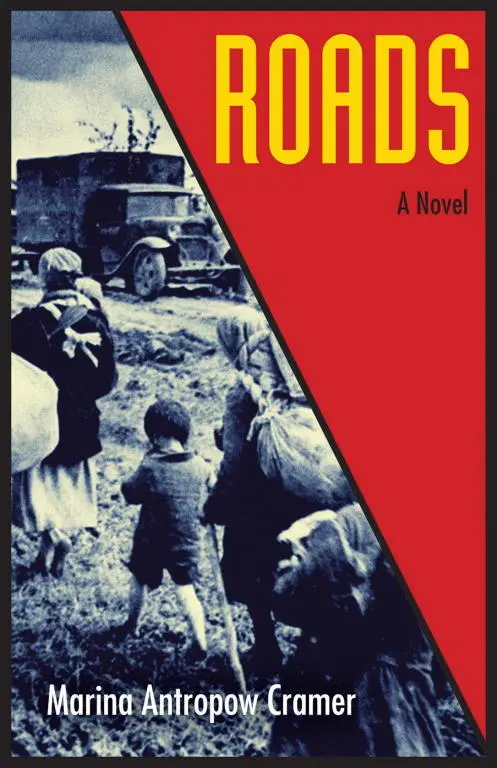
- Название:Roads
- Автор:
- Издательство:Academy Chicago Publishers
- Жанр:
- Год:2017
- Город:Chicago
- ISBN:978-1-61373-558-9
- Рейтинг книги:5 / 5. Голосов: 1
-
Избранное:Добавить в избранное
- Отзывы:
-
Ваша оценка:
Roads: краткое содержание, описание и аннотация
Предлагаем к чтению аннотацию, описание, краткое содержание или предисловие (зависит от того, что написал сам автор книги «Roads»). Если вы не нашли необходимую информацию о книге — напишите в комментариях, мы постараемся отыскать её.
By winter 1945, Allied air raids destroy strategic sites; Dresden, a city of no military consequence, seems safe. The world knows Dresden’s fate.
Roads
Roads — читать онлайн бесплатно полную книгу (весь текст) целиком
Ниже представлен текст книги, разбитый по страницам. Система сохранения места последней прочитанной страницы, позволяет с удобством читать онлайн бесплатно книгу «Roads», без необходимости каждый раз заново искать на чём Вы остановились. Поставьте закладку, и сможете в любой момент перейти на страницу, на которой закончили чтение.
Интервал:
Закладка:
“I know what I heard.” Filip bristled, startled from his own reminiscence: Galina’s body nestled against him, her honey hair parted to reveal the back of her neck, her rhythmic breathing like the whisper of receding waves on the pebbled beach of the Black Sea.
Ilya grunted. “If our boys start liberating the camps, we’re all dead men, tainted with the stain of collaboration whether we’ve worked with the Fascists or not. You know that, don’t you?”
“Maybe.” But they might need interpreters, too , he thought. “Here comes Grisha. We know what’s on his mind.”
“ Nu , parni , kak dela? How goes it, fellows?” Grisha, his soup bowl empty, towered over the two men from his considerable height. Though only in his midforties, he was nearly bald, with eyes round as billiard balls looking large behind thick wire-rimmed glasses. “Are you ready to join us?”
Ilya stood up. “Yes. I am. But I’m no fighter. I had enough of it in the last war.”
“Times have changed, old man. We have better weapons now, no more mustard gas. And we need numbers, a show of force. I’ve spoken with the camp commander.” He glanced at Filip as if to say, You’re not the only one who speaks German here . “They will back us up, provide uniforms, and help with training.”
“Huh.” Filip, still squatting, rolled a cigarette, careful not to spill a speck of the precious leaf. He licked the edge of the paper and pinched the ends closed. “They’ll say anything now to keep us from going to the Reds.”
“Oh, you young ones,” Grisha exclaimed with evident frustration. “You’ve never known anything but Communism. With our passion and Hitler’s manpower, we can unseat Stalin and his cronies, loosen their grip on our country. It is the ultimate act of patriotism. Just say it—‘ Russkaya Osvoboditel’naya Armiya , Russian Liberation Army’—and you can be part of it.”
“I know what ROA stands for.” Filip stood up. Shorter than the older man, he had to tilt his head back to look him in the eye. “And let’s say this insane plot succeeds. Then what? Who will form the new government? How do you know the people will support you? Are you counting on the monarchists to bring the surviving Romanovs out of hiding? What if you start another civil war?” He rolled the cigarette gently between fingers and thumb. “I don’t see a plan here. What if you win and the Germans choose to stay?”
“Andrei Andreevich Vlasov is perfectly able to form a government. He is a decorated general with many years of Red Army experience, and used to command. He was instrumental in the defense of Moscow, turning the enemy back within sight of the city limits.” Grisha closed his eyes, as if explaining a self-evident concept to an obtuse student. “And the monarchists will follow anyone who can replace the Bolsheviks. Isn’t that so, Ilya Nikolaevich?”
“Command!” Filip interrupted before Ilya could reply. “That’s fine for military operations, but can it make good government? Command? If so, we should stay with what we have.”
“We can argue the finer points forever,” Grisha said, his voice betraying a trace of impatience. “The truth is, we have no time. The movement is well under way, with over a million men signed up in Germany, Italy, Czechoslovakia, ready to fight. The time is now. Will you join us?”
In the end, after a few more heated recruiting efforts, they joined the ROA. Ilya, with the wholehearted enthusiasm of the newly converted, believing that not all monarchists were out of touch with modern times, kept his hopes to himself. Look at England or Sweden or Holland , he thought. Are they not proof enough that constitutional monarchy is not only possible but also good for people and rulers alike?
Filip overcame his reluctance more gradually. A million men? He doubted there could be that many. He could understand if refugees and POWs signed up, eager to band together for any hope of stability in their fractured lives. The promise of a hot daily meal and a good coat, plus a measure of protection from the capricious brutality of camp overseers—men had sold their souls for less.
So perhaps a million recruits. But if they were holed up throughout Europe, how would they ever mass together to mount a meaningful offensive? And how many among them were fit for battle? He didn’t know if he himself had the discipline or the stamina to be a soldier. Or the courage.
But he could see that holding out labeled him as a Red among men who had ceased to believe in the great Socialist experiment. It could work , he thought. Stalin was an anomaly. Remove the dictator; return power to the people—the principles were sound, weren’t they? But he also believed that the Reds, together with the Allies, would defeat the Nazis. When that happened, they, his countrymen, would see him as a traitor, no matter what he did now.
He joined so as not to draw attention to himself among these sheep bleating platitudes of a new kind, which he doubted many of them understood. As events heated up, there was bound to be confusion; he had only to watch for an opportunity to escape to the West. He would be vigilant. In the meantime, as a member of the resistance army, he might get to carry a gun—a possibility he found as exciting as it was unsettling.
They sewed the ROA patches on the sleeves of their German-issue uniforms, fingering the fine gray wool with positively sensual pleasure, glad to exchange their tattered jackets and mud-splattered trousers for this superior clothing. They mended the tears and patched the occasional bullet holes with care.
“I wonder which one of our boys shot this poor bastard,” Filip asked, holding up the jacket he had been issued. An oblong hole in the upper chest area lined up neatly with a similar one in the left sleeve. He wiggled his fingers through the holes.
“ Nu ,” one of the men remonstrated, as if correcting a foolish child. “No need for such talk.”
For the next month or so the new recruits were permitted to drill and even engage in some target practice, using wax bullets aimed at a plywood board bolstered with hay. There were not enough guns to go around. After the first day, when the men rushed from all sides at the pile of weapons laid out on a trestle table, as if playing a grimly comical version of musical chairs, the corporal in charge established a strict rotation, giving each trainee more or less equal shooting time.
Ilya, though not yet fifty, was deemed too old for combat due to his persistent cough, and assigned to the rear guard; his job would be to feed the troops, manage supplies, and care for the wounded. “That suits me,” he told his son-in-law. He was glad to be of use but not on the front lines.
Filip was hopelessly inept with a rifle, but liked the heft of a pistol in his hand, and was able to hit the target with a passable degree of accuracy. As long as it’s a bale of hay , he thought, and the gun holds blanks , not at all sure that shooting a man would yield the same kind of satisfaction.
His resolve was tested in a combat exercise that matched the trainees against each other in pairs. Filip’s opponent, though larger and stronger, was unarmed. They circled each other for a few minutes, Filip ducking or sidestepping most of the other man’s blows, though landing none of his own. Then the larger man moved in and caught Filip in a clinch. They grappled awkwardly, grunting and wheezing, Filip’s chin wedged into the other man’s shoulder, his buckling knees forcing them to fall to the ground.
A small crowd had gathered around the two men rolling in the dust. Filip was only dimly aware of their jeers—“ Durak ! Use your gun, fool!”—drowned out by the blood roaring in his ears, his only thought to escape his opponent’s viselike embrace.
Читать дальшеИнтервал:
Закладка:
Похожие книги на «Roads»
Представляем Вашему вниманию похожие книги на «Roads» списком для выбора. Мы отобрали схожую по названию и смыслу литературу в надежде предоставить читателям больше вариантов отыскать новые, интересные, ещё непрочитанные произведения.








Обсуждение, отзывы о книге «Roads» и просто собственные мнения читателей. Оставьте ваши комментарии, напишите, что Вы думаете о произведении, его смысле или главных героях. Укажите что конкретно понравилось, а что нет, и почему Вы так считаете.