Marina Cramer - Roads
Здесь есть возможность читать онлайн «Marina Cramer - Roads» весь текст электронной книги совершенно бесплатно (целиком полную версию без сокращений). В некоторых случаях можно слушать аудио, скачать через торрент в формате fb2 и присутствует краткое содержание. Город: Chicago, Год выпуска: 2017, ISBN: 2017, Издательство: Academy Chicago Publishers, Жанр: Историческая проза, на английском языке. Описание произведения, (предисловие) а так же отзывы посетителей доступны на портале библиотеки ЛибКат.
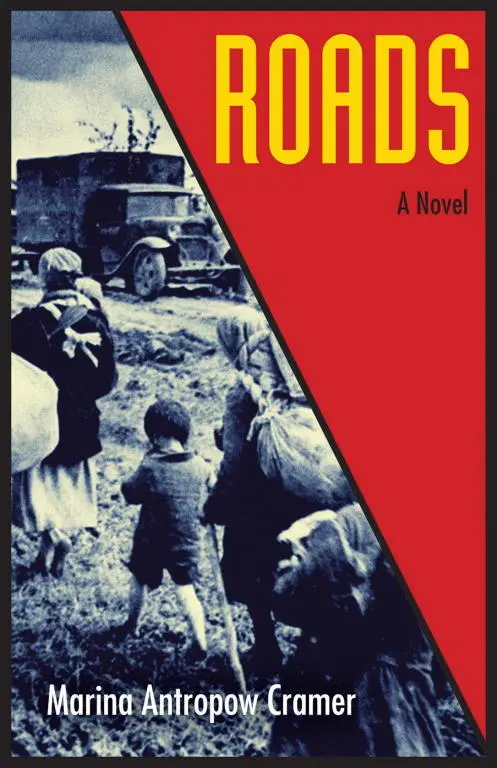
- Название:Roads
- Автор:
- Издательство:Academy Chicago Publishers
- Жанр:
- Год:2017
- Город:Chicago
- ISBN:978-1-61373-558-9
- Рейтинг книги:5 / 5. Голосов: 1
-
Избранное:Добавить в избранное
- Отзывы:
-
Ваша оценка:
Roads: краткое содержание, описание и аннотация
Предлагаем к чтению аннотацию, описание, краткое содержание или предисловие (зависит от того, что написал сам автор книги «Roads»). Если вы не нашли необходимую информацию о книге — напишите в комментариях, мы постараемся отыскать её.
By winter 1945, Allied air raids destroy strategic sites; Dresden, a city of no military consequence, seems safe. The world knows Dresden’s fate.
Roads
Roads — читать онлайн бесплатно полную книгу (весь текст) целиком
Ниже представлен текст книги, разбитый по страницам. Система сохранения места последней прочитанной страницы, позволяет с удобством читать онлайн бесплатно книгу «Roads», без необходимости каждый раз заново искать на чём Вы остановились. Поставьте закладку, и сможете в любой момент перейти на страницу, на которой закончили чтение.
Интервал:
Закладка:
Some lightened their loads yet again, leaving abandoned belongings on the shore: blankets, a square pillow, a small rolled rug, a broken doll. Ignoring Katyusha’s frightened wailing, Ksenia wrapped the child in her own shawl and tied her to Galina’s back, knotting the crossed ends securely across her daughter’s chest. She turned to Marfa to do the same with Tolik.
“No.” Marfa clutched her child and took a step back, her feet sinking in riverbank mud.
“He’ll be safer that way,” Ksenia explained. “You’ll need your hands free for the crossing.”
“No!” Marfa shouted. “Do you think I can’t protect him? My own child, my treasure?” She pressed the infant closer while he squirmed in protest at the tightness of her grasp. “He will be safe here, next to my heart.” Her voice broke and dropped to a whisper. In the end, she allowed Ksenia to tie the ends of her shawl at her back, for some measure of security.
They set off, walking close together, keeping to the sides near the handrails, bowing their heads into the wind, which intensified as they moved into the open, away from the shelter of the keening trees. It was slow going, the incline toward the center of the structure made steeper by the rain, the planks slick as newly formed ice, the wind’s howling reaching satanic proportions in its intensity.
At the crest, they stopped to rest, waiting for the women at the end of the queue to catch up. “Mother of God,” someone exclaimed, while the rest surveyed the scene before them in stupefied silence. The bridge fell away toward the shore, the downhill incline mirroring the climb they had just completed. It fell away, then disappeared under black, roiling water, coming up again at the far end onto the riverbank.
“Wait here,” Ksenia said, though no one was prepared to move. She edged along the rail toward the submerged section, so close that Galina cried out, “Mama, come back! Please, Mama, come back!”
“The bridge is still there, only part of it underwater, with a rope rail across the damaged section. People must have crossed here to the other side,” Ksenia announced on her return. “I think we can do it.”
Galina held the back of one hand to her mouth, gripped the slippery rail with the other. “I am afraid,” she said softly, so the other women would not hear, but Marfa heard and grasped her by the elbow in silent solidarity.
Ksenia had heard, too. Eyes blazing, she turned on her daughter. “The men who took your father and your husband were headed south,” she hissed. “Remember? The camps on this side are deserted. We will find them over there, in the American sector. And I intend to go.”
Galina was not alone in her fear. A few women went back to shore, holding children close, preferring to take their chances with human bureaucracy rather than risk defeat by the forces of nature. She watched them go, a huddle of retreating backs dissolving into the stormy night. Bozhe moi , she thought. My God. What will happen to them? To us?
“Leave anything you don’t need,” Ksenia instructed. “Anything that can weigh you down. Tie down anything you take. When we get to the rope, you will need both hands.” She glared at Marfa, who still held Tolik in her arms, read the obstinacy in her face, and said nothing more. To lead by example, she tossed their last cooking pot into the river. Soon a variety of objects rained down from the bridge: boxes, baskets, bedding. All floated for a moment on the simmering surface before they sank or disappeared downstream. A teakettle bobbed gaily, then passed under the bridge, adding a note of incongruous cheer no one was prepared to appreciate.
“Maybe someone will find this and wonder about us,” Marfa murmured, letting a baby pillow embroidered with lavender flowers slip from her fingers.
“Maybe,” Galina replied. “Or maybe it will just be so much trash littering the banks of the beautiful blue Danube.” No one cares about us , she wanted to scream into the wind. Don’t you know that?
The planks began to sink almost immediately beneath their weight. Twenty intrepid women peered into the gloom ahead and inched along. Twenty determined hands grasped the iron rail like so many birds on a wire. Soon they were wading, as the incline steepened and the creaking bridge fell away into the water. Someone started a chant— Gospodi pomilui , Lord have mercy—and others took it up, accompanied by the wind’s sustained howling, the staccato drumming of rain. Little Katyusha cried fitfully, her voice muffled against her mother’s back. Tolik, his face loosely covered by Marfa’s wrap, though wide awake, made no sound.
When they reached the broken section, Ksenia stopped. “Hold the rope with both hands and don’t let go. I can see the shore. God willing, we’ll soon be safe.” A murmur rose up from the women, already up to their knees in water that swirled rapidly around their skirts.
They moved in, Ksenia in the lead, then Galina and Marfa, with the others close behind. Almost at once, they were waist-deep, shuffling their numbed feet to find the broken timbers, scrambling for balance. “Keep moving,” Ksenia called over her shoulder. “Hold the rope and keep moving!”
There was no going back. The river seethed and rolled around them, a frigid boiling thing that took the breath from their lungs and emptied their minds of all thought. The end of the bridge rose out of the water just a short distance ahead, but who could look up to see it? Under the surface, they felt the whirling currents pull at their bodies, twisting their clothing as if demanding ransom for the passage. I am stronger than you , the river proclaimed. Just let go —while Ksenia exhorted them to hold on, hold on and keep moving.
She had reached the end, grasped the knot that unknown helping hands had tied to the remaining iron rail. Turning to the others, she started to say, “ Vot . Be strong. We are here,” when Marfa, with a wind-piercing scream, let go of the rope.
Galina and Ksenia, each holding the rope with one hand, reached instinctively for her, clawing at the ends of her coat, taking her back while she struggled, arms extended toward the rapidly receding bundle the river had wrenched from her side. Marfa roared and yelped like an animal while little Tolik bounced a few times on the crest of a wave and disappeared under the water, his wrap trailing along the surface like false hope before a whirling eddy took it, spinning, into the deep.
The rain stopped at dawn. A shameless sun, concealed behind rapidly receding clouds, burst through their cover, rising as if nothing had happened, its light reflected by countless quivering droplets that clung to every surface before vanishing into steamy air. The river ran as cold and blue as its celebrated popular image.
The other women moved off, busied themselves with their own concerns, hiding their relief at their own successful crossing, reluctant to share a stranger’s trouble. The day wore on, warming with spring’s promise. Sparrows pecked at the damp ground, chirping; a pair of squirrels chased each other around the base of a tree, then disappeared, chattering, into the upper branches.
Marfa said nothing. She sat down on a fallen tree, her back to the group. She made no attempt to dry her clothes or comb her hair. She sat straight-backed, head bent, staring vacantly dry-eyed at her shoes.
Galina and Ksenia glanced at one another. What was there to say? What comfort can anyone offer for the senseless death of a child? As if the death of this child, the pitiful bundle rocking on the river, spinning in a sinister game, the flash of one tiny hand outlined against the vortex like the veins of a leaf—as if that could be anything but senseless.
Читать дальшеИнтервал:
Закладка:
Похожие книги на «Roads»
Представляем Вашему вниманию похожие книги на «Roads» списком для выбора. Мы отобрали схожую по названию и смыслу литературу в надежде предоставить читателям больше вариантов отыскать новые, интересные, ещё непрочитанные произведения.








Обсуждение, отзывы о книге «Roads» и просто собственные мнения читателей. Оставьте ваши комментарии, напишите, что Вы думаете о произведении, его смысле или главных героях. Укажите что конкретно понравилось, а что нет, и почему Вы так считаете.