Marina Cramer - Roads
Здесь есть возможность читать онлайн «Marina Cramer - Roads» весь текст электронной книги совершенно бесплатно (целиком полную версию без сокращений). В некоторых случаях можно слушать аудио, скачать через торрент в формате fb2 и присутствует краткое содержание. Город: Chicago, Год выпуска: 2017, ISBN: 2017, Издательство: Academy Chicago Publishers, Жанр: Историческая проза, на английском языке. Описание произведения, (предисловие) а так же отзывы посетителей доступны на портале библиотеки ЛибКат.
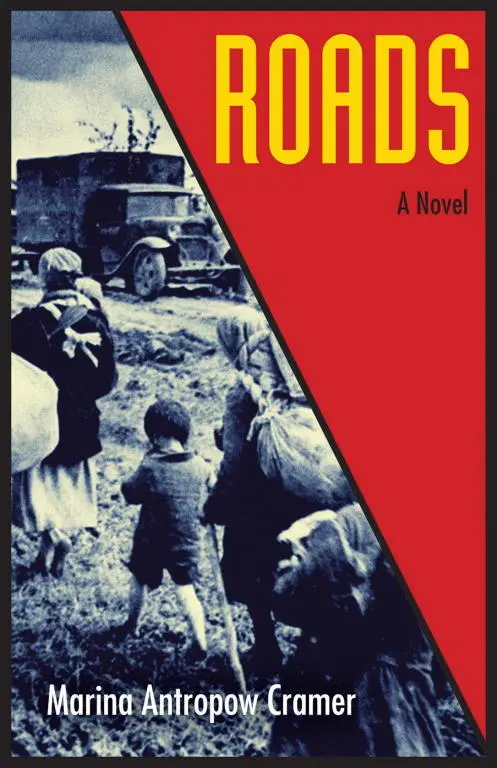
- Название:Roads
- Автор:
- Издательство:Academy Chicago Publishers
- Жанр:
- Год:2017
- Город:Chicago
- ISBN:978-1-61373-558-9
- Рейтинг книги:5 / 5. Голосов: 1
-
Избранное:Добавить в избранное
- Отзывы:
-
Ваша оценка:
Roads: краткое содержание, описание и аннотация
Предлагаем к чтению аннотацию, описание, краткое содержание или предисловие (зависит от того, что написал сам автор книги «Roads»). Если вы не нашли необходимую информацию о книге — напишите в комментариях, мы постараемся отыскать её.
By winter 1945, Allied air raids destroy strategic sites; Dresden, a city of no military consequence, seems safe. The world knows Dresden’s fate.
Roads
Roads — читать онлайн бесплатно полную книгу (весь текст) целиком
Ниже представлен текст книги, разбитый по страницам. Система сохранения места последней прочитанной страницы, позволяет с удобством читать онлайн бесплатно книгу «Roads», без необходимости каждый раз заново искать на чём Вы остановились. Поставьте закладку, и сможете в любой момент перейти на страницу, на которой закончили чтение.
Интервал:
Закладка:
It was past midday when Marfa spoke. She rose from her seat and confronted her stunned companions. “Why did you make me come?” Her voice was as flat as her face was blank. “I have no man to find. No husband, no father. No one. In my village there is an auntie. She is old and sick and childless. We could have helped each other, raised my little—” Marfa stopped, unable to utter her son’s name. She raised her hands to push away any argument. “ Znayu . I know, I know. How could I be sure I would return to my village? Well, why not? Who would stop me? I am nobody.” She looked up, her eyes wide. “Nobody. Nikto .”
“If only you had…,” Ksenia started to say, stopped, tried again. “It didn’t have to… You could have…”
“Tied my baby to my back, like you said, like she did,” she pointed to Galina, with no hint of the warmth they had so recently shared. “Well, haven’t I listened enough to you already?” Marfa shouted, so loud that some of the other women stopped wringing out their clothing and looked at them, though none dared approach or intervene.
It was a desperate outcry, spoken with the rage of a child cornered by her own helplessness and guilt, a child left with nothing but feral instinct, snarling and gnashing her teeth in her own defense. Marfa went back to the seclusion of her log, shaking in wrathful tearless silence.
It was Galina who could not stop weeping. She held her own infant close, ignoring the child’s squirming. “Katyusha,” she whispered, tears spilling from her eyes in an endless stream, coursing down her swollen cheeks. “Katyusha.”
She paced like an animal marking out territory, careful to keep her back to the unforgiven river; her footsteps soon wore a path in the newly sprouted grass, from tree to budding tree. River of death , she accused. Her heart filled with hate for its heedless sparkling beauty, hate and frustration that brought on ever more copious tears.
After her outburst, Marfa remained silent, her eyes stone dead, her mouth a thin grim line in a face pale as chalk. The other women had gathered in groups, talking and even laughing among themselves, speculating about the future and its unknown possibilities. “When they rebuild the factories they will need workers…” “I know a family in Antwerp…” “My godfather’s son lives in New York…”
“Why won’t they talk to us, Mama? It’s been two days since we crossed,” Galina whined. She lifted a restless Katya up to her shoulder to stop her rooting at Galina’s clothing, the child’s mouth an O of insatiable appetite.
“Feed her,” Ksenia instructed. “As for the women, I don’t know. Maybe they think grief is contagious.”
Galina collapsed in a fresh torrent of tears. “I fed her. I have no more”—she hiccupped loudly, catching her breath as each explosion left her chest—“no more milk.”
Ksenia took the baby and walked with her. “ Nu , nu , little one. Sleep now,” she crooned, offering the tip of her finger, dipped in water, to suck. “ Dochenka , my daughter, you must temper your grief. Stop crying. God has taken Tolik. We must accept the tragedy and care for the living.”
Marfa’s head snapped up at the sound of her son’s name. Her back stiffened; the disheveled halo of her hair stirred in the breeze. After a few minutes, she rose and approached them. Her dress, distended by engorged breasts, was damp, the leaking milk staining her bodice in dark irregular patches, like rings around a submerged stone. Without a word, she took Katyusha from Ksenia’s arms and went back to her log. The baby resisted at first, then hunger won out and she gave in, gulping the strange milk in large mouthfuls, waving one small fist in the air as a last bastion of defiance.
“God had nothing to do with it,” Marfa said without turning around. “It was my fault. Only mine.”
PART VI
The Men
1
ON LEAVING THE TRAIN at Plattling the men were trucked several kilometers to an abandoned farmhouse, already widely encircled with barbed wire and occupied by several hundred laborers. They were put to work building additional barracks and watchtowers.
“ Schnell ,” the guards prodded. “The sooner you finish, the sooner you sleep inside.” They worked steadily, unloading materials, sawing boards, pounding nails, tarring roofs, and hanging doors. No one was permitted to use the new buildings until four of the six were finished. The men slept outdoors, huddled together, each with only a thin camp-issue blanket and his own clothing to protect him from the late February cold. Some never got to use the beds they made; they succumbed to the milder but still wintry weather, their own persistent assortment of ailments made worse by low spirits and malnutrition.
The barn had been converted into a dormitory for the guards. Meals were dispensed behind the house, at the kitchen door; each man took his portion and did his best to find a place to eat it, leaning against a wall or squatting on the ground in the yard. Taking food into the barracks was forbidden.
“Why are we here? What do they want with us?” someone grumbled.
“Who knows? Maybe they have a new plan. At least we have something to do.”
Filip’s knowledge of German saved him, again, from the heaviest labor. He was assigned to the camp supervisor’s staff as interpreter, but slept in the barracks with the others, working with them when he wasn’t needed in the office.
The German staff numbered only two dozen or so and did not seem to care how the barracks were built. If the roof leaked or the walls were not straight, it made no difference; the shelters were for Slavs, who deserved no better. There were enough men among the newcomers who knew about building; to his surprise, Filip enjoyed working with them. Watching a pile of lumber and a bucket of nails become a house, however simple, was fascinating, as long as he didn’t have to swing a hammer all day.
As to their questions—Why are we here? At whose command? Are we prisoners? What happens when we finish the barracks? Where are our women and children?—no answers were forthcoming in any language.
Two weeks into their captivity, Filip met Ilya in the yard at dinnertime. Squatting next to the older man without looking at him, he said, “I found out.”
“What?” Ilya, also looking straight ahead, asked softly.
“Why we’re here and the women are not.” Filip stirred his soup, pushing the turnip bits around, skimming the rapidly congealing fat, what there was of it, onto his spoon. He rubbed the fat onto his bread and chewed.
Finally, Ilya lost patience. “ Nu ? Well?” he exclaimed, far louder than he intended.
“The Reds are on the move, sweeping in from the east, making gains every day against the Nazis. The Germans are afraid we’ll join forces with them and give away what we’ve learned of the land, the enemy positions.”
“How do you know this?”
“I overheard two guards complaining. Building these barracks is fool’s work. We should slow down. They’re just waiting for orders to shoot us when we’re done, so they don’t have to keep feeding us.”
“That’s stupid. Why waste the materials? Why not shoot us now? We could be useful yet, for reconstruction projects, or a prisoner exchange when this war ends. And that will be soon. I feel it.” Ilya tipped the rest of his broth into his mouth. “What I wouldn’t give for a plate—no, just a spoonful—of my Ksenia’s cooking.” He closed his eyes, resting his head against the wall. There were signs of early spring in the air, a hint of mildness, the sun spreading a welcoming warmth on his upturned face. “You’re sure about this? About the Reds?”
Читать дальшеИнтервал:
Закладка:
Похожие книги на «Roads»
Представляем Вашему вниманию похожие книги на «Roads» списком для выбора. Мы отобрали схожую по названию и смыслу литературу в надежде предоставить читателям больше вариантов отыскать новые, интересные, ещё непрочитанные произведения.










Обсуждение, отзывы о книге «Roads» и просто собственные мнения читателей. Оставьте ваши комментарии, напишите, что Вы думаете о произведении, его смысле или главных героях. Укажите что конкретно понравилось, а что нет, и почему Вы так считаете.