Marina Cramer - Roads
Здесь есть возможность читать онлайн «Marina Cramer - Roads» весь текст электронной книги совершенно бесплатно (целиком полную версию без сокращений). В некоторых случаях можно слушать аудио, скачать через торрент в формате fb2 и присутствует краткое содержание. Город: Chicago, Год выпуска: 2017, ISBN: 2017, Издательство: Academy Chicago Publishers, Жанр: Историческая проза, на английском языке. Описание произведения, (предисловие) а так же отзывы посетителей доступны на портале библиотеки ЛибКат.
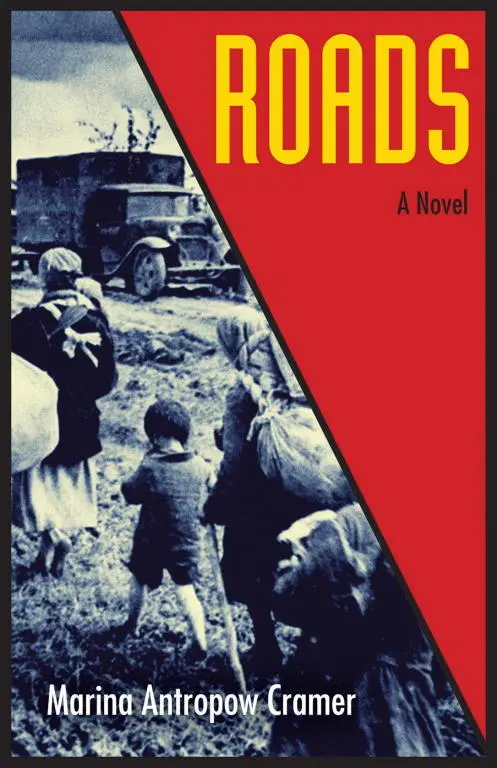
- Название:Roads
- Автор:
- Издательство:Academy Chicago Publishers
- Жанр:
- Год:2017
- Город:Chicago
- ISBN:978-1-61373-558-9
- Рейтинг книги:5 / 5. Голосов: 1
-
Избранное:Добавить в избранное
- Отзывы:
-
Ваша оценка:
Roads: краткое содержание, описание и аннотация
Предлагаем к чтению аннотацию, описание, краткое содержание или предисловие (зависит от того, что написал сам автор книги «Roads»). Если вы не нашли необходимую информацию о книге — напишите в комментариях, мы постараемся отыскать её.
By winter 1945, Allied air raids destroy strategic sites; Dresden, a city of no military consequence, seems safe. The world knows Dresden’s fate.
Roads
Roads — читать онлайн бесплатно полную книгу (весь текст) целиком
Ниже представлен текст книги, разбитый по страницам. Система сохранения места последней прочитанной страницы, позволяет с удобством читать онлайн бесплатно книгу «Roads», без необходимости каждый раз заново искать на чём Вы остановились. Поставьте закладку, и сможете в любой момент перейти на страницу, на которой закончили чтение.
Интервал:
Закладка:
By the time Ilya returned, most of the wagons were filled. The remaining crowd pressed toward the last one, a real passenger car, third class, with windows, benches along the walls, and doors at either end that opened out to a narrow railed platform. “No one sits! Children can stand on the benches. Schnell , schnell , everyone inside.” The soldiers prodded at the backs of the heaving crowd, their shouts fueling the general panic.
Filip pushed forward using his suitcase as a wedge to maneuver through the crowd; the others followed closely in his wake. “You! That suitcase is too large. Give it to me.” But Filip was already at the train, shoving the bag through the open window, where cooperative hands received it and passed it into the interior. “ Russische Idioten ,” the guard mumbled. “I’ll be glad when you’re all gone.” Filip did not hear. He was working his way to the door, pulling Galina by the hand. Her scarf came loose, fluttered briefly above their heads, and fell to the ground, but he would not let her stoop to pick it up.
“It’s the last car,” he said urgently. “Stay with me, all of you.” And then they were inside.
People tried to arrange themselves as best they could, but there were too many. Children wailed. Windows were quickly closed against the evening cold, and just as quickly reopened to let in some air. Packed one against the other, clutching their belongings, everyone grew quiet.
Still the train did not move. On the platform, the last of the refugees stood in a loose crowd. There was no more room, all the cars were packed beyond capacity. What would happen to them?
Then shouts: “All you men over here. Put your luggage down.” The group of twenty or so men and boys disappeared around the side of the station. The women, left behind, stood in stunned silence, holding children by the hand. What now? What new indignity?
It was getting dark. Light snow was coating the heaped luggage with a sheen that glowed dimly in the pools of pale yellow light from the evenly spaced lampposts. Inside the wagon, it grew increasingly close, the air stale with unwashed skin and clothing, people pressed in so tightly that some slept, with no fear of falling down, their bundles and cases held firmly between their feet. “I can’t breathe.” Galina’s face was drained of all color, her temples beaded with sweat. “Please…” She took large, yawning breaths. Her body trembled with a numbing fatigue. Unexpected tears trickled down her cheeks. Spots of light danced and flickered before her eyes.
“She needs air. Get her to the door, Filip,” Ksenia instructed. “Nice people, please, let her through.” Bit by bit, one tiny shuffling step at a time, Filip guided his wife toward the door at the back of the car. Some resisted, but most people tried to push even closer together in a slow undulation that gradually propelled the young couple to the edge of the throng.
Filip yanked at the door handle. I could get shot for this. The thought flitted across his mind, followed by another: I could get shot for anything. On the third try, with the effort of several hands, the door opened a crack.
Galina leaned her head against the door frame and let the air revive her, feeling the weakness ebb with every bracing gust. “Look,” she said, peering through the crack to the outside.
Around a curve, the men and boys were returning, pushing a dusty-looking boxcar before them, its wheels creaking and grinding on the frigid tracks. Others had spotted the approaching wagon through the windows, giving rise to a chorus of speculation. “They really want us out of here.” “We’re already hours late.” “You know the Germans and their schedules; lateness is a deadly sin.”
A guard watched a few of the men hook the boxcar onto the end of the train. “This hitch is rusty,” Galina heard one man say. “ Molchi ,” another growled. “Keep your mouth shut, or we’ll be blamed for that, too.”
Filip edged closer to the door, his voice a hoarse whisper. “What’s the delay? We’ve been on this train for hours.”
“Allied bombing to the west, I heard. Some track destroyed, fewer trains coming in. But they really want us gone. That’s why we get to ride in this antique.” The man outside inclined his head toward the now waiting boxcar.
“Must be why we’re headed south, to Plattling,” Filip mused. “Out of easy bomber range. The planes can’t get there and back without refueling, maybe.”
The boxcar filled up quickly, the last of the day’s transport crammed into its windowless depths within minutes. Behind the mountain of luggage, new crowds of refugees were beginning to gather and mill about. Exactly like us , Filip observed. How many among them ready for a new life, now that returning to the old one was no longer possible? How many impatient to lead or even follow, using their abilities to transform a changing world, to heal the wounds inflicted by this endless war? How many artists, builders, writers, visionaries, scientists, who could have begun to make their contribution here, in this city, now, instead of being shunted to yet another place, guessing at a precarious future, their longing for stability once again postponed? His longing, his impatience to do something, to make a mark.
Instead, here they were on this train, again going who knows where to suffer whatever fresh travails were sure to be waiting there. The only certainty was the imminent birth of his and Galina’s child, a thought that filled him with equal parts curiosity, bewilderment, and despair.
At least the train was moving now, after a long, deep tremor that rippled from car to car along its entire length, clouds of steam hissing in the night air, pluming backward as the engine pulled the train out of Dresden station.
The station clock read 10:10, Filip noted as they rolled by. He pulled the door open wider, stepped out onto the car’s narrow platform, turning to help Galina follow. She leaned into the railing, holding on with one hand while pushing the hair out of her eyes with the other. “I wish I hadn’t lost my scarf. Who knows when I’ll get another.”
“We’ll find you a scarf. Germany is full of scarves.”
“Just make sure it’s blue, or has blue in it.” She smiled.
But Filip was not smiling. He stared, open-mouthed, at the dark cloud-filled sky. “Hush,” he said, as if any noise they could make would matter. “Bombers.” He grasped her arm firmly and pulled her back against the wagon.
Then she heard the engines, and those inside the wagon heard, too, shouting in useless fearful commotion. Whatever happened, there was nowhere to go. The airplanes descended in a sweeping arc and began raining green flares onto the city, followed by the white flash of incendiary bombs, which burst everywhere into seething balls of blinding flame.
“Filip, the station! The railroad station is on fire! Bozhe moi , my God! All those people!” Galina screamed, her eyes wild with the horror of it.
“Hold on to the railing,” Filip yelled in her ear. “I’ll try to get us back inside the car.” He tugged at the door with frantic urgency, but the crush of bodies against it was too great. It would not budge.
Absurdly, with an incongruity born of panic, his mind conjured an image of the chocolate bonbon rolling on Musa’s tablecloth. I should have eaten it. It was a random, unbidden thought, baffling in its stupidity. He moved his head from side to side, as if to shake the nonsense out and return to the madness of reality.
The train picked up velocity, leaning into the incline leading out of the city as the next wave of bombers appeared in the west. With a sickening piercing metallic groan, the rusty hitch holding the boxcar onto the end of the train gave way. “ Ai, ai, no, no!” Galina sobbed, letting go of the railing, reaching out as if to pull the loose car back with her own hands. From behind, Filip grasped her by the shoulders and held her tight against himself, while the train sped swaying into the night and the boxcar packed with desperate people rolled back into the flaming station, their screams rising like a lurid operatic chorus between the circling planes discharging their cargo of death and the infernal scene below.
Читать дальшеИнтервал:
Закладка:
Похожие книги на «Roads»
Представляем Вашему вниманию похожие книги на «Roads» списком для выбора. Мы отобрали схожую по названию и смыслу литературу в надежде предоставить читателям больше вариантов отыскать новые, интересные, ещё непрочитанные произведения.







Обсуждение, отзывы о книге «Roads» и просто собственные мнения читателей. Оставьте ваши комментарии, напишите, что Вы думаете о произведении, его смысле или главных героях. Укажите что конкретно понравилось, а что нет, и почему Вы так считаете.