Marina Cramer - Roads
Здесь есть возможность читать онлайн «Marina Cramer - Roads» весь текст электронной книги совершенно бесплатно (целиком полную версию без сокращений). В некоторых случаях можно слушать аудио, скачать через торрент в формате fb2 и присутствует краткое содержание. Город: Chicago, Год выпуска: 2017, ISBN: 2017, Издательство: Academy Chicago Publishers, Жанр: Историческая проза, на английском языке. Описание произведения, (предисловие) а так же отзывы посетителей доступны на портале библиотеки ЛибКат.
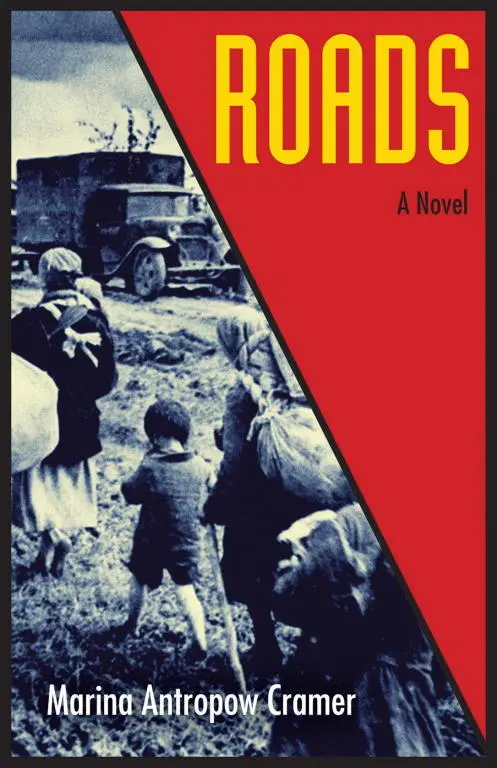
- Название:Roads
- Автор:
- Издательство:Academy Chicago Publishers
- Жанр:
- Год:2017
- Город:Chicago
- ISBN:978-1-61373-558-9
- Рейтинг книги:5 / 5. Голосов: 1
-
Избранное:Добавить в избранное
- Отзывы:
-
Ваша оценка:
Roads: краткое содержание, описание и аннотация
Предлагаем к чтению аннотацию, описание, краткое содержание или предисловие (зависит от того, что написал сам автор книги «Roads»). Если вы не нашли необходимую информацию о книге — напишите в комментариях, мы постараемся отыскать её.
By winter 1945, Allied air raids destroy strategic sites; Dresden, a city of no military consequence, seems safe. The world knows Dresden’s fate.
Roads
Roads — читать онлайн бесплатно полную книгу (весь текст) целиком
Ниже представлен текст книги, разбитый по страницам. Система сохранения места последней прочитанной страницы, позволяет с удобством читать онлайн бесплатно книгу «Roads», без необходимости каждый раз заново искать на чём Вы остановились. Поставьте закладку, и сможете в любой момент перейти на страницу, на которой закончили чтение.
Интервал:
Закладка:
The others scrambled, picking up snow and frigid mud with numbed hands, snow that melted as soon as it hit the reeking, steaming mess; but they kept at it until the ground within a few yards was bare and the troughs filled to overflowing, a light carapace of ice forming over the cooled surface.
The men digging the grave hacked at the frozen ground, making little headway. They were at some distance from the others, with a single guard a few feet away. “There are only six of them,” someone said quietly, “and many of us.”
“So? We have shovels. They have guns. Even if we get their weapons, where will we go?”
“Anywhere. But the women, the children…”
“That’s the problem. Best to wait. Something seems different, as if they’ve lost direction, or the will to fight. They could have shot us,” Ilya said, “but they didn’t.”
It proved impossible to work the frozen earth, even with a pickax; the time required was more than the transport could finally afford to take. Already, they could see people in the forward wagons returning to their places, the signal to resume the journey shouted down along the length of the train. The bodies were left in the shallow trench, covered with bare twigs and heaped with snow. Ilya, working rapidly with a bit of wire, fashioned a rough cross and laid it on top.
Back on the train, the refugees gathered up their things and arranged themselves for the rest of the trip. The transport stopped several more times in the next few days, but everyone was ordered to stay on board. Some had managed to fill whatever cup or vessel they had with snow, against the implacable thirst; there was no food. Only now, there was a little more room.
Fresh troops were waiting at Plattling, with a convoy of open-bed trucks lined up along the road leading away from the station. Two men took up positions at each wagon door; no one could disembark until given permission. Inside, the people waited, as they had for the endless hours of what should have been a short journey, through detours, rerouting, and many unexplained delays, the train standing idle in open country for hours at a time. After nearly a week on board, they were hungry, filthy, dispirited, and crazed with thirst.
The jolt of the stop woke Galina. She was wedged between Filip and Ksenia, the curve of her stomach pressed against her mother’s back, one hand resting on Ksenia’s shoulder.
“I was dreaming,” she said. “Mama, you had given me some cloth scraps—I recognized one from a dress you made for me when I was little, white with red dots. I loved that dress.” Her voice took on a dreamy storytelling cadence. “My doll Masha lay naked on the table, arms at her sides, her blue eyes closed. I was sewing her a dress with my shiny new needle, singing a little song. I was so happy.
“May there always be blue skies, may there always be sunshine. May there always be Mama, may there always be me.” She sang in a melodious whisper, raising her chin a little, oblivious to the curious glances from those who overheard.
Ksenia bowed her head. Was it possible Galina had forgotten? Had her mind erased the harrowing details of their ordeal so completely that all she was left with was this innocent child’s version? Lord have mercy. Gospodi pomiluy , she thought, reaching up to squeeze her daughter’s hand. May you never remember.
Each car was emptied with model efficiency, the local police working with the soldiers, forming men and teenaged boys into an orderly line and loading them onto the waiting trucks.
The trucks began to move. The women pulled their children closer, buzzing with consternation. Armed guards prevented them from running alongside the convoy but could not keep them from calling out to the departing husbands and brothers, fathers and friends. “Stay strong.” “Don’t despair.” Alyosha, Nikola, Andrei, Sashok.
“Send word, Ilya.” Ksenia’s voice rose above the others. “I will find you.”
They watched the last of the trucks disappear down the road, then turned as one to face the soldiers and police. “Why have you taken them? Where are they going? What happens to us?” they demanded.
“You? March. Single file. Hold your Kinder by the hand. Any child who runs will be shot.”
PART V
The Women
1
THEIR DESTINATION WAS a deserted summer camp. No military barracks, just several rustic dormitories and a roofed open-sided dining pavilion. The lavatory had a dozen sinks against one wall, several open showers, and a huge oblong bathtub against the other.
Galina could easily imagine this tub filled with squealing, happy children getting washed in batches of ten or twelve, their bodies slick with soap, their heads full of impressions from a day at the lake, the woods, or a farm visit. Soap! What a luxury that was. Would she ever be clean again? How long would it take to scrub away the grayish tint from her skin, or to lose the stale odor that, like a badge of their lowly status, they hardly even noticed on each other?
The overseer noticed, and ordered an immediate disinfection. “Strip, before you carry your lice and filth into our bedding. Put your clothes in the bathtub. Everything,” she shouted at the women reluctant to remove their undergarments.
They showered several at a time, scouring their bodies with harsh brown laundry soap that left their skin dry as sandpaper, with raw red patches in the crooks of their elbows, behind the knees, under their breasts, between their thighs. Still wet, they were led from the lavatory across the compound to the infirmary, prevented from concealing their nakedness or sheltering the youngest among them by walking single file, the February wind biting at their skin. All the camp guards, including the women, turned out to see the parade, some hooting or whistling or making crude remarks, others watching in enigmatic silence.
A thin, impassive barber shaved their heads. An emaciated woman of indeterminate age swept the falling hair into sacks; her shabby dress and weary expression suggested she was an inmate like themselves. “They say the hair is disinfected and sold to wig makers,” she told them later, her own head covered with a blue-and-white-striped rag tied at the nape of her neck. “Nothing is wasted here.”
One by one, the women were admitted into the “treatment room,” where a doctor examined them and doused them with disinfectant. Those waiting were silent. All their questions had been ignored. No one knew where the men had been taken, or why. They were still completely at their captors’ mercy. There was nothing to say.
The women came out, each one’s head yellow with a foul-smelling liquid, each clenching her teeth at the stinging pain of the cuts and scrapes on her freshly shaved scalp and pubis. Some had tear-stained faces; some looked enraged or strangely relieved. Some were in the room longer than others.
When a girl of twelve or thirteen went in, hunched over as if trying to conceal her newly formed breasts, hands cupped in front of her groin in a touching display of modesty, a collective sigh went through the crowd, more eloquent than any words of warning or encouragement. The doctor kept her at least a quarter of an hour. When she emerged, hands at her sides, her face flushed but stony, she, like the others, said nothing. An older woman who stepped out of the line, reached for the child, and spoke her name, received a sharp reprimand and a baton blow across her back, which sent her gasping against the wall. The girl looked at her, then turned away. She went to stand with the “clean” women, waiting with them for whatever came next.
The two in the group who were clearly pregnant gravitated toward each other almost in spite of themselves, as if their nudity exposed more than they might otherwise choose to reveal.
Читать дальшеИнтервал:
Закладка:
Похожие книги на «Roads»
Представляем Вашему вниманию похожие книги на «Roads» списком для выбора. Мы отобрали схожую по названию и смыслу литературу в надежде предоставить читателям больше вариантов отыскать новые, интересные, ещё непрочитанные произведения.











Обсуждение, отзывы о книге «Roads» и просто собственные мнения читателей. Оставьте ваши комментарии, напишите, что Вы думаете о произведении, его смысле или главных героях. Укажите что конкретно понравилось, а что нет, и почему Вы так считаете.