Marina Cramer - Roads
Здесь есть возможность читать онлайн «Marina Cramer - Roads» весь текст электронной книги совершенно бесплатно (целиком полную версию без сокращений). В некоторых случаях можно слушать аудио, скачать через торрент в формате fb2 и присутствует краткое содержание. Город: Chicago, Год выпуска: 2017, ISBN: 2017, Издательство: Academy Chicago Publishers, Жанр: Историческая проза, на английском языке. Описание произведения, (предисловие) а так же отзывы посетителей доступны на портале библиотеки ЛибКат.
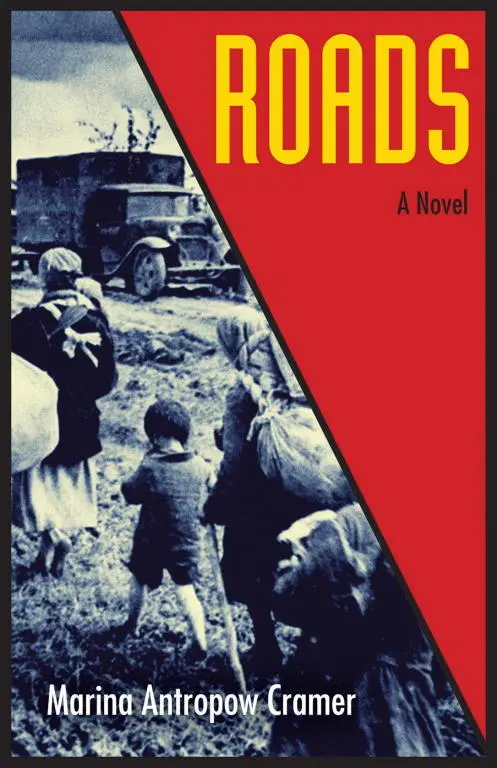
- Название:Roads
- Автор:
- Издательство:Academy Chicago Publishers
- Жанр:
- Год:2017
- Город:Chicago
- ISBN:978-1-61373-558-9
- Рейтинг книги:5 / 5. Голосов: 1
-
Избранное:Добавить в избранное
- Отзывы:
-
Ваша оценка:
Roads: краткое содержание, описание и аннотация
Предлагаем к чтению аннотацию, описание, краткое содержание или предисловие (зависит от того, что написал сам автор книги «Roads»). Если вы не нашли необходимую информацию о книге — напишите в комментариях, мы постараемся отыскать её.
By winter 1945, Allied air raids destroy strategic sites; Dresden, a city of no military consequence, seems safe. The world knows Dresden’s fate.
Roads
Roads — читать онлайн бесплатно полную книгу (весь текст) целиком
Ниже представлен текст книги, разбитый по страницам. Система сохранения места последней прочитанной страницы, позволяет с удобством читать онлайн бесплатно книгу «Roads», без необходимости каждый раз заново искать на чём Вы остановились. Поставьте закладку, и сможете в любой момент перейти на страницу, на которой закончили чтение.
Интервал:
Закладка:
“The animals… the zoo,” Galina whispered. “Who will unchain the elephants?”
8
NO ONE SPOKE about Dresden. Not one person mentioned the things they had lost, though each still clearly saw the mountain of luggage consumed by flames, and pictured the ashes of their belongings fanning out over the ruined city, everything only so recently held to be precious or necessary to life now rendered frivolous, the remnants buried like ancient artifacts under the rubble of the train station.
Who could imagine the mayhem, people incinerated in their beds, or running, hair and clothing ablaze, while buildings crumbled like broken toys, the insatiable inferno engulfing everything in a wall of flame, sucking the air out of cellars, leaving those who sheltered there to die of suffocation? From the train now headed for undisclosed reasons to Plattling, they saw other fires along the way, burning in the distance, each a marker of death and destruction.
Dawn came slowly, a thin pearly light penetrating the edges of the eastern sky. Filip and Galina, now back inside the wagon with the others, watched the night lift away; a cold, mirthless sun pierced the shifting clouds. Villages half-concealed in swirls of soot and smoke flashed by the windows. People moved in the landscape as if under water, their gestures and poses arrested in gruesome tableaux by the motion of the train: several children huddled under a leafless tree near a farmhouse reduced to its doorframe and chimney, a bull, hindquarters crushed and bleeding, lowing in useless rage. Now and then, a house went by intact, as if protected by an unseen hand in a random act of mercy.
The morning of the third day, the train stopped within view of a demolished farmhouse. The refugees were, for the most part, alive. In the crush of bodies packed into the wagons, the dead could not fall down; their numbers would not be known until the doors were opened and people began to descend to the ground. Ahead, near the front of the train, rows of men were being marched forward to clear what looked like an obstruction on the tracks.
Filip was the last left on board. Squatting to tie his shoelace, he heard two guards from the other cars join the one standing at the steps. “How many dead?” one asked, his tone expressionless, as if inquiring about the weather.
“Three. No, four.”
“Six in mine. I have the cattle car. One of them a boy, maybe ten years old. My son’s age.”
“Old enough to throw a grenade. Don’t get soft, Corporal.”
“What’s their status? Any new orders?” The corporal stamped his feet. “Damn, it’s cold.”
“No orders. They’re not DPs yet, just refugees with no camp assignment. The war’s not over; we’re still in charge. They’ll want to keep the men separate, under closer guard so they don’t join the Reds. But it’s not our problem. We only have to get them to Plattling.” Filip heard the officer pull on his cigarette, inhaled with longing the aromatic smoke drifting through the open door.
So that’s it , he thought. DPs. Displaced persons. That’s who we are now, or nearly. But under whose protection? Eavesdropping would get him killed, whether they knew he understood or not.
“Have them bring all the dead over here,” the officer said, and the group moved off.
Filip waited to be sure, then stretched his muscles and slipped off the train just as a half dozen men were being deployed, under guard, to find anything suitable for a latrine. They came back with animal feeding troughs, bits of straw sticking out of the cracks between the weathered boards.
“ Ja ,” the ranking officer nodded. “This will do. Good enough. We have no time to dig trenches.” Although time, it seemed to everyone, was one thing of which they had more than enough.
“What’s that? Pig troughs? Perfect,” another added.
“Now,” the commander resumed. “Men here, women over there. Do your business, and be quick.”
No one moved. As soon as their feet hit the ground, they had all stooped to scoop handfuls of snow, shoving it in their mouths to slake the thirst more unbearable than hunger. Some had used snow to wash their faces, smearing the grime and soot over parched yellow skin, wiping away the frost with their coat sleeves. Now, they stood shivering, exchanging puzzled, bewildered glances. Even in the worst of the labor camps, there had been real latrines, however primitive. This was too degrading to believe.
“What? You think I can’t smell you? You couldn’t wait. Now get to it, like the animals you are.”
Slowly, the people moved toward the troughs, the men standing shoulder to shoulder, pissing like schoolboys, urine oozing through the cracks, staining the snow in bright patches that steamed briefly, then rapidly froze.
The women shielded each other with their coats and skirts, taking turns a few at a time until the officer shouted, “Faster! Schnell ! We can’t be here all day.”
Ksenia spoke up then, mixing Russian words with her poor German. She faced the officer squarely. “We are not animals. We are women. Look, the ones who are finished can cover the others. Soon all will be done.”
“What do you think this is? Intermission at the Bolshoi Ballet?” He shoved her in the shoulder with the butt of his pistol. She staggered but did not fall. “Who told you you could talk to me?”
Ilya came to stand next to his wife. “Are we prisoners, then? We came to Dresden on our own. We paid for our tickets with our own money.”
“Your own money. Ha! Look, grandpa, as long as you wear this”—he poked a gloved finger, hard, at what remained of the OST patch on Ilya’s lapel, a fraying shadow outlined with a few loose threads—“you are guests in my country, and you will do what I say.” He waved an arm at the pile of corpses near the tracks. “You see those? It would cost me nothing— nothing —to add you and your Frau to their number.” He pushed them together so their heads lined up, one behind the other. “One bullet.”
Galina saw her parents’ hands grope instinctively for one another and clasp each other behind the folds of their coats. A tremor rippled across her father’s face; her mother stood pale, stony-faced, revealing nothing. Galina broke away from the milling crowd, brushed off Filip’s restraining hand. “No!” she screamed. “Mama, Papa! No!”
The officer spun around, raised the pistol over his head, and fired into the air, laughing. “You men—you and you and you two and of course you, Großvater ,” he shouted, pointing at Ilya. “Take these shovels and dig a hole, over there, away from the tracks, for these.” He pointed at the corpses with the tip of his boot. “You, Mutti , and your brave daughter, strip them. I want all the clothes folded, shoes on top, rings and jewelry inside the shoes. Their papers you will give to me. The rest of you, fill these stinking troughs with snow. Nobody wants to see your shit.” When they hesitated, looking around for more shovels, he yelled, “What? You have hands. And five minutes.”
It was hard work. Some of the corpses were, like them, wearing several layers of clothes. Galina’s fingers trembled, fumbling with icy buttons, tugging at sleeves encasing unyielding arms. “Don’t you cry,” Ksenia mumbled. “Don’t you dare cry. Empty your mind, or say a prayer.” They worked quickly, adding to the growing pile of skirts, trousers, sweaters, coats, shirts, dresses, laying children’s clothes on top, along with caps and scarves, tossing wedding rings and earrings into a shoe. Neither said another word.
When they were finished, Ksenia walked the shaking Galina to a tree, holding her while she retched, doubled over, wiping the thin stream of greenish slime from the corner of her mouth. Just then the child moved and Galina groaned, both hands on her belly; a bit of color returned to her pallid cheeks. Thank God , Ksenia thought. At least this one is still alive.
Читать дальшеИнтервал:
Закладка:
Похожие книги на «Roads»
Представляем Вашему вниманию похожие книги на «Roads» списком для выбора. Мы отобрали схожую по названию и смыслу литературу в надежде предоставить читателям больше вариантов отыскать новые, интересные, ещё непрочитанные произведения.










Обсуждение, отзывы о книге «Roads» и просто собственные мнения читателей. Оставьте ваши комментарии, напишите, что Вы думаете о произведении, его смысле или главных героях. Укажите что конкретно понравилось, а что нет, и почему Вы так считаете.