Marina Cramer - Roads
Здесь есть возможность читать онлайн «Marina Cramer - Roads» весь текст электронной книги совершенно бесплатно (целиком полную версию без сокращений). В некоторых случаях можно слушать аудио, скачать через торрент в формате fb2 и присутствует краткое содержание. Город: Chicago, Год выпуска: 2017, ISBN: 2017, Издательство: Academy Chicago Publishers, Жанр: Историческая проза, на английском языке. Описание произведения, (предисловие) а так же отзывы посетителей доступны на портале библиотеки ЛибКат.
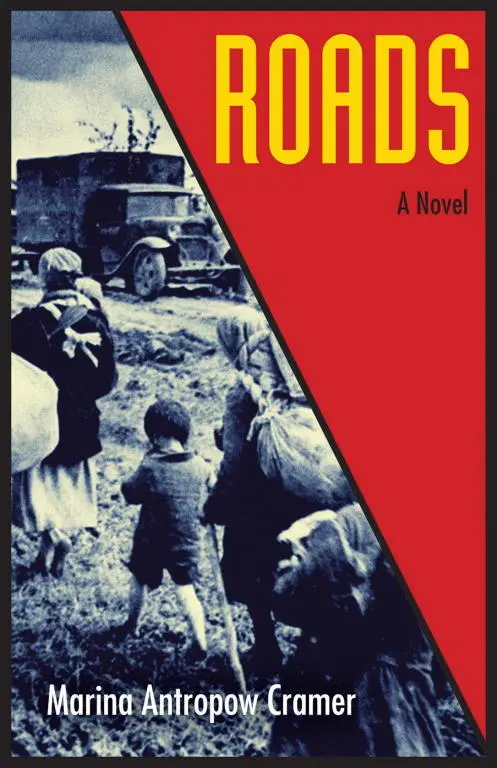
- Название:Roads
- Автор:
- Издательство:Academy Chicago Publishers
- Жанр:
- Год:2017
- Город:Chicago
- ISBN:978-1-61373-558-9
- Рейтинг книги:5 / 5. Голосов: 1
-
Избранное:Добавить в избранное
- Отзывы:
-
Ваша оценка:
Roads: краткое содержание, описание и аннотация
Предлагаем к чтению аннотацию, описание, краткое содержание или предисловие (зависит от того, что написал сам автор книги «Roads»). Если вы не нашли необходимую информацию о книге — напишите в комментариях, мы постараемся отыскать её.
By winter 1945, Allied air raids destroy strategic sites; Dresden, a city of no military consequence, seems safe. The world knows Dresden’s fate.
Roads
Roads — читать онлайн бесплатно полную книгу (весь текст) целиком
Ниже представлен текст книги, разбитый по страницам. Система сохранения места последней прочитанной страницы, позволяет с удобством читать онлайн бесплатно книгу «Roads», без необходимости каждый раз заново искать на чём Вы остановились. Поставьте закладку, и сможете в любой момент перейти на страницу, на которой закончили чтение.
Интервал:
Закладка:
“We could have left after dinner,” Galina said. “Instead of worrying my parents and sleeping with that collaborator.”
“Collaborator? You could call him that. More like an opportunist, I’d say. And what about your father, and all those Nazis coming to your apartment to pick up their pins and carved boxes?”
“How dare you! My father accepted their orders because he’s a craftsman, and unlike our own people, those officers had money to spend. But he never served them breakfast or polished their boots. And he never told them anything.”
“Don’t be angry, Galya. I’m only saying he did business with the enemy, and took the food parcels they brought him while everyone else subsisted on rations. I never said he was a spy.”
“Everyone else would have done the same, given the chance, and you know it. As if you ever turned down a bite of that extra food! And what about your work interpreting? What do you call that?”
“That was in a labor camp. I’m not much good at digging ditches or hauling rocks.” He yawned. “That was the most uncomfortable night, but the food was good.”
“I don’t know why he was so generous. How well did you know him?”
“He’s two or three years older. We met while buying stamps at a collectors’ shop in town. Made some good trades, too. I don’t know what came over him. Maybe he’s homesick.” He did not mention the hand resting on his waist, or the erection pressed against the back of his thigh, Musa whispering, “I know you’re not asleep,” his voice thick with wine. Filip first not breathing at all, then imitating the rhythm of deep slumber, until the older man’s body went slack, his soft snoring hot on the back of Filip’s neck. “Who knows why his colonel found him valuable enough to bring along? Forget him.”
When they found the others, Galina broke down weeping into her father’s arms. “ Nu , nu ,” he crooned, smoothing her hair. “Stop, now.” Amid apologies and explanations, Ilya told them what he and Ksenia had learned.
“There are too many people. We are to leave our luggage here. Mama has the claim tickets. I’ve heard rumors that the Red Army is advancing, so they want to move us away from the border. Maybe they’re afraid we’ll join forces with our troops. I don’t know.”
“Where are we going?” Filip asked. “Must we leave everything here?”
“South and west.” Ilya looked at his ticket. “Leipzig. Our things should be on the next train out.”
“We are permitted to each take a small bundle or case,” Ksenia added, spreading her hands apart to indicate the size. “No bigger than a woman’s handbag.”
They spent the next hour or so sorting through their belongings. All around them, clustered in tight family groups, people were doing the same, pulling on extra clothes, setting aside bulky items and household goods to reclaim later.
Ksenia focused on food supplies, tying a small article of clothing around each packet of rice, flour, and salt, finding room in her bundle to add two tin cups and some spoons. For Galina, she fashioned a flat backpack using a thin blanket rolled with underclothes and socks.
“ Ai , Mama, I can hardly move,” Galina complained. “I’m already wearing two dresses and a sweater under this coat.”
Ksenia ignored her daughter’s protests, crossed the ends of the blanket over Galina’s shoulders, and tied them firmly in back. “Hush. Now sit here on this suitcase while we finish packing.”
Filip refused to wear his second shirt. He wrapped it around his stamp albums, a notebook and pencils, and some photographs from home, jamming it all into the smallest suitcase they had. Ilya took only his workbox. “It may be bigger than a woman’s handbag, but I’m not leaving it behind, not even for a day. I need my tools and materials. Where will I find ivory now?”
“Papa, do they hurt the elephants to get the ivory? How do they survive without their tusks?” Galina looked up from an open box filled with family memorabilia.
“No, dochenka , they harvest the tusks after the elephants die, or if they break them fighting with other males.”
Galina nodded but thought, How can you be sure? “Can you fit these pictures into your box? There’s your wedding photo, and Maksim, and you and me and Mama. And this—I really love these views.” She handed him some photographs and a packet of souvenir postcards: Yalta, the Gem of the Black Sea.
They repacked their remaining things, making sure the identifying tags were clearly visible, then carried everything to the open area on the platform designated for luggage. The soldier on duty tossed their cases and baskets onto the growing pile, and shooed them away. “Your train leaves in an hour. Be ready,” he growled.
Ready? Ready for what? Filip wondered. He was tired of this nomadic existence, his movements dictated by people who had not the slightest knowledge or interest in who he was or what he wanted, what he was capable of. He was ready to begin his own life, but when?
About midafternoon, the train pulled in. There were dark clouds in a sky the color of ashes. It snowed a little. Soldiers and civilians spilled out of dented passenger cars; the civilians formed into a mute line, waiting to have their papers checked and stamped. More soldiers appeared to unload the cargo wagons. The refugees watched them load large wooden crates marked with stenciled numerical codes onto waiting trucks and military vehicles. It all happened quickly, the men moving with grace and precision in virtual silence, like a latter-day ballet in combat boots.
“What do you think is inside?” Galina leaned heavily against Filip, tucking her hand under his arm. “Could it be food?” Last night’s feast now seemed a distant memory. As if responding to her question, the baby tumbled inside her in a vigorous somersault. She bit her lip to keep from crying out.
“If so, it’s not for us,” he replied casually, not looking at her. “More likely ammunition or medical supplies or wine for the officers’ table.” He glanced at her then. “You look pale. Do you want to sit down?”
“I want a cup of tea, with sugar.” She sighed.
Filip grunted at the impossibility of satisfying her yearning; she may as well have asked for claret with strawberries. But Ilya heard. He moved off quietly and soon returned, his hand covering a thick porcelain mug to keep the contents warm. “Drink it quickly, dorogaya , my dear. I left a deposit for the cup.” There was no sugar, but the weak brew was colored with a little milk, which tempered its bitterness, and she gratefully swallowed it.
A junior officer appeared, spoke a few words to the now idle soldiers, then turned to the mass of refugees. “You will now board the train,” he commanded. “All of you.” People looked at one another in confusion: My ticket is for Frankfurt… Hamburg… Berlin—how can one train go in all directions at once? “There has been a change of plan. Forget your tickets. You will all go to Plattling. Now schnell , hurry. Everyone on board. One parcel per person.”
The soldiers moved to surround them, herding the throng past the passenger cars behind the steaming locomotive, toward the line of cargo wagons at the back of the train. “Not without Papa!” Galina shouted. She rose on her toes, craning her neck to find Ilya, who had gone to reclaim his deposit for the empty cup. “Mama, help me; we have to wait for him!” She clutched at Ksenia with one hand and held on to Filip with the other; together they formed a hard knot, struggling to hold their ground against the crowd surging and shoving all around.
“Not without Papa,” she repeated, speaking directly into the face of a young soldier with short blond hair and a smooth chin. Their eyes locked. He was almost a schoolboy, surely still in his teens; she saw innocence there, and met it with her obstinate passion. The boy moved on, pressing the side of his rifle against a group of people bunched to their left.
Читать дальшеИнтервал:
Закладка:
Похожие книги на «Roads»
Представляем Вашему вниманию похожие книги на «Roads» списком для выбора. Мы отобрали схожую по названию и смыслу литературу в надежде предоставить читателям больше вариантов отыскать новые, интересные, ещё непрочитанные произведения.








Обсуждение, отзывы о книге «Roads» и просто собственные мнения читателей. Оставьте ваши комментарии, напишите, что Вы думаете о произведении, его смысле или главных героях. Укажите что конкретно понравилось, а что нет, и почему Вы так считаете.