Marina Cramer - Roads
Здесь есть возможность читать онлайн «Marina Cramer - Roads» весь текст электронной книги совершенно бесплатно (целиком полную версию без сокращений). В некоторых случаях можно слушать аудио, скачать через торрент в формате fb2 и присутствует краткое содержание. Город: Chicago, Год выпуска: 2017, ISBN: 2017, Издательство: Academy Chicago Publishers, Жанр: Историческая проза, на английском языке. Описание произведения, (предисловие) а так же отзывы посетителей доступны на портале библиотеки ЛибКат.
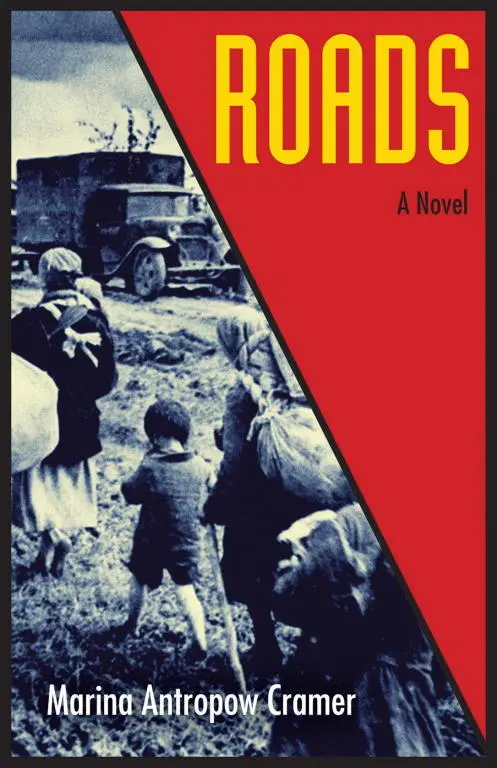
- Название:Roads
- Автор:
- Издательство:Academy Chicago Publishers
- Жанр:
- Год:2017
- Город:Chicago
- ISBN:978-1-61373-558-9
- Рейтинг книги:5 / 5. Голосов: 1
-
Избранное:Добавить в избранное
- Отзывы:
-
Ваша оценка:
Roads: краткое содержание, описание и аннотация
Предлагаем к чтению аннотацию, описание, краткое содержание или предисловие (зависит от того, что написал сам автор книги «Roads»). Если вы не нашли необходимую информацию о книге — напишите в комментариях, мы постараемся отыскать её.
By winter 1945, Allied air raids destroy strategic sites; Dresden, a city of no military consequence, seems safe. The world knows Dresden’s fate.
Roads
Roads — читать онлайн бесплатно полную книгу (весь текст) целиком
Ниже представлен текст книги, разбитый по страницам. Система сохранения места последней прочитанной страницы, позволяет с удобством читать онлайн бесплатно книгу «Roads», без необходимости каждый раз заново искать на чём Вы остановились. Поставьте закладку, и сможете в любой момент перейти на страницу, на которой закончили чтение.
Интервал:
Закладка:
Her question was answered when a train pulled in; passengers thronged the platform, climbing into the empty cars before the wheels had stopped turning, shoving and dragging their children and belongings with them. In the momentary space that opened with this departure, it was possible to see the railroad windows and discern the lines of people queued up for tickets. “Where can we go?” Ksenia asked.
“What difference does it make?” Filip loosened his wife’s grip on his arm, took a small tobacco pouch from his pocket, and rolled himself a cigarette. She missed, or chose not to see, the way his lip curled in disgust. What difference does it make?
“West,” Ilya decided. “Away from the eastern border.” And far from the approaching Red Army, with its threat of forced repatriation, they all understood at once.
Ksenia moved toward a cleared space near the open station doors. “I will stay here with our things. You, Ilya, get in line for tickets. And you two go, look around the city; we have enough time before our permit expires. Try to find something to eat if you can. And don’t forget the curfew.” She piled their cases and bundles together and sat down on the sturdiest one.
It was a good plan. Without their things, the young couple could blend more easily into the crowd, move around the city with less likelihood of being stopped at every turn to have their papers examined. They wandered, looking in shop windows like newlyweds, admiring linens, furniture, glassware. A movie house marquee advertised an Italian comedy; the concert hall promised an early evening chamber music recital.
“Schubert? Who’s Schubert?” Galina wondered.
“An Austrian composer, a little like Beethoven, but less”—Filip struggled for the right word—“forceful. You do know Beethoven, yes? His picture was on the wall of the music room at school.”
“Yes. I never liked him. He looked like a beast.” They spoke softly, lest their language attract unwanted attention.
“Well, speaking of beasts, it’s this way to the zoo.”
The zoo was quiet after the busyness of the street, the hubbub of the train station. A group of German schoolchildren crowded around a matronly guide, only half-listening to her talk about the lives and habits of sea lions. The still-energetic seals were starting to show the effects of war rationing, their otherwise shiny pelts dotted with dull, rusty patches and scabby lesions, which seemed to cause them some discomfort. They slithered about on the wet platform, scratching their necks with paddle flippers, filling the air with comical throaty barking.
Here and there, couples, almost invariably one or both of them in military uniform, strolled along the freshly swept paths, paying only cursory attention to the caged animals. Young mothers in groups of two of three pushed baby carriages; an old woman sat on a bench, scattering bread crumbs to a single peacock and his harem of hens. And everywhere there were refugees, dazed, pathetic-looking people moving mechanically from cage to cage, excited children in tow.
We look like that , Galina thought. No wonder they don’t want us here. She straightened her shoulders, ran her hands down the sides of her thin coat, then took Filip’s arm. “Where are the elephants? I can hear them, can’t you?”
“Filip? Is it you?”
They turned, surprised and alarmed. Who would know them here? Was it wise to respond?
The man before them was young, and only a little older than they. He was almost impossibly handsome, his perfect features set off by smooth black hair swept back from his forehead, showing off high Tatar cheekbones and piercing dark eyes. Galina did not recognize him. A face so beautiful was not easily forgotten.
“Musa,” Filip said. “What the hell are you doing here?”
“Looking at the animals, just like you,” the man smiled, his crooked stained teeth spoiling the overall effect. What a shame , Galina thought. She shot Filip a questioning glance. Did he really know this man? She shivered.
“Let’s walk,” Musa said. “It will be warmer than standing here in the wind. Still collecting?”
“Who has money for stamps?” Filip shook his head. “But I find one from time to time.”
Musa was well dressed, in pressed trousers, good shoes, and a warm jacket, a fur cap in his hand. How had he come to be here? What gave him such a confident, secure air? Should they be talking to him? Was it simple acquaintance, friendship, that motivated his approach? Or was he an agent and, if so, for whom? What did he want?
Galina hung back, not wanting to appear suspicious, yet unsure how to respond to this dazzling young stranger from home. Filip seemed at ease, deep in conversation with Musa. They talked stamps, numbing detail about issues and watermarks, series and values—talk so specialized and mundane that she felt her fears dissipate. She turned her attention to the animals in their small but clean cages.
They walked through the monkey house, warm humid air heavy with a musky blend of fur and fruit, the occupants screeching invective at the passing spectators, pushing small leathery palms through the bars, demanding handouts. In the outdoor exhibits, a pair of black panthers, draped languidly on dead tree limbs near the top of their cage, appeared to be napping, ears flattened, tails gently twitching. There was a lone tiger measuring its confined space with endless pacing; a herd of gazelles, antelopes, and other hoofed creatures whose names Galina didn’t know; a family of giraffes whose small heads and absurd necks made her laugh out loud.
“But where are the elephants?” She interrupted the men, who had moved on to other subjects, something about buildings or bicycles. “I want to see elephants.” She stopped, a brown bear gnawing a large stick in the cage at her back. Musa took her arm and pulled her away just as the bear reared to its full height in a rapid movement that belied its shaggy bulk, baring fearsome tan teeth, waving furry paws the size of a man’s head, claws extended, in their direction. Galina cried out, then covered her mouth, stifling a nervous laugh.
“He must be hungry,” Filip observed, taking her arm and steering her away from the now indifferent bear.
“And so am I. Come have dinner with me,” Musa said. “I insist,” he added, seeing their hesitation. “I have plenty of food. After we see the elephants, of course.” He smiled at Galina. To her own surprise, she smiled back.
The elephants were housed in a spacious cement compound surrounded on three sides by a deep dry moat. “Oh, look, they are chained!” Galina exclaimed. “How awful.” Each creature was tethered to a thick iron post; the chains circling its hind leg had etched a deep groove into the skin.
“The chain is long enough for them to move around. See how they come right up to the edge of the moat? And most of them are born in captivity, so they have never known any other life,” Musa explained in a tone that struck her as patronizing.
Filip, standing aside, hands in his coat pockets, turned to look at his companions. “Can you miss freedom if you have never known it?”
“That, my friend, is one for the philosophers, and I don’t recommend we discuss it here in public.” Musa bent to pluck a handful of dried grass from the frozen soil. “Here,” he said to Galina. “Just stand near the fence and stretch out your arm. They can reach it.”
First one, then all the elephants came to her, even the baby, trotting on its sturdy cylindrical legs, a stiff breeze stirring the wiry tuft of hair on its smooth gray head. She laughed to see them, waving their trunks, stretching across the moat to take the grass from her open palm. Musa and Filip moved along the path, looking for the last of the fallen leaves, brushing aside patches of snow to reveal clumps of grass underneath, plying her with these while she spun this way and that, trying to make sure each animal received at least one handful.
Читать дальшеИнтервал:
Закладка:
Похожие книги на «Roads»
Представляем Вашему вниманию похожие книги на «Roads» списком для выбора. Мы отобрали схожую по названию и смыслу литературу в надежде предоставить читателям больше вариантов отыскать новые, интересные, ещё непрочитанные произведения.








Обсуждение, отзывы о книге «Roads» и просто собственные мнения читателей. Оставьте ваши комментарии, напишите, что Вы думаете о произведении, его смысле или главных героях. Укажите что конкретно понравилось, а что нет, и почему Вы так считаете.