Marina Cramer - Roads
Здесь есть возможность читать онлайн «Marina Cramer - Roads» весь текст электронной книги совершенно бесплатно (целиком полную версию без сокращений). В некоторых случаях можно слушать аудио, скачать через торрент в формате fb2 и присутствует краткое содержание. Город: Chicago, Год выпуска: 2017, ISBN: 2017, Издательство: Academy Chicago Publishers, Жанр: Историческая проза, на английском языке. Описание произведения, (предисловие) а так же отзывы посетителей доступны на портале библиотеки ЛибКат.
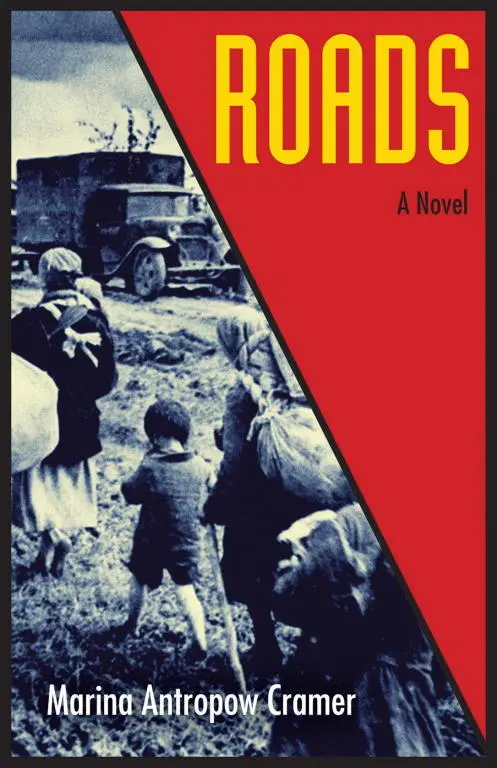
- Название:Roads
- Автор:
- Издательство:Academy Chicago Publishers
- Жанр:
- Год:2017
- Город:Chicago
- ISBN:978-1-61373-558-9
- Рейтинг книги:5 / 5. Голосов: 1
-
Избранное:Добавить в избранное
- Отзывы:
-
Ваша оценка:
Roads: краткое содержание, описание и аннотация
Предлагаем к чтению аннотацию, описание, краткое содержание или предисловие (зависит от того, что написал сам автор книги «Roads»). Если вы не нашли необходимую информацию о книге — напишите в комментариях, мы постараемся отыскать её.
By winter 1945, Allied air raids destroy strategic sites; Dresden, a city of no military consequence, seems safe. The world knows Dresden’s fate.
Roads
Roads — читать онлайн бесплатно полную книгу (весь текст) целиком
Ниже представлен текст книги, разбитый по страницам. Система сохранения места последней прочитанной страницы, позволяет с удобством читать онлайн бесплатно книгу «Roads», без необходимости каждый раз заново искать на чём Вы остановились. Поставьте закладку, и сможете в любой момент перейти на страницу, на которой закончили чтение.
Интервал:
Закладка:
“Why would they?” her father replied. “Here’s a piece of luck—they missed my toolbox.”
That thing is heavy as six bricks , Filip thought. Who would want to lug it around?
“Let’s sleep a little now,” Ksenia suggested. “We can pack up in the morning and decide what to do.”
In the morning, early, they gathered in the camp kitchen. Filip took charge.
“We can’t stay here. This area is too industrial; the Allies are sure to come back to finish the demolition job. As you see, most people are already gone. Berlin is out of the question. Do I have to explain why?”
“It’s the seat of government, a primary target.” Ilya sat back in his chair, arms crossed.
“Right. Frankfurt is a transportation center. Also not a good place to be.”
“Where, then? And why go to a city?” Ksenia, rummaging in the bare pantry, emerged with half a jar of soured milk. “Aha. Breakfast.”
“That’s where the work is. And there are more people; it’s easier to blend in.”
“Maybe Herr Doktor Blau could help us.” Galina held the cup her mother offered, sipped at the bitter stuff with unconcealed distaste.
“Blau? Blau’s long gone. Don’t ask me where. I don’t know.” Filip read the shock on his wife’s face. “I thought you knew.”
She turned pale, then burst into tears. “He was kind. And those sweet little girls…”
“Maybe they’re safe somewhere, with relatives,” Ilya said. But no one believed it.
“Well. So,” Filip resumed, “the place to go is Dresden. They make porcelain and cigarettes. It’s a cultural center, historic but not strategic. Even the Germans say it’s a safe city.”
“How do you know so much?” Galina, still sniffling, dried her eyes on her sleeve.
“I have ears. Germans may bark at us, but they like to talk among themselves.”
“We go north, then, and east.” Ilya rose to look out the window. The last few stragglers were at the gate, hoisting their bundles onto their backs, calling to their children not to fall behind. “It’s as good a plan as any.”
“Yes.” Filip pushed his cup toward Galina. “You drink this. You need it more than I do.”
7
FILIP WAS THE FIRST to reach the bridge.
“You wanted to see the world. There it is.” Galina came up behind him, waved an open hand toward the city rising in stately grandeur on the far bank of the river.
Even the slight hill leading up to the bridge was enough to leave her puffing like a long-distance runner. She carried a bundle of clothes tied in a bed sheet across her back and shoulders, the ends secured in a knot under her breasts. She brought her right hand back to her chest to steady her breathing, while the left rested in its habitual place, on the small but unmistakable mound of her unborn child. Filip found this gesture, this mute confirmation of an experience only women could know, vaguely irritating and even embarrassing.
“To see the world? Yes. But not like this.” He set down his suitcase as if wanting to deny any affiliation with its shabbiness. “Not as a beggar.”
They stood, waiting for the rest of the ragged band of travelers to catch up. The sun, climbing in a cloudless February sky, caught on distant cathedral spires and laid a veneer of warmth onto the aged roughness of the stone parapet over the languidly flowing Elbe below.
After months of trudging through the German countryside, shunted from factory towns to village farms, wearing the degrading OST patch that marked them as conscripted laborers from the East, here was a city. Filip admired how the buildings of more recent construction, their limestone facades still to be tempered by time, fit seamlessly into the orderly design, lining the cobbled streets in harmony with their more weathered neighbors.
The place exuded history and culture. And possibility. Who knew what opportunities lay ahead there for a young man of nearly twenty with a quick wit and an adaptable mind? Even without formal education, he believed he understood how buildings were made. He felt ready to learn how to build an arch, construct a bridge, raise a spire, calculate the proper spacing for a staircase. His heart filled with desire to make something, something beautiful and grand, from wood, stone, iron, glass; something no one had imagined before in quite the same way. I can, I will be an architect. Just give me a chance.
From stamp collecting he had learned attention to detail, which translated readily into an aptitude for record keeping—an aptitude the Nazi camp managers seemed to value out of all proportion. His gift for languages had assured him of at least sporadic interpreter duties, sometimes resulting in extra rations.
And yet, since leaving Yalta, calling on these skills had amounted to nothing more than a kind of maneuvering, a way to evade the mindless degradation of hard labor. So far, it was only a way to stay alive without quite knowing for what purpose. But here, in this glowing city, with its trade schools, its university, its countless offices and ateliers, here a clever man who knew how to keep his eyes open and his mouth shut could find his chance, seize it, and begin to live.
He turned to his wife and was about to speak, then stopped. Was that a hint of mockery he had heard in her remark? There it is. He decided not to share his nascent hopes with her. He would surprise her. He would surprise them all, as soon as something concrete developed that would prove his worth beyond all doubt. “Where are the others?” he asked instead.
“Trading news with some people traveling from another town.”
“And you didn’t wait to hear the news?”
“We’ll hear soon enough. I wanted to be with you.” She said it simply, looking not at him but at the placid river, its path carved out of the land in broad curves, its blue-gray waters mirroring skeletal leafless trees growing along the banks. “I wonder what makes a river flow the way it does, moving this way and that. Is it just rocks and boulders the water can’t move out of the way?”
Filip could not admit that he really did not know. “Taking the path of least resistance,” he guessed. “Like us.”
“Us?” She turned from the landscape to look at him with a quizzical smile.
“Yes. We are alive, and together.”
“That’s just luck, don’t you think? We could have been separated, or died a hundred different ways.”
He lit a cigarette and leaned forward, resting his elbows on the parapet. “Not just luck. It’s knowing how to bend, like this river, when faced with obstacles or pushed around by forces we can’t control.”
“If you’re saying we worked for the enemy, it was only to save our lives, and your child,” Ksenia had come up soundlessly behind them. “But have we ever informed on or knowingly endangered another person? No.”
The trunk they had brought from home had become too cumbersome for foot travel; they had sold it at a country bazaar along the way. A large wood-framed basket now contained their household items: two small pots, a frying pan, cutlery, a few plates, cups, and bowls, and some rudimentary supplies—salt, flour, rice. Ksenia sighed and sat down carefully on its edge, resting her head in her hands.
Filip went cold. He dragged deeply on his cigarette, hoping no one noticed the shudder that made his shoulders shift and fingers shake. Again, he saw the lamppost, Borya’s body rotating slowly in the balmy breeze of a perfect Yalta afternoon, the damning word PARTISAN painted on his shirt, bare feet level with Filip’s eyes. Who would take a dead man’s shoes? he asked himself, outraged anew at the callousness, the disrespect for his young friend’s extinguished life. Anyone. Anyone would. A dead man had no need of shoes.
Читать дальшеИнтервал:
Закладка:
Похожие книги на «Roads»
Представляем Вашему вниманию похожие книги на «Roads» списком для выбора. Мы отобрали схожую по названию и смыслу литературу в надежде предоставить читателям больше вариантов отыскать новые, интересные, ещё непрочитанные произведения.








Обсуждение, отзывы о книге «Roads» и просто собственные мнения читателей. Оставьте ваши комментарии, напишите, что Вы думаете о произведении, его смысле или главных героях. Укажите что конкретно понравилось, а что нет, и почему Вы так считаете.