Marina Cramer - Roads
Здесь есть возможность читать онлайн «Marina Cramer - Roads» весь текст электронной книги совершенно бесплатно (целиком полную версию без сокращений). В некоторых случаях можно слушать аудио, скачать через торрент в формате fb2 и присутствует краткое содержание. Город: Chicago, Год выпуска: 2017, ISBN: 2017, Издательство: Academy Chicago Publishers, Жанр: Историческая проза, на английском языке. Описание произведения, (предисловие) а так же отзывы посетителей доступны на портале библиотеки ЛибКат.
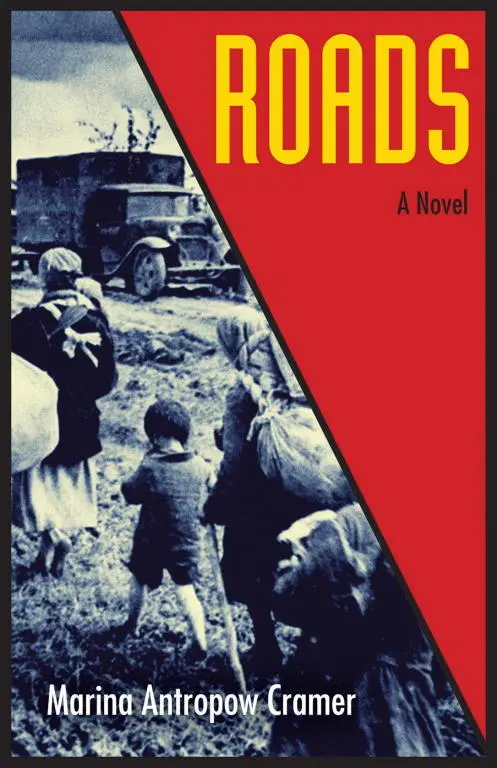
- Название:Roads
- Автор:
- Издательство:Academy Chicago Publishers
- Жанр:
- Год:2017
- Город:Chicago
- ISBN:978-1-61373-558-9
- Рейтинг книги:5 / 5. Голосов: 1
-
Избранное:Добавить в избранное
- Отзывы:
-
Ваша оценка:
Roads: краткое содержание, описание и аннотация
Предлагаем к чтению аннотацию, описание, краткое содержание или предисловие (зависит от того, что написал сам автор книги «Roads»). Если вы не нашли необходимую информацию о книге — напишите в комментариях, мы постараемся отыскать её.
By winter 1945, Allied air raids destroy strategic sites; Dresden, a city of no military consequence, seems safe. The world knows Dresden’s fate.
Roads
Roads — читать онлайн бесплатно полную книгу (весь текст) целиком
Ниже представлен текст книги, разбитый по страницам. Система сохранения места последней прочитанной страницы, позволяет с удобством читать онлайн бесплатно книгу «Roads», без необходимости каждый раз заново искать на чём Вы остановились. Поставьте закладку, и сможете в любой момент перейти на страницу, на которой закончили чтение.
Интервал:
Закладка:
Galina remembered the clumsy fumbling of their early married nights, Filip awkward and self-conscious, angry with himself for not knowing quite what to do; she waiting, equally unschooled in the art of intimacy. Now, they grew adept at the love act (there were other words for it, she was sure, but in her innocence, she did not know them), with a furtive haste that reduced it to little more than coupling, leaving her wondering while Filip slept. What happened between them, was it love? She wanted to ask her mother, How do we get to where you are, you and Papa? That place of harmony and understanding, one being with two hearts? But she could not.
Once, not so long ago, her husband had looked at her with admiration. What was there to admire now? Since losing her job with Herr Doktor Blau, she had grown thinner, her hair dull as straw, her face pale and mottled, her hands roughened by kitchen work. He, Filip, had bloomed on leaving the factory labor force; his work, while unpredictable in its demands, was far less taxing. He did not suffer the mindless exhaustion that, for her and so many others, marked the end of every working day.
And now, as May’s last coolness gave way to the bright days of June, and even in this gray, depressing place some grass grew here and there in defiant clumps and violets appeared, followed by buttercups, and birds sang—now she was sick. “Mama, I can’t eat this,” she pushed her portion of greasy soup away. “You take it. I’ll only throw it up.”
Ksenia looked at her daughter as if seeing her bony body and sunken cheeks for the first time. “You’re pregnant,” she finally said. “Lord have mercy.”
Summer changed to autumn. The bombing raids intensified. The factory continued to operate around the clock, blackout curtains over every window giving it a funereal aspect. It was, the men said, like working in hell, or some infernal tomb.
There was no way to conceal the smokestacks, to hide the sooty plume that hung perpetually overhead, sparks swirling into the night like ominous fireflies. As 1944 drew to a close, October was marked with frequent raids; November brought an onslaught so intense that even at the camp, several kilometers away, the ground quaked, walls shook, the air screamed and whistled with each explosive contact.
“Why don’t they stop?” Galina’s voice dissolved into a whine, her hands over her ears. “Don’t they know we’re not the enemy?”
Filip stared at her. How could anyone be so naive? She had never before been so prone to hysteria, so perpetually close to tears. It must be the child , he decided. My child. “We don’t matter. To anyone.” He lit a cigarette and sat, elbows on knees, to smoke it.
In the morning, the factory was gone. Several trucks were salvaged, and those people who were nearest the doors escaped outside, running for their lives as tons of stone, iron, and timber collapsed in a vast cloud of smoke and ash. Those inside, workers and guards alike, perished, their bodies crushed by falling slabs or incinerated beyond recognition in the ensuing fire.
The runners, too, were far from safe. Bombs rained randomly from the sky for another twenty minutes, until the planes swooped in a wide arc and disappeared into the night, leaving few survivors on the ground.
At the camp, no one knew why they had been spared. For hours after the attack, fires burned all around, lighting up the sky and obscuring a timid dawn. At the command house, there was a frenzy of activity. Telephone lines were down, telegraph communication intermittent. Confusion reigned until the highest-ranking surviving officer ordered all remaining inmates to the scene for rescue and salvage operations.
It was too soon. The rubble was still too hot to touch; dislodging any stone was likely to reignite the embers, causing new fires to spring up, fanned by the frosty air. More than once, moving a cooled piece made a fresh avalanche of debris descend on the would-be rescuers.
They worked for hours, shifting what could be moved, sorting what could be salvaged, all very much aware of the ultimate futility of the work. “They’re waiting for orders,” Filip clarified, helping a dozen or so men move a pile of rocks from one spot to another just like it. “They do nothing without orders.”
By midafternoon, the orders came. The captain read the dispatch, conferred briefly with his staff, and turned to the expectant workers. He looked a moment at the blackened faces streaked with runnels of limestone dust, the impassive eyes like beacons in the smoke.
“ Halt ,” he said, climbing onto a pile of charred timbers, his expression inscrutable. “Stop and listen. This Arbeitslager has been closed. You may return to gather your things. Everyone is to be gone by morning.”
Gone? Gone where? The question buzzed through the crowd, the workers looking first to each other, then back at the German, who suddenly seemed smaller to them, less self-assured. Something that might have passed for compassion flickered in his eyes and disappeared.
“You all have work papers. Go where you want.” He jumped to the ground and turned to Filip. “You, interpreter. You ride with us.” He moved off in the direction of the waiting jeep.
Filip followed, pulling Galina by the hand. “Thank you, Herr Kommandant. But my wife, she is—”
“ Ja , ja . I see. All right, then, but no one else.”
But Galina broke away, refusing to ride while her parents walked.
They set off, a pathetic-looking crowd, filthy, hungry, thirsty, disheveled, confused. All knew they would not reach the camp before dark, and to have food, any food waiting for them was a miracle none expected to happen. They followed the dust of the retreating jeep until it disappeared around a bend in the road. Rounding the bend, they saw a man in the road, shoulders hunched, hands in his pockets, waiting.
No word was spoken. When they reached him Galina took her husband’s arm, keeping her head down to conceal her tears. She had not meant to shame him, but was gratified to see that he, too, could not ride while the others walked.
As the trek wore on, the crowd spread out along the road, afraid at first to leave its relative safety for the unknown perils of scorched fields and denuded woods. Some stopped to rest; others, weighing the value of their paltry belongings against the chance to get an early start on their liberty, cut away, vanishing into pine thickets or turning onto roads leading who knows where.
The rest, walking as in a trance, watched the country come into view like images projected by a magic lantern onto a dusky sky: a village, people moving in blurry silhouette against still-burning buildings; a family sitting in a barren field, surrounded by scattered possessions including, inexplicably, a bed; a tractor, its rear wheels buried under a fallen tree, the smoldering engine gasping its last puffs of fumes. The desolate, eerie silence was broken by the sudden crash of a collapsing roof, or the mournful lowing of an abandoned cow. Now and then, a dog howled. Once, Filip was sure he heard the plaintive notes of a harmonica. He raised his head to listen, but the sound was gone; only a chill wind remained, carrying a prickling of early snow.
The family reached the camp well after midnight, among the last ones to arrive. Ilya’s cough had worsened, aggravated by smoke and exertion. Time and again, they had stood with him while he struggled to regain his breath, unable to offer him help or comfort. Predictably, the barracks had been ransacked. In their haste, it seemed, the thieves had left—or overlooked—most of the things Ilya, Ksenia, Filip, and Galina cared about.
Galina examined the scattered contents of her suitcase. “They took my extra shoes and my green dress. But they didn’t take our pictures.”
Читать дальшеИнтервал:
Закладка:
Похожие книги на «Roads»
Представляем Вашему вниманию похожие книги на «Roads» списком для выбора. Мы отобрали схожую по названию и смыслу литературу в надежде предоставить читателям больше вариантов отыскать новые, интересные, ещё непрочитанные произведения.







Обсуждение, отзывы о книге «Roads» и просто собственные мнения читателей. Оставьте ваши комментарии, напишите, что Вы думаете о произведении, его смысле или главных героях. Укажите что конкретно понравилось, а что нет, и почему Вы так считаете.