Marina Cramer - Roads
Здесь есть возможность читать онлайн «Marina Cramer - Roads» весь текст электронной книги совершенно бесплатно (целиком полную версию без сокращений). В некоторых случаях можно слушать аудио, скачать через торрент в формате fb2 и присутствует краткое содержание. Город: Chicago, Год выпуска: 2017, ISBN: 2017, Издательство: Academy Chicago Publishers, Жанр: Историческая проза, на английском языке. Описание произведения, (предисловие) а так же отзывы посетителей доступны на портале библиотеки ЛибКат.
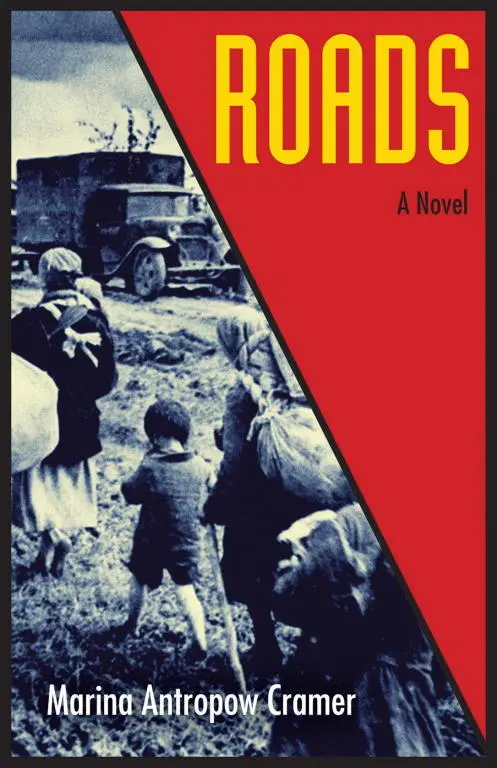
- Название:Roads
- Автор:
- Издательство:Academy Chicago Publishers
- Жанр:
- Год:2017
- Город:Chicago
- ISBN:978-1-61373-558-9
- Рейтинг книги:5 / 5. Голосов: 1
-
Избранное:Добавить в избранное
- Отзывы:
-
Ваша оценка:
Roads: краткое содержание, описание и аннотация
Предлагаем к чтению аннотацию, описание, краткое содержание или предисловие (зависит от того, что написал сам автор книги «Roads»). Если вы не нашли необходимую информацию о книге — напишите в комментариях, мы постараемся отыскать её.
By winter 1945, Allied air raids destroy strategic sites; Dresden, a city of no military consequence, seems safe. The world knows Dresden’s fate.
Roads
Roads — читать онлайн бесплатно полную книгу (весь текст) целиком
Ниже представлен текст книги, разбитый по страницам. Система сохранения места последней прочитанной страницы, позволяет с удобством читать онлайн бесплатно книгу «Roads», без необходимости каждый раз заново искать на чём Вы остановились. Поставьте закладку, и сможете в любой момент перейти на страницу, на которой закончили чтение.
Интервал:
Закладка:
What was it Maksim had said? Cold and wet. You’d tire of it in a week. The words rang clearly in her head, as if her brother had just spoken them. She could hear the disdain in his voice, see his hand pushing his glasses up the bridge of his nose. Rest in peace , she thought. But you were wrong. Who could tire of such beauty?
“Step back,” a gruff voice commanded. The door slammed shut, a heavy bolt thudded into place. Galina closed her eyes to the murk, the ceaseless sighing and swaying of the human cargo, holding the image of pristine whiteness against her eyelids, until, still standing, she fell asleep.
A convoy of open trucks took them from the station to the outskirts of Munich, speeding through the city at sunrise. Filip admired the architecture, shocked by the signs of wanton destruction; he spotted the towering steeple of a Baroque church, a flock of birds rising through the gaping hole in its roof, the surrounding area reduced to rubble.
In the side streets, he glimpsed narrow passageways lined with squat two-story houses, small windows and painted doors, every roof covered with red tiles, wisps of translucent chimney smoke hinting at breakfast. Even with so much damage caused by enemy bombing, it was a medieval fairy-tale city, and he wished he could step in, even for a little while, and sample its daily routines, mingle with its residents. “Why are we at war with these people? What do we want from each other?” He said it under his breath, but Ilya, standing at his side, heard.
“If I were a younger man, I would be fighting them. But my lungs—” he stopped, his chest heaving in painful spasms of dry coughing.
“Don’t let them hear you,” Ksenia cautioned.
“What? Saying I would defend my home? There’s no shame in that.”
“No. Don’t let them hear you cough.”
“It’s only the cold air.” Ilya waved a dismissive hand.
They all knew it wasn’t the cold air, that he had defended his country as a younger man, in the Great War, against this very enemy, that he’d soldiered through clouds of mustard gas that left him, along with thousands of other survivors, permanently, incurably impaired. “At least, you should not smoke,” Ksenia persisted.
“ Ai , Mama. Would you deny me every joy?”
Leaving the city behind, they watched the Bavarian countryside roll out: a cluster of painted cottages here, followed by a pine thicket, the cantilevered branches dusted with early snow. Then fields, farmhouses of stone and timber, barns, outbuildings. There was less bomb damage here; perhaps the area had fewer strategic targets.
They sped past an old man in a green cap leading an old horse pulling an even older wagon, saw him move to the side of the road to let the trucks pass. In the distance, stooped figures of women dotted the fields, digging the last of the year’s potatoes. Will there be enough farm work for us , Ksenia wondered, with winter coming?
By afternoon, they had reached the work camp, its boundaries marked out with double rows of barbed wire enclosing some newly built barracks and several previously existing structures. Processing was rapid, methodical.
“We have letters, from your Lieutenant Berg, in Yalta,” Ksenia held the documents out to the officer at the table. “For farm work. We volunteered.”
“ Ja , klar .” He glanced at the pages, dropped them onto a stack at his elbow. “Of course.”
They were permitted to stay together, assigned, along with nine other families, to a low building that had once been a beer hall. The darkly paneled walls and wood floor still held a smoky, yeasty, not unpleasant aroma, though all counters and furnishings had been stripped out.
“Each family will stay in its own space,” the escorting corporal decreed, pointing to a grid of white lines painted on the floor. Clotheslines above the lines crisscrossed the room from wall to wall. “No cooking. Lights out at ten. Up at six. Sharp.”
“Are we to sleep on these?” Galina toed a stack of burlap-covered straw mattresses in the family’s allotted space, some stained blankets folded on top.
“As you see,” Ksenia said. “Help me with these blankets. It’s good we have a corner space.”
They draped the blankets on the clothesline, giving their “room” a semblance of privacy. Others were doing the same, talking in low voices among themselves. Children ran around the hall, weaving in and out of every grouping as if laying out the rules of a new game.
Supper, dispensed outside the kitchen door, was thin cabbage soup and a slice of grainy bread. For breakfast, the same bread, harder now, only made edible by soaking in bitter acorn “coffee” muddied with a bit of milk.
An open-bed truck took them and another thirty or so people, then, to an industrial area several kilometers away. The sun hung dully in a leaden sky that promised more snow.
“ Heraus , alle ,” the guard commanded when the truck stopped in front of a large factory. “ Schnell . Everybody out.” It was a four-story rectangular building, not unlike a latter-day castle, with what looked like rounded grain silos at each corner for turrets and many tall, narrow windows cut into thick stone walls.
“What do they make here?” Filip asked the truck driver, who looked barely old enough to drive.
“ Zement ,” the boy replied. He jumped into the cab and slammed the door. “Cement.”
4
“SLOW DOWN.” THE MAN at Filip’s side plunged his shovel into the bin but came up with only half as much coal as it could hold.
“What?” Filip paused to wipe his face with his sleeve, then started in again, his shovel fully loaded, moving twice as fast as his wiry neighbor.
“Slow down. Po malu ,” the other said again after the overseer went by. “Unless you’re eager to help the Fascists build more bunkers.”
It didn’t take Filip long to cultivate the illusion of working hard while producing little in the way of results; he quickly learned how to put his back into each shovel thrust but pitch fewer and fewer coals into the blazing furnace. Hadn’t his father often chided him for laziness? Now, this natural inclination served him well.
It was a dangerous game. If the factory fell short of production quotas, if it failed to deliver the required amount of cement on time, everyone suffered the consequences. Shorter rations, longer hours, tighter, more vigilant supervision, and, of course, no end of verbal abuse seasoned with the occasional beating.
The violence was almost entirely arbitrary. Anyone, at any time, could feel the crack of a baton against his head or back; shoving and kicking were so commonplace as to be barely noticed, by workers and guards alike. Whether the misdeeds were real or imagined made no difference.
Some misdeeds, like the bucketful of steel shavings and rusted nails that found its way, bucket and all, into the stone crusher, were real enough. The sabotage went unnoticed until the metal, melted by the kiln’s intense heat, fouled the morning’s batch, requiring cooling down and thorough scrubbing of the machinery before work could resume. The entire workforce endured two days without food, then half rations for another week, while working sixteen-hour shifts with no days off for a month.
“We can survive this,” the men said with grim satisfaction to one another. “But, damn, it feels good to slow them down, even a little.”
Filip had gone to the infirmary with a high fever the day the guards took their revenge. He returned to work an hour later, dosed with aspirin, to find Savko, a young Macedonian, dead on the floor.
He started to ask, but read the warning in the other men’s eyes, each going about his task with unaccustomed efficiency, stepping around the body with care. The guard shoved Filip’s shoulder with the flat of his hand. “Take his boots off. Then get back to work. Your sick day is over.”
Читать дальшеИнтервал:
Закладка:
Похожие книги на «Roads»
Представляем Вашему вниманию похожие книги на «Roads» списком для выбора. Мы отобрали схожую по названию и смыслу литературу в надежде предоставить читателям больше вариантов отыскать новые, интересные, ещё непрочитанные произведения.







Обсуждение, отзывы о книге «Roads» и просто собственные мнения читателей. Оставьте ваши комментарии, напишите, что Вы думаете о произведении, его смысле или главных героях. Укажите что конкретно понравилось, а что нет, и почему Вы так считаете.