Marina Cramer - Roads
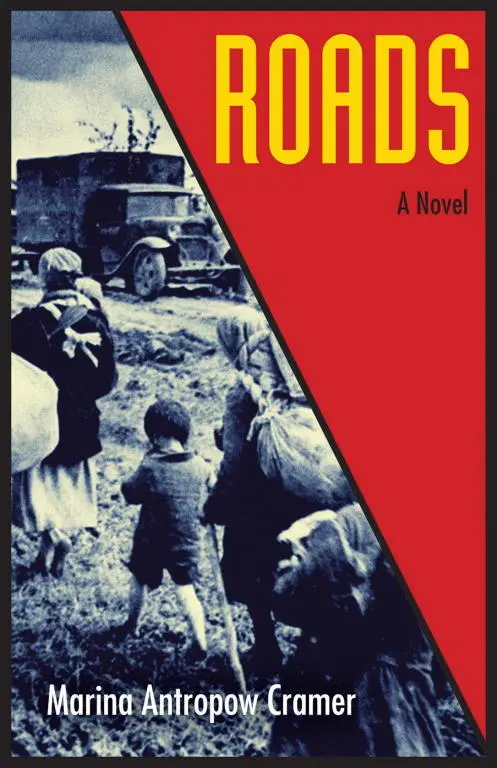
Здесь есть возможность читать онлайн «Marina Cramer - Roads» весь текст электронной книги совершенно бесплатно (целиком полную версию без сокращений). В некоторых случаях можно слушать аудио, скачать через торрент в формате fb2 и присутствует краткое содержание. Город: Chicago, Год выпуска: 2017, ISBN: 2017, Издательство: Academy Chicago Publishers, Жанр: Историческая проза, на английском языке. Описание произведения, (предисловие) а так же отзывы посетителей доступны на портале библиотеки ЛибКат.
- Название:Roads
- Автор:
- Издательство:Academy Chicago Publishers
- Жанр:
- Год:2017
- Город:Chicago
- ISBN:978-1-61373-558-9
- Рейтинг книги:5 / 5. Голосов: 1
-
Избранное:Добавить в избранное
- Отзывы:
-
Ваша оценка:
Roads: краткое содержание, описание и аннотация
Предлагаем к чтению аннотацию, описание, краткое содержание или предисловие (зависит от того, что написал сам автор книги «Roads»). Если вы не нашли необходимую информацию о книге — напишите в комментариях, мы постараемся отыскать её.
By winter 1945, Allied air raids destroy strategic sites; Dresden, a city of no military consequence, seems safe. The world knows Dresden’s fate.
Roads
Roads — читать онлайн бесплатно полную книгу (весь текст) целиком
Ниже представлен текст книги, разбитый по страницам. Система сохранения места последней прочитанной страницы, позволяет с удобством читать онлайн бесплатно книгу «Roads», без необходимости каждый раз заново искать на чём Вы остановились. Поставьте закладку, и сможете в любой момент перейти на страницу, на которой закончили чтение.
Интервал:
Закладка:
Zoya looked up, struck by the anguish in her son’s voice. She was not used to being so formally addressed, as if they were characters in an ancient Russian folk tale, in which the wise elders always had the answers. Filip slumped in his chair, unseeing eyes fixed on the book open on the table in front of him.
“What is it, son? You’ve become so gloomy. Has something happened?”
Yes , he wanted to say. Yes. My best friend was hanged for defending his country, and I do nothing. Day after day, I do nothing, wondering if his death was my fault. Had he ever held anything back from his mother, anything important? He didn’t think so. But he knew she would find a way to bring God or the Virgin Mary into it, might try to persuade him to pray. That, to his mind, was no solution at all. He couldn’t tell her.
“I’ve heard that young married men are to be taken to Germany now, with or without their wives. So no one will be exempt except small children and old people. The university exam has been postponed.”
“Is there no work for you here?” Zoya’s hands moved smoothly, her crochet hook darting in and out of the delicate piece taking shape under her fingers.
He had tried to find work, if only halfheartedly. And what, really, could he do? He thought the library might hire him, but in the end that opening went to someone older, with some experience. “No.”
They sat silent for a while, she at her needlework, he turning pages without reading them.
“Ksenia Semyonovna—I can’t call her ‘Mama’—has proposed we go sign up for Germany. She says those who go voluntarily get better placements and are allowed to stay together.” He spoke without looking at her.
Zoya glanced at her son, put her work down in her lap. “I have heard that, yes.”
“You know my father-in-law was detained by the city police. Something about his travel permit. It turned out they were looking for someone else, a different Ilya—Ilya Zorin. Mistaken identity. So they let him go.” He took a deep breath, held it a moment before exhaling, remembering the fear that had gripped the household; Ilya’s release had only increased the sense of imminent danger. “We all know they didn’t have to. They could have locked him up whether he was the right man or not.”
“I know,” Zoya said calmly. “Your father put a word in for him.”
Filip stared at her, stunned. How much more was there he did not know? He was not a child. Yet it seemed he had no grasp at all of the ominous things going on around him every day. He felt adrift, incompetent. Maksim had died, sacrificed, however unwittingly, to the Soviet cause. Borya’s execution was another casualty of the same struggle. Why did he, Filip, not feel part of that struggle? Where did he belong? If anything, the catastrophic events that brushed against his life filled him with ambivalence, a debilitating malaise that left him powerless to act.
Who was the enemy? It seemed clear enough that the invading forces of a foreign nation should be expelled at any cost, and yet… He remembered his father—was it just a few years ago?—a postal inspector with a fresh Communist Party card, refusing to talk at home about his work, even as his mother grew more secretive about her religious outings. This was in peacetime, he himself aglow in his Young Pioneer membership, until even he recoiled at the increasing pressure to tell on the activities within his home and neighborhood. Why was Stalin so afraid, the fear cascading in paranoid ripples through every aspect of everyone’s life? It was far safer to take refuge in chess and stamps and music when the nation’s leader was at war with his own people.
And now the Germans, like it or not, had brought a certain sense of order, along with their tanks and troops. There was a clarity in dealing with them. You overstepped, you died. But still, there were some rules. Or so it seemed. What he didn’t know was whether their promises could be trusted, what, exactly, they meant by “better placement.”
“Mama, I don’t know what to do.”
Zoya sighed deeply. “Your in-laws have decided on this desperate plan because Ilya Nikolaevich is being watched. His travels, his dealings with the Germans, however innocent they may be, do not sit well with the police.” She picked up her crochet hook but did not resume her work. “And they are doing it for you. You are young, neither a student nor a worker; the Germans will surely take you for forced labor, if not this week or the next, then soon. By volunteering as a family, things may go better for you.” She paused and looked at him, her gaze strong and kind. “And you must stay with your wife, son. It is your obligation, as a Christian and as a decent man.”
“I may never see you and Papa again.” He didn’t need to add, If we go with the Germans, there’s no way back. They both knew that well enough.
She put the hook down, letting the work slide off her knees and onto the floor, and took both his hands in hers. “It will be as God wills,” she said. “I will pray for you every day.”
For once, he felt no irritation at words that would have struck him as sanctimonious at any other time. The coolness of her fingers tempered the heat in his own hands, calming his mind a little but doing nothing to dispel his sadness.
They stayed together until the evening shadows began to fill the corners of the room. Filip paced, then threw himself into a chair, only to rise and stare out the window at the street below. Zoya wept from time to time, making no effort to conceal her silent tears.
When Vadim’s key turned in the lock, neither one had heard his footsteps on the landing. “Why do you sit here in the dark?” He strode across the room, illuminating its familiar objects with lamplight: this polished table, that sofa with its brown plaid blanket laid across the back. The chair by the window, the black fringed flowered shawl draped carelessly over the armrest, the glass-globed lamp, the cups and plates in rows on shelves, the copper samovar, the sepia wedding portrait on the wall.
“Papa,” Filip said, rising. “Oh, Papa.”
2
HOW DO YOU PACK to leave your home?
Transport regulations allowed them one suitcase each and a small trunk for household items—cooking pots, dishes, bedding. Ksenia watched Galina fold her few dresses, underclothes, and nightshirt, tucking an extra pair of shoes in the corner and a light sweater on top.
“There,” Galina said. “And I still have room for all the family pictures.”There were not so very many, but each picture was a treasure. Ksenia as a small child, with a soup-bowl haircut and a lacy old-fashioned smock; Ilya with his mother and sister, whom Galina barely knew; Ksenia unsmiling, but with the sparkle of youth and optimism in her adolescent eyes. Ksenia and Ilya’s grave postrevolutionary wedding portrait, both gazing at the camera with a look of serious purpose.
And here was Maksim, first a sandy-haired toddler holding a bunch of droopy daisies, then a schoolboy, and finally, a university student, his open face a study of eagerness and hope. Galina remembered that session, Maksim impatient, his bags packed, ready to leave for the train station right from the photo studio, Ksenia trying to suppress her anxiety but letting the pride shine through tear-filled eyes while Galina and Ilya hovered in the background like the supporting players they were.
She packed the pictures of herself last, laying each one with care into the folio lined with tissue paper. Here, she is a baby, seated on a white cotton coverlet, wearing a knitted dress and a halo of fine wispy hair. This one, a school picture: dark dress, lace collar, holding a book. And her favorite: she a gawky nine-year-old standing next to her seated father. He is wearing his white summer trousers, his arm draped casually along the back of the bench, his head thrown back, a hint of a smile lighting up his face. She lingered over that one. Will I ever be so happy again? So sheltered, so contented, so loved?
Читать дальшеИнтервал:
Закладка:
Похожие книги на «Roads»
Представляем Вашему вниманию похожие книги на «Roads» списком для выбора. Мы отобрали схожую по названию и смыслу литературу в надежде предоставить читателям больше вариантов отыскать новые, интересные, ещё непрочитанные произведения.









Обсуждение, отзывы о книге «Roads» и просто собственные мнения читателей. Оставьте ваши комментарии, напишите, что Вы думаете о произведении, его смысле или главных героях. Укажите что конкретно понравилось, а что нет, и почему Вы так считаете.