Marina Cramer - Roads
Здесь есть возможность читать онлайн «Marina Cramer - Roads» весь текст электронной книги совершенно бесплатно (целиком полную версию без сокращений). В некоторых случаях можно слушать аудио, скачать через торрент в формате fb2 и присутствует краткое содержание. Город: Chicago, Год выпуска: 2017, ISBN: 2017, Издательство: Academy Chicago Publishers, Жанр: Историческая проза, на английском языке. Описание произведения, (предисловие) а так же отзывы посетителей доступны на портале библиотеки ЛибКат.
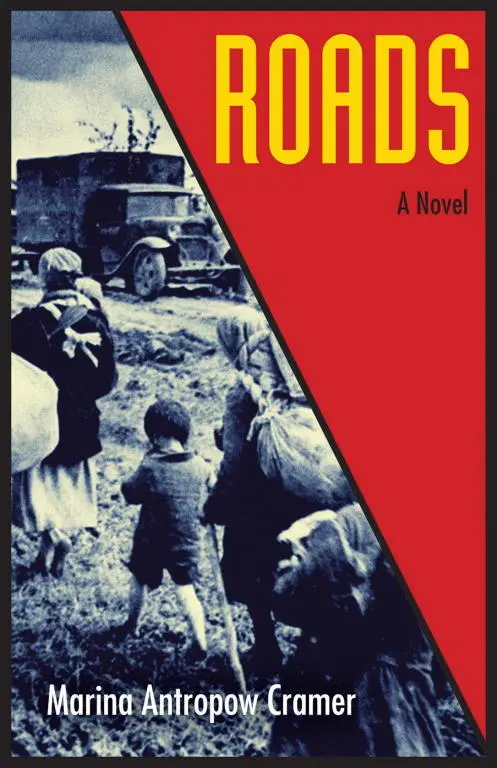
- Название:Roads
- Автор:
- Издательство:Academy Chicago Publishers
- Жанр:
- Год:2017
- Город:Chicago
- ISBN:978-1-61373-558-9
- Рейтинг книги:5 / 5. Голосов: 1
-
Избранное:Добавить в избранное
- Отзывы:
-
Ваша оценка:
Roads: краткое содержание, описание и аннотация
Предлагаем к чтению аннотацию, описание, краткое содержание или предисловие (зависит от того, что написал сам автор книги «Roads»). Если вы не нашли необходимую информацию о книге — напишите в комментариях, мы постараемся отыскать её.
By winter 1945, Allied air raids destroy strategic sites; Dresden, a city of no military consequence, seems safe. The world knows Dresden’s fate.
Roads
Roads — читать онлайн бесплатно полную книгу (весь текст) целиком
Ниже представлен текст книги, разбитый по страницам. Система сохранения места последней прочитанной страницы, позволяет с удобством читать онлайн бесплатно книгу «Roads», без необходимости каждый раз заново искать на чём Вы остановились. Поставьте закладку, и сможете в любой момент перейти на страницу, на которой закончили чтение.
Интервал:
Закладка:
I am a doctor , he thought, or nearly. I cannot be an instrument of death. So he had traded them his boots and socks, taking moldy bread, cold salted fish, and a handful of foul tobacco mixed with sawdust in exchange. How to describe the feeling of desolation and, yes, fear, when the Partisans moved off during the night, so quietly he never heard a twig snap, leaving him alone in a forest where even the predawn singing of birds had an ominous coded quality. They could have, should have, killed him, to guard against betrayal of their names and whereabouts. He would never know why they had not. He had picked up his pitiful bundle and made his way home, relying on compassionate acts of strangers for his survival.
“Hey, friend,” Filip tapped him on the shoulder. Maksim recoiled as if stung. “Why so jumpy? You know chess, yes? Could you move some pieces? You don’t have to play seriously if you don’t want to. It’s so damn hard to work out these moves alone.”
“I know how to move the pieces. But no one calls me friend.” He half-turned on the bench, studied the board a moment, and advanced a black pawn.
Filip consulted his book, jotted something in his notebook. After some deliberation, he moved his knight into position, preparing to threaten the black queen in the next move. Maksim advanced another pawn and lost the queen.
They went on like this for another quarter hour, Maksim playing a quick, desultory game, Filip agonizing over every decision, chin in hand, pencil at the ready. “Ah, I understand!” he muttered. “It’s all about the bishop, you see?”
Maksim stood, jarring the board, sending black and white pieces into an irretrievable jumble. “This is a waste of time,” he announced, and retreated into the house.
“And what you do is not?” Filip flared up, unable to stop the words. I tried, Galya , he thought. I tried. Who does he think he is?
Soon after the chess incident, Maksim took to his bed, refusing nearly all food. Ksenia, too, ate less and less, as if in solidarity with her son’s suffering. She moved silently about the house, wiping at invisible dust, straightening pristine coverlets, obsessively polishing her spotless stovetop. Some days, she sat at his bedside while he slept, interlacing the fingers of her large, restless hands, studying the ethereal beauty of his gaunt features, taking some small comfort in the regularity of his breathing.
She had not watched him sleep since he was a very small boy, a toddler in short pants. They had lived in the country then, in a little house of their own, with a kitchen garden, a few chickens and a goat in back, a fig tree at the front gate. He had slept with innocent abandon after a day of playing outside, his tousled hair smelling of sweat and earth and sunshine. As a young mother, she had inhaled this sweet, slightly rancid aroma with wonder and delight, marveling at the way this child’s arrival had changed her status in the world. When the revolution finally reached them and everything changed, she and Ilya had their hands full just staying together and alive in a country they no longer recognized. No time then to indulge in the luxury of watching a child sleep.
She took the time now, whenever she could, her thoughts moving like summer wind over ripe grain, this way and that, stirring up memories. Once when he awoke she pleaded, “Tell me. I have lived through revolution, witnessed the execution of my father. When you were small, we suffered through the years of civil war and the horror of famine. I know these things, in my own mind and body; I will not forget them. But we survived all that; we are alive. We must have hope.” She paused, placing her hand over his brittle fingers. “Share your sorrow with me. Your silence is breaking my heart.”
“Tell you?” Maksim took his hand away, raising himself on his elbow. “Mama, what should I tell you? Shall I describe the mayhem of life at the front, the chaos of conflicting orders or breakdown of communication, the paralyzing fear of making a fatal mistake? Or would you like to hear about the swift, questionable justice of field executions, to stop the wave of desertion, neither the runners nor the shooters knowing what is right or wrong?” He took a sip of water from the glass Ksenia held out for him, and fell back heavily on his pillow.
“How can I tell you what it is like to be a medic with no supplies, no blankets, no safe or sanitary place to even try to save a life? I cannot make you hear the voices in my head, grown men crying for their mothers, boys who should be dancing with their sweethearts caught in the agony of slow, relentless death.”
Ksenia closed her eyes but could not stop the tears. “We can pray,” she said. “God will—”
“God will what? Erase the memory of mud, excrement, and blood, a stench for which there is no word? It permeates your clothing, your hair, clings to your skin; you eat it with your daily kasha and moldy bread, drink it with your foul water, breathe it in what passes for sleep. Is this the God we should pray to? The one who watches and allows such beastliness?” Maksim turned his face to the wall.
Ksenia wept. For the wasted lives, the needless stupid sacrifice, the crazed suffering from which there was no return to ordinary humanity. For the damaged, the broken, the shattered, the vanished. For the son she was losing, the son she had already, she knew, lost.
He lingered a few more days. One morning Galina sat with him, holding a cup of hot rice broth she knew he would not drink. Their parents were out; Filip was with his mother.
“Look.” Maksim sat up abruptly. He pointed at the tapestry on the opposite wall. “There, do you see? There is a figure in that bush, a man, crouching. I never noticed it before.”
“What man? Which bush?” Galina got up to examine the familiar woodland scene. “This one? I see nothing there.”
“Yes, yes, you have your finger on it. But is he watching or hiding? I don’t know.” He sank back down on his cot, then turned to his sister, his eyes clear and bright. “I was hallucinating. It’s the end,” he said softly, as if some lucid corner of his brain remembered the sure signs of imminent death—the surge of energy, the visions, the momentary sharpened awareness.
“What? No,” Galina said. “You’re not hallucinating. There’s just nothing there.”
But he was no longer listening. His eyes dulled. His breath came quick and ragged, then stopped and resumed, knocking against his chest and throat like a trapped creature, and was still. “Death rattle,” she said aloud to the empty room. “Gone.”
Galina sat down carefully on the edge of the bedside chair. She sat a long time through the gathering dusk, still holding the cup, while evening fell all around her with crushing emptiness and the broth cooled in her hands.
PART IV
Germany
A New Life
1
“WHAT DO YOU DO with these doilies?” Filip stroked the latest addition Zoya had placed in her basket, this one with lacy scalloped edges and an intricate pineapple design.
She hesitated, colored slightly. “I sell them,” she finally replied. “Or trade them for things we need.”
“At the bazaar?” He couldn’t imagine his demure, diminutive mother among the aggressive sellers hawking whatever goods they had in a cacophony of voices to rival the squawking of seagulls competing for a dead fish.
“No. No one would notice me there,” she confirmed. “I just choose a street corner. Late afternoon and early evening seem to be the best times. People buy. I don’t know why, but I’m grateful.”
“Because your work is beautiful.” He smoothed the piece, aligning the edges with the ones underneath. “Mother, what shall I do?”
Читать дальшеИнтервал:
Закладка:
Похожие книги на «Roads»
Представляем Вашему вниманию похожие книги на «Roads» списком для выбора. Мы отобрали схожую по названию и смыслу литературу в надежде предоставить читателям больше вариантов отыскать новые, интересные, ещё непрочитанные произведения.











Обсуждение, отзывы о книге «Roads» и просто собственные мнения читателей. Оставьте ваши комментарии, напишите, что Вы думаете о произведении, его смысле или главных героях. Укажите что конкретно понравилось, а что нет, и почему Вы так считаете.