Marina Cramer - Roads
Здесь есть возможность читать онлайн «Marina Cramer - Roads» весь текст электронной книги совершенно бесплатно (целиком полную версию без сокращений). В некоторых случаях можно слушать аудио, скачать через торрент в формате fb2 и присутствует краткое содержание. Город: Chicago, Год выпуска: 2017, ISBN: 2017, Издательство: Academy Chicago Publishers, Жанр: Историческая проза, на английском языке. Описание произведения, (предисловие) а так же отзывы посетителей доступны на портале библиотеки ЛибКат.
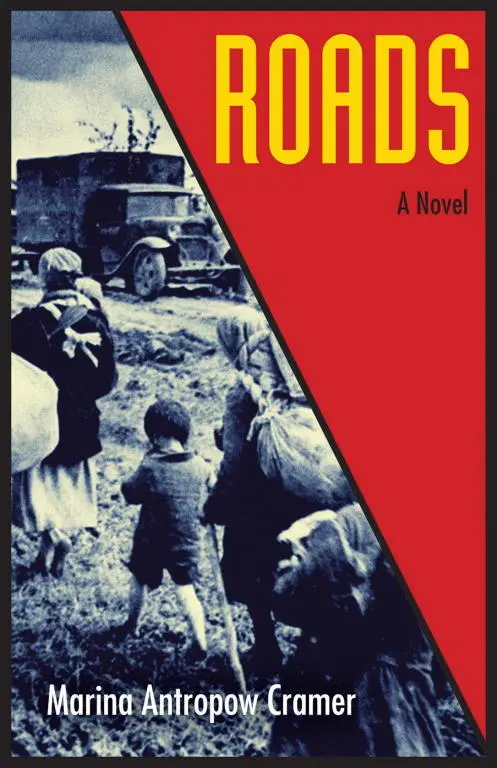
- Название:Roads
- Автор:
- Издательство:Academy Chicago Publishers
- Жанр:
- Год:2017
- Город:Chicago
- ISBN:978-1-61373-558-9
- Рейтинг книги:5 / 5. Голосов: 1
-
Избранное:Добавить в избранное
- Отзывы:
-
Ваша оценка:
Roads: краткое содержание, описание и аннотация
Предлагаем к чтению аннотацию, описание, краткое содержание или предисловие (зависит от того, что написал сам автор книги «Roads»). Если вы не нашли необходимую информацию о книге — напишите в комментариях, мы постараемся отыскать её.
By winter 1945, Allied air raids destroy strategic sites; Dresden, a city of no military consequence, seems safe. The world knows Dresden’s fate.
Roads
Roads — читать онлайн бесплатно полную книгу (весь текст) целиком
Ниже представлен текст книги, разбитый по страницам. Система сохранения места последней прочитанной страницы, позволяет с удобством читать онлайн бесплатно книгу «Roads», без необходимости каждый раз заново искать на чём Вы остановились. Поставьте закладку, и сможете в любой момент перейти на страницу, на которой закончили чтение.
Интервал:
Закладка:
She stirred the peels into the stockpot with a wooden spoon, put the potatoes on to boil in a separate pot. Tomorrow, she would shred the boiled meat, mix it with the fork-mashed potatoes and make a pie, using the potato water to enrich the dough. If there was enough flour, she would use one of the precious eggs to make lapsha , add the homemade noodles to the stock for a meal as satisfying as it was economical. The other eggs she would save for Maksim. They would give him strength, and perhaps, she fervently wished, a moment’s joy.
Ksenia picked up the bowl of cold millet and ate it, slowly, standing up, chewing the swollen grains with deliberation. “Needs salt,” she said to the empty room, but added none, scraping the last of the cooking liquid out with her spoon, finishing her supper with the second smoked fish.
From her kitchen window she could see into the room outside, a wisp of smoke rising from the kerosene lamp on what was now Filip’s desk, his head bent over a stamp album, no doubt. She could not see Galina, but guessed she would be on the bed, sewing, working on one of the scrap projects that seemed to occupy all her spare time. And yes, singing. Ksenia could hear snatches of a popular melody—what was it? Ah, “Sinyi Platochek,” “The Blue Scarf,” another plaintive song of love and loss. Then Galina moved into her line of vision and Ksenia stepped back; she felt a flicker of shame at her intrusion but was unable to avert her eyes. Filip rose and the two of them swayed together, dancing in the impossibly cramped space, Galina’s mouth at his ear, still singing the haunting waltz. Ksenia saw the flush rise in Filip’s cheeks, and then the light went out.
4
MAKSIM RESISTED SEEING the doctor. “What’s the use? A doctor is not a magician, a wizard who can restore the past with a few incantations. Save your money, Mama. Let it be.”
But Ksenia was adamant. “You may not know everything. An older doctor, with experience, may be able to help you, to improve your life.”
“Improve my life?” He laughed, a strangely mirthless, bitter sound. “You mean equip me with a hook so I can tie my shoelaces and terrorize small children?”
“Do not mock your fate, son,” she replied, stern and unyielding. “Do you think you are the only one who suffers?” she shamed him. “You owe a debt, because you have been spared. A debt to the many who have died, who are dying even now.”
“A debt? What debt?”
“To live a productive life. To do what you can in the time you have. That is your obligation.” He made no answer, his gaze fixed on a point between his feet, so she pushed on. “Let’s see what comfort or relief medicine has to offer. Then we can talk about your future.”
“These words: comfort , relief , future —they mean nothing to me. But I will see the doctor, Mama, because you want it so. I want to put these questions to rest for you.”
“ Horosho ,” she said. “Good. Ilya? Fetch the doctor. I must finish this pie.”
Toward evening, Ilya returned with a middle-aged woman. She was solid, gray-haired, businesslike. “Maria Kirilovna.” She offered Ksenia a firm handshake, her own hand small and square. “I have been on staff at the sanatorium for the last twenty-two years. Many of my colleagues have been mobilized to treat the wounded at the front. The army determined that I could be spared to care for people here,” she explained.
“This way, Doctor.” Ksenia gestured toward the bedroom she shared with her husband. “My son sleeps here”—she indicated the curtained corner of the front room—“but our room will be more private for your examination.” Maria Kirilovna nodded, followed Maksim into the room, and shut the door.
Ilya followed Ksenia into the kitchen. “Did you notice her limp?” he whispered. “That may be why she was passed over for service. That, and her age.”
“As long as she knows doctoring.” Ksenia removed the towel from the rising meat pie, pricked the smooth doughy surface at regular intervals with a fork, and slid the pan into the oven.
She had just removed the pie and set it on the table to cool, an hour or so later, when Maksim and the doctor emerged from the bedroom, just as Filip and Galina came through the front door. Ilya put down the book he was reading. Everyone stood a moment in silence, inhaling the incomparable aroma of baking, an aroma that filled the whole apartment with an essence so rich it seemed capable, almost, of satisfying the very hunger it provoked.
Several people sighed; someone grunted appreciatively. Maria Kirilovna spoke. “Maksim is an exceptionally fortunate young man. Any delay or carelessness in treating his wound would surely have been fatal. He would have died of infection or loss of blood, or both. But he did not.” She sat down in the chair Ksenia offered, opposite Ilya. The pie steamed enticingly between them, Ksenia with a bread knife at the ready to cut into its burnished crust. The others stood around the kitchen, listening.
“The arm was amputated just above the elbow, as you know. It is possible, in my opinion, to have it fitted with a prosthesis, so that, with training, Maksim could regain some limited use of it. Unfortunately, unless you are members of the Politburo, that operation will have to wait; all medical resources are being focused on the war effort at present. Could I have some water, please?”
“ Ach , forgive me. Galina, make some tea,” Ksenia exclaimed. She put down the knife and reached for the teakettle.
“No, no. Water will do. Thank you. Now, the limp. My own condition is congenital; I was born with one shorter leg. But that is not the case here, correct? Your son did not limp before he left home. My examination revealed no wound or other trauma to the legs, hips, or back. I must conclude, then, that there is no physical obstacle preventing a natural walk. There is, however, the possibility of psychological shock, which can manifest itself in unpredictable ways. I am not expert in this area, but that is my suspicion.”
Ksenia picked up the bread knife. Starting at the center of the pie and making the lightest tentative cuts, she marked off equal-sized portions along the edges of its rectangular surface at intervals so precise they would have stood up to mathematical measurement and been found accurate. She frowned. “What does this mean? That he is limping for no reason? He tells me there is pain.”
“There is a reason, but it is not physical. There is a wound, of the mind and spirit. Until this wound is healed, I believe Maksim will continue to limp. The pain is caused by the unbalanced use of leg and back muscles—in other words, by the limp itself. That, too, will cease when the underlying cause is no longer present.”
“So what can we do?” Ilya asked, his hands folded in front of him, fingers interlaced.
“I am not expert in this area,” the doctor repeated, “but I believe…” She stopped speaking. Ksenia had begun to slice the pie, cutting deeply at each mark, through the firm upper crust, the aromatic layer of meat, onions, and potatoes, and the thinner bottom crust, her knife scraping along the metal pan. Everyone watched, entranced, completely absorbed in her actions. She turned the pan around, sliced in the other direction, then raised her head, signaling Galina with her eyes. Galina handed her a plate.
Maria Kirilovna cleared her throat. “I believe,” she went on, “that the answer may lie in some meaningful activity. Maksim has suffered a grievous wound, it is true. But his heart is strong, and his intelligence is evident.” Again she stopped, and everyone watched Ksenia lift each perfectly formed square onto the plate, stacking them in a pyramid four layers high. The pie seemed to breathe on the chipped platter, the air above it alive with vapor, heat from the savory filling radiating into the room.
Читать дальшеИнтервал:
Закладка:
Похожие книги на «Roads»
Представляем Вашему вниманию похожие книги на «Roads» списком для выбора. Мы отобрали схожую по названию и смыслу литературу в надежде предоставить читателям больше вариантов отыскать новые, интересные, ещё непрочитанные произведения.






Обсуждение, отзывы о книге «Roads» и просто собственные мнения читателей. Оставьте ваши комментарии, напишите, что Вы думаете о произведении, его смысле или главных героях. Укажите что конкретно понравилось, а что нет, и почему Вы так считаете.