Marina Cramer - Roads
Здесь есть возможность читать онлайн «Marina Cramer - Roads» весь текст электронной книги совершенно бесплатно (целиком полную версию без сокращений). В некоторых случаях можно слушать аудио, скачать через торрент в формате fb2 и присутствует краткое содержание. Город: Chicago, Год выпуска: 2017, ISBN: 2017, Издательство: Academy Chicago Publishers, Жанр: Историческая проза, на английском языке. Описание произведения, (предисловие) а так же отзывы посетителей доступны на портале библиотеки ЛибКат.
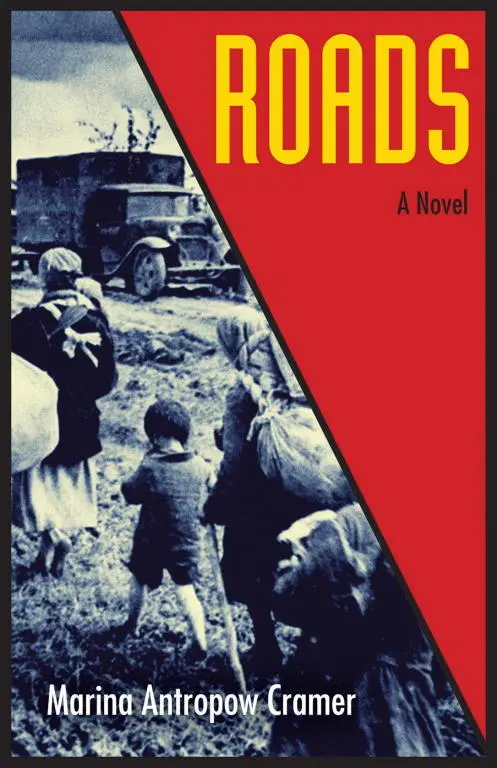
- Название:Roads
- Автор:
- Издательство:Academy Chicago Publishers
- Жанр:
- Год:2017
- Город:Chicago
- ISBN:978-1-61373-558-9
- Рейтинг книги:5 / 5. Голосов: 1
-
Избранное:Добавить в избранное
- Отзывы:
-
Ваша оценка:
Roads: краткое содержание, описание и аннотация
Предлагаем к чтению аннотацию, описание, краткое содержание или предисловие (зависит от того, что написал сам автор книги «Roads»). Если вы не нашли необходимую информацию о книге — напишите в комментариях, мы постараемся отыскать её.
By winter 1945, Allied air raids destroy strategic sites; Dresden, a city of no military consequence, seems safe. The world knows Dresden’s fate.
Roads
Roads — читать онлайн бесплатно полную книгу (весь текст) целиком
Ниже представлен текст книги, разбитый по страницам. Система сохранения места последней прочитанной страницы, позволяет с удобством читать онлайн бесплатно книгу «Roads», без необходимости каждый раз заново искать на чём Вы остановились. Поставьте закладку, и сможете в любой момент перейти на страницу, на которой закончили чтение.
Интервал:
Закладка:
3
“MAKSIM,” KSENIA SAID SOFTLY, moving aside the curtain that separated his cot from the rest of the room, “are you sleeping?”
“No.” He kept his eyes closed, his one arm shielding his face from the light.
“Go to the post office for me, proshu tebya . Please, I ask of you, do this for me. I have a letter for my sister, your aunt Varya, in Kostroma.”
He faced her. “Why bother, Mama? She will not receive it. And if she does, you will never get her reply.”
“We must try, son. She may not receive my letter, kto znaet ? Who knows? But if she does, she will know we are still alive.”
“Why me?” he asked peevishly. “It will take me forever to get there, and what if they’re not open today? Or if there’s a long line, with no way to rest my leg. I would not be home till sundown, and nothing will be accomplished. Send Filip; stamps are his special interest.” He rolled onto his side, face to the wall. “Let me sleep.”
Ksenia retreated to the kitchen. She stood, head down, hands grasping the back of a chair, for a long time. Finally, she raised her chin. Nyet , she decided. No.
She left the letter on the table and gathered a few things: a three-legged stool Ilya had fashioned from scraps, the legs cleverly carved to disguise imperfections in the wood; the last two painted teacups and matching saucers from her wedding set; a multicolored shawl Galina had knitted from odd lengths of scavenged yarn. She tied everything in a bundle. As an afterthought, she tucked several cloth dolls and Maksim’s discarded spinning top into one of her dress pockets and went out.
She took the streetcar north, to the city limits, then walked in an easterly direction, keeping to the wooded edge of the road. No one challenged her. She was just another baba lugging things around for who knows what purpose.
The day was clear and hot, the midsummer air still, the road nearly deserted. Somewhere far away, thunder rolled, approaching and receding in great invisible waves. Ksenia stopped to rest at the edge of a meadow. She listened. Yes, it was thunder. Not guns, not bombers. Thunder. “Jehovah’s chariot,” she observed, and smiled.
The road ended, turned into a dirt track through woods of pine and birch. Ksenia looked up. The sky above the treetops was still blue, the leaves high overhead barely disturbed by a breeze she did not feel. The storm was still some distance away. At the edge of the Tatar village she met a boy herding a few goats, brandishing a thin leafy branch. He waved it at her, as if taking pleasure in its supple motion; she raised a hand in return greeting. Later she would wonder if this had really happened. Or was it a dream, a vision of some bucolic paradise conjured by her need for relief from ugly, treacherous reality?
The first house she came to was small, the roof thatch in need of repair. The young woman who answered her knock shook her head, pointing to the small children clustered at her skirts, the baby in her arms. Outside, an older girl scattered a handful of kitchen scraps; Ksenia watched the two hens and lone rooster cluck and peck, devouring every trace within minutes.
She had not visited this particular village before, knowing that you could not keep coming back to the same people too often and expect good results. Choose a bigger house , she told herself, one that looks more prosperous. She found one near the village center, a solid structure with a painted flower trellis and shiny brass pump in the yard. The woman here was older, her tawny skin set off by large silver hoop earrings, a medallion necklace adorning her deep red caftan.
Ksenia untied her bundle and showed her wares, not in the aggressive manner she used on market days, but with simple dignity. Neither woman spoke much. They communicated with gestures and a few words that both understood in their respective languages. The Tatar examined the shawl from both sides, seemed to like its variegated colors and approve the workmanship. She turned the stool this way and that, tracing the carving with a slender finger. She held the teacups up to the light, looking for hairline cracks or imperfections. Finally, she nodded. She disappeared into the summer kitchen at the side of the house and came back with a small sack of flour, some carrots, and a few plums.
Ksenia nodded her appreciation, then gathered up her courage and said, “Do you have any meat? Myaso ?”
The woman hesitated. She pressed her lips together, then took back the flour and produce and came back with a small paper-wrapped parcel and three eggs. “ Loshadina ,” she said. “Horse meat.”
Ksenia bowed deeply, touched her hand to the ground at the woman’s feet. She wrapped the eggs in her handkerchief, tying the corners with care, and slipped them into another dress pocket. She had turned to go, holding the meat parcel against her chest, when a lurid flash of lightning bisected the sky directly above, followed by a clap of thunder that sent both women back into the open doorway. Catching each other’s eye, they both laughed at their instinctive reaction, then turned to watch the first heavy raindrops kick up puffs of dust in the yard, sending chickens into the sheltering branches of a nearby oak.
Within minutes, it was over; the furiously falling curtain of rain lifted as suddenly as it had descended. Ksenia stepped out, ready to leave, but the woman restrained her with a light touch on the arm. She went inside and reappeared with a cup. Ksenia drank. She did not care for koumiss, the pungent fermented mare’s milk that had been a staple of the Tatars’ nomadic ancestors for generations. But it would have been worse than rude to refuse, and she was hungry.
Leaving the village, she stopped again at the first house. Ignoring the look of annoyance on the young mother’s face, she gave her the cloth dolls and spinning top without a word, and turned for home. She did not look back to see the speechless young woman, toys in hand, stare after her in open-mouthed amazement.
It was evening when Ksenia reached home. She was tired from the day’s traveling, but knew she still had work to do before retiring to her bed. Ilya was at his worktable, bent over a bit of ivory he was carving with a fine-gauge tool, his face illuminated by the glow of the lamp at his elbow. How handsome he is , Ksenia thought. His hair still dark and glossy, his tall body trim. And those hands, those beautiful, sensitive hands.
“Good evening, my dear. Dobryi vecher ,” he said, without missing a stroke, looking up only when his tool reached the edge of the piece. “Was your expedition successful?”
“Yes. There will be meat pie tomorrow. How is…” She glanced toward the curtained corner of the room.
“Sleeping.” Ilya picked up a wood-handled chisel, the blade fine as a scalpel, and set to work creating intricate flower petals. “Galya left you some food.”
In the kitchen, Ksenia lifted the plate covering a small bowl of millet, two thin smoked smelts laid across the top. She ate one of the fish, grinding its tiny bones with her teeth, swallowing the head whole, licking her fingers one by one.
She untied the parcel and examined the meat. It looked fresh, with no greenish discoloration or brown curled edges, but who knew how long ago the animal had been slaughtered? Or died, more likely. Healthy horses were too valuable to kill for meat. She had to cook it now, tonight, taking no chances on spoilage from the summer heat. If only I had an ice house, or a cool cellar, like in the country , she thought. I could rest now.
She sighed, added wood to the stove, covered the meat with water in the soup pot, peeled an onion from her kitchen garden. When the water boiled, she skimmed off the gray foam, added a dried bay leaf and the onion, along with two garlic cloves, and moved the pot to the back burner, where the heat was less intense and the soup would simmer, undisturbed, extracting as much essence from the meat as possible. She sat at the table, peeled the last of the month’s potatoes, working expertly, her knife removing barely a shadow of the pulp. This is my craft , she thought. She savored the way the knife’s handle fit her hand, the sharp blade worn paper-thin from many years’ use. My tools.
Читать дальшеИнтервал:
Закладка:
Похожие книги на «Roads»
Представляем Вашему вниманию похожие книги на «Roads» списком для выбора. Мы отобрали схожую по названию и смыслу литературу в надежде предоставить читателям больше вариантов отыскать новые, интересные, ещё непрочитанные произведения.








Обсуждение, отзывы о книге «Roads» и просто собственные мнения читателей. Оставьте ваши комментарии, напишите, что Вы думаете о произведении, его смысле или главных героях. Укажите что конкретно понравилось, а что нет, и почему Вы так считаете.