Marina Cramer - Roads
Здесь есть возможность читать онлайн «Marina Cramer - Roads» весь текст электронной книги совершенно бесплатно (целиком полную версию без сокращений). В некоторых случаях можно слушать аудио, скачать через торрент в формате fb2 и присутствует краткое содержание. Город: Chicago, Год выпуска: 2017, ISBN: 2017, Издательство: Academy Chicago Publishers, Жанр: Историческая проза, на английском языке. Описание произведения, (предисловие) а так же отзывы посетителей доступны на портале библиотеки ЛибКат.
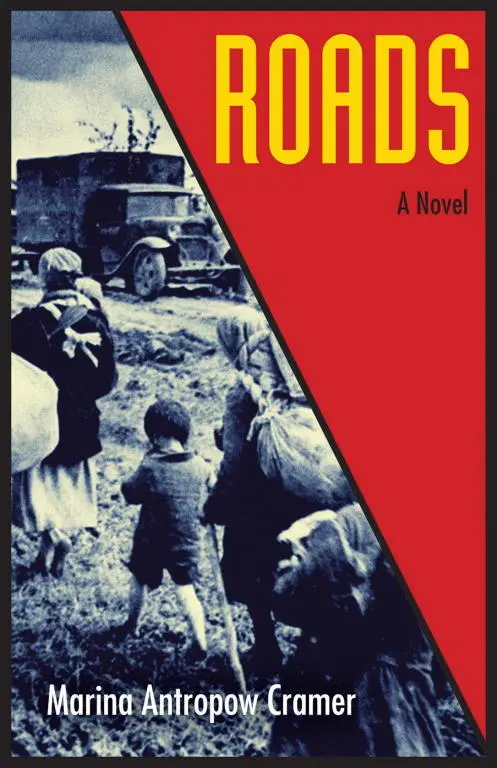
- Название:Roads
- Автор:
- Издательство:Academy Chicago Publishers
- Жанр:
- Год:2017
- Город:Chicago
- ISBN:978-1-61373-558-9
- Рейтинг книги:5 / 5. Голосов: 1
-
Избранное:Добавить в избранное
- Отзывы:
-
Ваша оценка:
Roads: краткое содержание, описание и аннотация
Предлагаем к чтению аннотацию, описание, краткое содержание или предисловие (зависит от того, что написал сам автор книги «Roads»). Если вы не нашли необходимую информацию о книге — напишите в комментариях, мы постараемся отыскать её.
By winter 1945, Allied air raids destroy strategic sites; Dresden, a city of no military consequence, seems safe. The world knows Dresden’s fate.
Roads
Roads — читать онлайн бесплатно полную книгу (весь текст) целиком
Ниже представлен текст книги, разбитый по страницам. Система сохранения места последней прочитанной страницы, позволяет с удобством читать онлайн бесплатно книгу «Roads», без необходимости каждый раз заново искать на чём Вы остановились. Поставьте закладку, и сможете в любой момент перейти на страницу, на которой закончили чтение.
Интервал:
Закладка:
And then he saw him.
Filip had had an especially pleasant day. Rising late, he’d made his way to his mother’s apartment. She gave him tea and baklava, then surprised him with a small square of Swiss chocolate.
“Mama, where did you get this? How?”
“Your father brought it. I don’t ask,” Zoya replied. “More tea?”
She gave him a little money, “for the house.” He happily spent it on a tiny packet of Australian stamps. Even Galya will like these , he thought, eager to get home and examine his treasure, the animals in their curious exotic oddity, the sere desert landscape so alien to his own.
On the streetcar, he got a seat next to the open window, away from the crush of people, with their parcels and their children, in the aisle. He raised his face to the warm breeze and thought again about the chocolate, how it had felt on his tongue, how the melting richness had filled his mouth with something like ecstasy, leaving behind a nugget of hazelnut, a delicious surprise.
And then there Borya was, threading his way through the crowd on the sidewalk, wearing a dark shirt, looking a bit disheveled, his hair longer than Filip had ever seen it.
“Hey, Bor’ka!” Filip shouted, his joy at seeing his friend making him reckless. “Hey! How are things in the woods? Finding any mushrooms?”
Borya’s head snapped back as if he’d been slapped. He froze, then ran, elbowing people out of his way, turning out of sight around the next corner.
Filip felt a sudden chill. Nu, durak , he scolded himself. What a fool. How could anyone know he’d been remembering the firewood Borya had brought, like Father Christmas dragging a tree through the streets to delight happy children? What a stupid, stupid thing to say.
He got off at the next stop and walked the rest of the way home, trying to shake off the echo of the hastily shouted words. “ Balda . Durak . Idiot,” he mumbled, then stopped. I only wanted to talk to him , he thought. That’s all. Maybe no one had noticed; there were so many people, all busy with their own concerns. No doubt he was berating himself for nothing. Forget it , he decided, and told no one.
Two weeks passed. Filip and Galina, making their way home in the early evening, were caught in a roundup, herded along with dozens of others toward the main square.
“What do you think—” Galina started to say.
“More regulations. As if they don’t already have us by the throat,” he replied. “Be quiet.”
In the square, backlit by the descending sun, two men hung from the lampposts, their necks broken, their bodies rotating slowly in the air. A gasp swept through the crowd, sharp and instinctive, followed by nervous, expectant silence.
“When did this happen?” Filip asked of no one in particular.
“About an hour ago,” said a voice from the crowd. “They went away, but they won’t let us leave until they’re done with us. All the streets are blocked.” This tragedy was clearly not over.
“ Kakoi uzhas ,” Galina whispered, blanched and trembling at the horror. But Filip did not hear, nor was he aware of her hand, the fingers digging into his arm in panicked recognition.
One of the men was short and stocky. He had Tatar features, with silky hair black as crow’s feathers that glinted in the sun. He was dressed in green sharivari , the cloth of the loose trousers flapping in the evening air. The other one, long legs dangling closer to the ground, wearing scuffed and muddied cheap leather shoes, was Borya.
“No,” Filip breathed, denying the evidence of his eyes. He felt the blood drain from his head, then rush back in, thundering in his ears; his body shuddered with ice and fire in a fever of contradictions. For a moment, all went black, but he did not fall, supported by helping hands of strangers on every side. He opened his eyes.
A dozen black-shirted SS men entered the square from a side street, swastikas emblazoned on the doors of their truck. The crowd parted to let them through. Two held the swaying body still while a sergeant, standing on the vehicle’s roof, his legs spread wide for balance, lettered the word PARTISAN in thick, rough brushstrokes of red paint across their shirts, first on one and then on the other.
The rest of the men took up positions around the square, each cradling a semiautomatic weapon against his chest. No one doubted they needed only the slightest hint of a provocation to open fire.
The lieutenant surveyed the operation from the bed of the truck. He was tall and blond, his classic Aryan features contorted in a grimace of fury and contempt. He turned, sweeping his eyes over the crowd like an actor reaching out to every member of his audience; the sun, now low in a purplish-yellow sky, caught on the lightning bolt insignia pinned to his collar.
“If you fight against der Führer, we will find you,” he shouted. He took the dripping brush from the sergeant and waved it in an arc, spraying drops of red paint over their heads like a ghoulish benediction. “We know who you are. Now go home.”
In the morning, Filip went back. They had both had a restless night filled with disturbing dreams; Galina moaned and, once, cried out in her sleep, clutching his hand so tightly it hurt. Filip rose at first light, slipped quietly out of the house. The executed men were still there, swollen black tongues protruding from their parted lips; the damning word on their backs blazed like fresh blood in the rising sun.
Someone had taken their shoes. Filip stared numbly at the bare feet, the skin a ghastly greenish-gray threaded with ropy blue veins, toenails opaque as ram’s horn.
He moved on, so as not to attract attention. He would not see his mother today. She would sense his rage, probe his ineffable sadness, understand his fear. He did not want to be understood. He walked to the sea, stood a long time at the retaining wall, watched the waves crash and recede until the rhythm calmed his mind a little. He tried to think of other things: the impending university exam, his father’s birthday next week, the book of German verse he had left open on the floor near his and Galina’s bed. Nothing could obscure the question he knew would nag him for the rest of his life, like an embedded splinter too deep under the skin to remove yet impossible to ignore. Am I to blame?
PART III
Maksim
1
THE FIRST THING Galina noticed was the limp. She watched him approach from the end of their street, bareheaded, a long heavy coat draped over his shoulders in spite of the warmth of the late May afternoon, his eyes cast down as if choosing his path with care. Yes, it was definitely her brother, and he was definitely limping, one foot dragging noticeably behind the other as he made his way in her direction.
“Maksim!” she shouted and ran to meet him, a string-tied parcel of dried beans dangling from her waving hand. “Maksim,” she repeated, stopping in front of him, blocking his way forward.
“It’s you,” he said, raising his head. His look combined weariness, relief, and disappointment.
“You’re so pale! We thought…”
“You thought I was dead. Well, perhaps I am.”
“That’s not funny,” she said, even though his expression held no hint of humor. “We had no letter from you since early October. How could we know… Anyway, you’re home. Kiss me.” She giggled, surprised at her own impulsiveness. She leaned in closer and offered her cheek, trying not to flinch at his stale unwashed odor.
“Here, in the street?” He stepped back, as if afraid she might embrace him.
“You haven’t changed. Give me your hand, then. No, not the left,” she protested. “ Balda . Never the left, you fool.”
Читать дальшеИнтервал:
Закладка:
Похожие книги на «Roads»
Представляем Вашему вниманию похожие книги на «Roads» списком для выбора. Мы отобрали схожую по названию и смыслу литературу в надежде предоставить читателям больше вариантов отыскать новые, интересные, ещё непрочитанные произведения.





Обсуждение, отзывы о книге «Roads» и просто собственные мнения читателей. Оставьте ваши комментарии, напишите, что Вы думаете о произведении, его смысле или главных героях. Укажите что конкретно понравилось, а что нет, и почему Вы так считаете.