Marina Cramer - Roads
Здесь есть возможность читать онлайн «Marina Cramer - Roads» весь текст электронной книги совершенно бесплатно (целиком полную версию без сокращений). В некоторых случаях можно слушать аудио, скачать через торрент в формате fb2 и присутствует краткое содержание. Город: Chicago, Год выпуска: 2017, ISBN: 2017, Издательство: Academy Chicago Publishers, Жанр: Историческая проза, на английском языке. Описание произведения, (предисловие) а так же отзывы посетителей доступны на портале библиотеки ЛибКат.
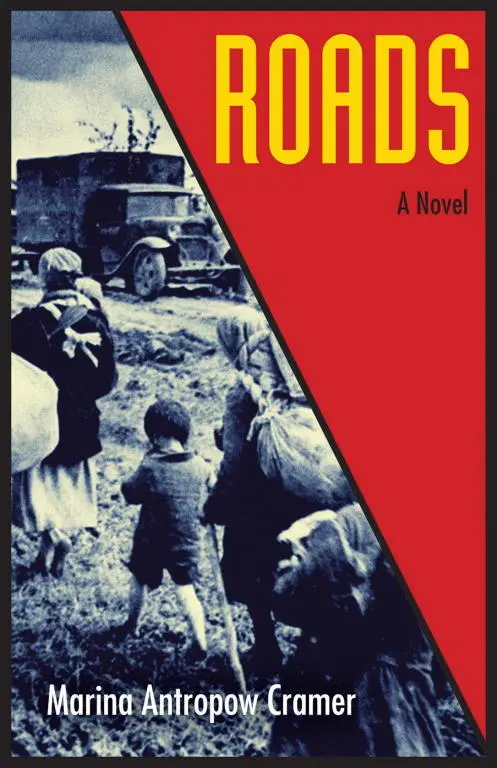
- Название:Roads
- Автор:
- Издательство:Academy Chicago Publishers
- Жанр:
- Год:2017
- Город:Chicago
- ISBN:978-1-61373-558-9
- Рейтинг книги:5 / 5. Голосов: 1
-
Избранное:Добавить в избранное
- Отзывы:
-
Ваша оценка:
Roads: краткое содержание, описание и аннотация
Предлагаем к чтению аннотацию, описание, краткое содержание или предисловие (зависит от того, что написал сам автор книги «Roads»). Если вы не нашли необходимую информацию о книге — напишите в комментариях, мы постараемся отыскать её.
By winter 1945, Allied air raids destroy strategic sites; Dresden, a city of no military consequence, seems safe. The world knows Dresden’s fate.
Roads
Roads — читать онлайн бесплатно полную книгу (весь текст) целиком
Ниже представлен текст книги, разбитый по страницам. Система сохранения места последней прочитанной страницы, позволяет с удобством читать онлайн бесплатно книгу «Roads», без необходимости каждый раз заново искать на чём Вы остановились. Поставьте закладку, и сможете в любой момент перейти на страницу, на которой закончили чтение.
Интервал:
Закладка:
“Nothing, no one is safe in wartime,” Ksenia said, her voice dull. “But this idea of yours, this living apart, it is childish. It will not do. The Germans are not fools. Do you think you are the first to try this ruse?” She looked squarely from one to the other, her gray eyes holding the question until both young people faltered and lowered their heads.
“No,” Ksenia continued. “It will not do. If you are married, you must live as man and wife. But for me and for your father, Galina”—she gestured toward Ilya, who stood in stunned silence at her back—“there is no union until you receive the Church’s blessing. So go home, Filip, and tell your parents. I will arrange things with Father Gennady.” She stood up and moved toward the stove, lifting a corner of the towel to check the bread dough’s progress. Filip turned to go, but Ilya’s voice stopped him.
“Wait.” Ilya grasped the back of the chair with both hands. “Wait a moment. What about love? This piece of paper means nothing, less than nothing, to me. It can be annulled. This is a fine gesture, Galya, a selfless, generous act. But marriage, as your mother says, is not a game. So tell me, is there enough love between you to understand each other, to live in harmony, and to forgive the mistakes you will both inevitably make? Is there enough love?”
Galina and Filip glanced at each other; each caught the same surprised expression on the other’s face. “We never… that is, well… yes,” she faltered, blushing fiercely. Then, regaining some composure, she spoke more firmly. “Yes, Papa, we are friends. Of course we love each other.”
“Those are not the same thing, friendship and love, as you will see,” Ilya replied kindly. “But it is a good beginning. And you?” he addressed his new son-in-law.
“Of course. Of course I love her, Ilya Nikolaevich. Since first grade, at school.” He said it quietly, with confidence, but not without a trace of derision, as if stating something obvious to everyone that only Ilya could not see. Ilya caught the inference, raised his head, but let the challenge pass unanswered.
“All right. Horosho . I will make the arrangements,” Ksenia said.
“But where…,” Galina began, sweeping her hand in an arc that included the kitchen, the front room, the tiny bedrooms, and the sheltered yard. She felt everything spinning away, the sense of control rapidly becoming an illusion, an imaginary exercise made real, to which she and Filip had come entirely unprepared.
“Here. You two can take your brother’s room. Maksim is not likely to return from university before this occupation ends.”
Urgent knocking at their door interrupted their conversation. “ Sosed ! Neighbor! Come quickly.” Ilya went to answer the summons. In a moment, he returned with an older man who lived across the common yard on the other side of the compound.
“Such a tragedy,” the man wailed, shaking his head in disbelief. “Such a tragedy.”
“Tell us what you know,” Ilya prompted.
“The bastards—excuse me, sosedka .” He nodded to Ksenia.
“What has happened?” She waved away his apology with an impatient gesture.
“They are cutting down the trees. I saw it with my own eyes.” The man swayed from foot to foot, kneading his cap in his hands.
“Who?” “What trees?” “Where?” The choir of questions assaulted the distraught messenger from all sides, making him stop in maddening silence.
Galina was the first to react. “Here, Gavril Gavrilovich, sit down.” She offered the man a chair and poured water into a glass from the ceramic pitcher they filled daily from the pump in the yard. He declined the chair but drank the water. “Thank you, my dear,” he said, wiping his mouth with the back of his hand.
“Now please tell us, what trees?” Galina asked gently.
“The palms, along the seawall,” he replied, his eyes filling with tears. “The pride of our beautiful city.”
“Who?” Filip cut in. But they already knew the answer.
“The Germans,” Gavril Gavrilovich whispered. “That is, our people are doing the work, but the Germans are giving the orders.”
“But why?” Filip persisted. “Do they think we will climb the trees like monkeys and send distress signals to the Caucasus? Or pelt them with stones from above while they stroll on the beach?”
“Who knows why,” Ilya said. “There may be some strategic reason, or it may just be an act of malice, a way to deface the enemy’s homeland while keeping their own troops busy supervising the work.” He paused, sighed deeply. “I am more worried about our people. Not everyone who serves on a work detail returns home when the job is done.”
Ksenia crossed herself. “God’s will. But maybe you should go see, Ilya. It may be possible to help someone. Now everybody out of my kitchen except you, Galya. Bread dough can’t wait.”
After the men left—Ilya and the neighbor to witness the destruction, and Filip home to inform his parents—the women worked in silence. Galina sliced vegetables for soup while Ksenia punched down the dough, which had risen nicely, in spite of the meager amount of yeast. She formed it into a loaf of respectable size and covered it with a towel, leaving it to rise once more before baking. “Here, let me finish with the soup. You do some of this mending. You know how I hate to sew,” Ksenia said, pointing to a dilapidated wicker basket, itself so full of holes it was a wonder it could hold anything and still retain its shape.
“It is true, what your father said about love,” she said. She opened a corner cupboard and took out a jar partly filled with barley. “When we were courting—we lived in Kostroma, where his family is from—we would go for walks along the river. Those were terrible times, worse than now, for everyone.” She measured some grain into the palm of her hand.
“After the revolution?” Galina offered. She worked her deft needle around a hole in a pillowcase, joining the threadbare fabric to a bright patch of scrap cloth.
“Yes. I know in school they tell you it was glorious, freedom and brotherhood, work and bread and land for everyone. But it was a nightmare; people were angry, hungry, suspicious of each other, and no government in place with enough experience to restore order.” She stirred the barley into the soup and covered the pot. Silently, she appraised the remaining grain with a calculating eye before returning the jar to its place on the shelf.
Galina went on sewing. Her mother almost never talked about her life. Oh, there were the childhood stories, the virtues of country life lived close to the soil under the blue skies of peace and merchant-class prosperity, stories tinted with nostalgia and prone to the pitfalls of selective memory. This was something different, something precious and personal, an intimacy with her mother she did not want to lose any more than she knew how to handle it. “Which river?” she ventured at last, hoping to keep the narrative going.
“The Volga. That’s what your father called me, ‘my Volga.’ We had nothing to offer each other but the work of our own hands. He said, ‘You are like this river to me, strong and constant and sure, ever flowing through me, dearer than my own blood.’”
“And so you are,” Ilya said, coming in unexpectedly from the front room. “I forgot my cap,” he apologized, smiling.
Galina did not know how to describe the thing that passed in that moment between her father and mother. It was something powerful and tender, silent and primal. She only knew that witnessing it had reduced her to insignificance. She was neither child nor woman, but something becoming , her essence submerged in some vague process she was only beginning to understand.
Читать дальшеИнтервал:
Закладка:
Похожие книги на «Roads»
Представляем Вашему вниманию похожие книги на «Roads» списком для выбора. Мы отобрали схожую по названию и смыслу литературу в надежде предоставить читателям больше вариантов отыскать новые, интересные, ещё непрочитанные произведения.










Обсуждение, отзывы о книге «Roads» и просто собственные мнения читателей. Оставьте ваши комментарии, напишите, что Вы думаете о произведении, его смысле или главных героях. Укажите что конкретно понравилось, а что нет, и почему Вы так считаете.