Marina Cramer - Roads
Здесь есть возможность читать онлайн «Marina Cramer - Roads» весь текст электронной книги совершенно бесплатно (целиком полную версию без сокращений). В некоторых случаях можно слушать аудио, скачать через торрент в формате fb2 и присутствует краткое содержание. Город: Chicago, Год выпуска: 2017, ISBN: 2017, Издательство: Academy Chicago Publishers, Жанр: Историческая проза, на английском языке. Описание произведения, (предисловие) а так же отзывы посетителей доступны на портале библиотеки ЛибКат.
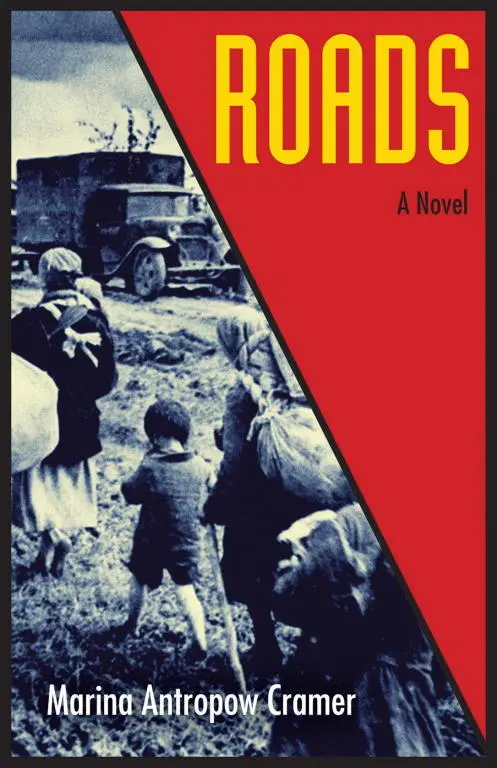
- Название:Roads
- Автор:
- Издательство:Academy Chicago Publishers
- Жанр:
- Год:2017
- Город:Chicago
- ISBN:978-1-61373-558-9
- Рейтинг книги:5 / 5. Голосов: 1
-
Избранное:Добавить в избранное
- Отзывы:
-
Ваша оценка:
Roads: краткое содержание, описание и аннотация
Предлагаем к чтению аннотацию, описание, краткое содержание или предисловие (зависит от того, что написал сам автор книги «Roads»). Если вы не нашли необходимую информацию о книге — напишите в комментариях, мы постараемся отыскать её.
By winter 1945, Allied air raids destroy strategic sites; Dresden, a city of no military consequence, seems safe. The world knows Dresden’s fate.
Roads
Roads — читать онлайн бесплатно полную книгу (весь текст) целиком
Ниже представлен текст книги, разбитый по страницам. Система сохранения места последней прочитанной страницы, позволяет с удобством читать онлайн бесплатно книгу «Roads», без необходимости каждый раз заново искать на чём Вы остановились. Поставьте закладку, и сможете в любой момент перейти на страницу, на которой закончили чтение.
Интервал:
Закладка:
Surely Franz could see that she would never be more than an indentured servant to the woman in the picture. His idea was no more than a dreamy vision that had nothing to do with anyone’s happiness but his own. She, Galina, was the answer to several of the pressing problems in his life. How fortunate for him, she thought, that he also found her appealing enough to love.
Maybe he imagined a placid domestic scene, playing chess with his grandfather, his Mutti sipping her coffee while she, his wife, sang the babies to sleep before washing the dinner dishes and making sure the chickens were safe in their coop for the night. Or maybe his world was full of easy camaraderie, frequent gatherings, boisterous card games. Bring more beer for our friends, Galina. And sing for us! And where, exactly, did her family, with their own customs and expectations, fit into either picture? She was ashamed, now, of ever having harbored the beginnings of affection for his open, naive, overconfident nature.
She had also moved toward her own solutions.
“Thank you, but this is no proposal, Franz,” she said, meeting his eyes with a flash of her own, matching his lapse into the familiar form of address. “This is a plan. I cannot help you feed your people while mine starve at the hands of your government. And I am already married.”
She moved off to stand with her back to him, ready to board the approaching streetcar, her face raised to catch the fading rays of the setting sun. From her seat by the window, she saw Franz put his cap on, using both hands to center it properly on his head. He squared his shoulders, spun on his heel, and walked away in the opposite direction.
6
SHE MIGHT AS WELL make it true, now that the words were spoken. It was as if Galina had needed the release, the confessing out loud to someone other than Filip what had weighed on her mind since her impetuous pronouncement. Then we must marry. So why not marry Filip?
She knew him better than any of her friends. Galina had never been one to trade secrets with other girls. She preferred the anonymity of social gatherings, being one of the group without having to reveal many of her thoughts or expose the details of her life. With Filip, there was no need of much talk; they had been the closest of friends since early childhood. They understood each other.
She knew his bookish nature. He could bury himself in his stamp collection to the point of oblivion—an occupation for which, admittedly, she had little patience. He was self-centered but also deeply sensitive to beauty; she had learned to see art, music, literature in new ways through his eyes. If he was inept at solving problems of daily living, well, they were both young. They would mature together. She had enough practicality for them both.
If marriage would save Filip from forced labor, what was the harm in it for her? It was just a matter of living together, sharing meals and obligations. The other thought, the one about the bedroom, frightened her. She banished it from her mind. Eventually, she would know about that, too. But it could wait.
Filip turned eighteen in mid-May. On his birthday, a Wednesday, they arranged to meet downtown early, skipping school for the first time in both their lives. “Don’t forget your documents,” Galina had admonished. “And bring a witness.”
By nine o’clock they were outside the building, its limestone facade austere in its respectable solidity, an emblem of order and calm. Borya, their witness, was late. Out on the street, Filip stood rooted, an air of vague anxiety on his face, his shoulders slightly hunched.
Galina paced. “Did you tell him Wednesday? Are you sure?”
Filip nodded.
“What will we do if he doesn’t come? And why won’t you talk to me?”
“He will come. He promised,” Filip answered dully after a lengthy pause, his voice hoarse. With a quick glance, he consulted a wristwatch pulled surreptitiously from his pants pocket. “It’s only quarter past.”
Galina stopped pacing. She could feel the day’s warmth beginning to radiate from the building’s rough-hewn exterior. “Is that yours? For your birthday? Let me see it.” She admired the brushed silver case and elegant face. “Umm, nice,” she said, holding the leather band up to her nose, then handing the watch back to Filip, who slipped it quickly back into his pants pocket.
They stood side by side in silence a few minutes. Along the Black Sea wall, the palm trees swayed in the breeze, waving their leafy fronds like handkerchiefs to unseen departing travelers.
“Do you want to do this?” she said finally, looking straight ahead, her voice low but steady. “Can you see me as your wife? I mean, we could just go to school, and only miss a class or two.”
Filip lowered his head. He spoke softly. “It’s not… yes… I’m sure you will be a fine wife. But this is not how it happens, is it? We are so young; we know nothing. I have no work. There are no rooms for us. It’s just not… normal.”
“Normal.” Galina repeated the word as if considering it for the first time, trying to fathom its meaning. “Normal. And is it normal to stand in line for hours for paltry handouts? Is it normal to wonder what happened to your neighbors who were there yesterday and are gone today, without a word to anyone? Is it normal to share the streets and shops with bands of foreign soldiers who can do anything they please with us? What is normal now? Tell me.”
“I know. And I know that I cannot join the army. It’s not the politics. You know I’m neither a monarchist, like your parents, nor a Communist, like my father. I just can’t see myself fighting, at all. And I know the risks if I stay single, the almost certain conscription to work in Germany.” He took a deep breath, then raised his head and faced Galina. “But we haven’t even asked our parents. How will we live? And where?”
“Is that what worries you?” She twisted her mouth into a crooked smile. “If we ask our parents, they will say no. So I think we should just do this, and stay where we are, each with our own parents, for now. Don’t you? We are young, as you say, and there is nowhere we can go, but your legally married status will protect you from the work transport, at least for a while. Yes?” She placed a hand on his arm. The touch of her fingers, cool on his feverish skin, was feathery, tentative. Its intimacy sent a shiver through his entire body.
“Yes,” he said, finally meeting her eyes. Then, firmly, “Yes. Here comes Borya.”
They turned to watch their friend weave his way through the morning’s pedestrian traffic, everyone intent on some urgent mission, some personal business or family matter of great immediate importance. People barely spoke to one another, embracing a new kind of rudeness that seemed to exclude all civility. Galina reflected how, even a few short years ago, it had all been different. Life had been hard, but people had stopped, exchanged a few words, smiled. Or was it only because a few years ago she had been a child, protected from the worst of the famine years by her mother’s lifesaving frugality, her father’s tireless industriousness?
Galina stroked the brooch pinned modestly at her throat: a swallow in flight, every detail of beak, feather, eye, neatly forked tail etched impeccably into the polished ivory, ringed with intricately carved miniature flowers. An Easter gift, the work of her father’s hand. She knew he could easily have sold it, that someone else, a girl or woman far away, perhaps in another country, could be wearing it with casual pleasure, with no inkling of the dangers of life in an occupied city.
This premature marriage, this urgent mission, while it was clearly a desperate solution to an intolerable situation, surely there was something undeniably humane, something inevitable about it. We two were meant to be together, sooner or later , she thought. So why not now?
Читать дальшеИнтервал:
Закладка:
Похожие книги на «Roads»
Представляем Вашему вниманию похожие книги на «Roads» списком для выбора. Мы отобрали схожую по названию и смыслу литературу в надежде предоставить читателям больше вариантов отыскать новые, интересные, ещё непрочитанные произведения.











Обсуждение, отзывы о книге «Roads» и просто собственные мнения читателей. Оставьте ваши комментарии, напишите, что Вы думаете о произведении, его смысле или главных героях. Укажите что конкретно понравилось, а что нет, и почему Вы так считаете.