Marina Cramer - Roads
Здесь есть возможность читать онлайн «Marina Cramer - Roads» весь текст электронной книги совершенно бесплатно (целиком полную версию без сокращений). В некоторых случаях можно слушать аудио, скачать через торрент в формате fb2 и присутствует краткое содержание. Город: Chicago, Год выпуска: 2017, ISBN: 2017, Издательство: Academy Chicago Publishers, Жанр: Историческая проза, на английском языке. Описание произведения, (предисловие) а так же отзывы посетителей доступны на портале библиотеки ЛибКат.
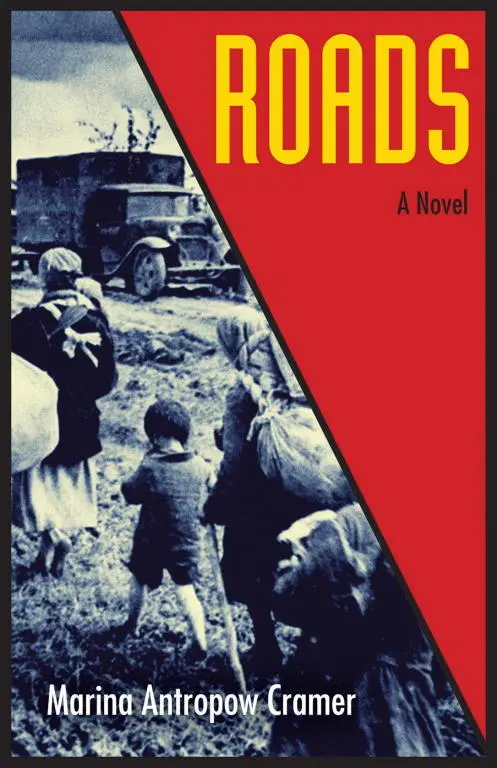
- Название:Roads
- Автор:
- Издательство:Academy Chicago Publishers
- Жанр:
- Год:2017
- Город:Chicago
- ISBN:978-1-61373-558-9
- Рейтинг книги:5 / 5. Голосов: 1
-
Избранное:Добавить в избранное
- Отзывы:
-
Ваша оценка:
Roads: краткое содержание, описание и аннотация
Предлагаем к чтению аннотацию, описание, краткое содержание или предисловие (зависит от того, что написал сам автор книги «Roads»). Если вы не нашли необходимую информацию о книге — напишите в комментариях, мы постараемся отыскать её.
By winter 1945, Allied air raids destroy strategic sites; Dresden, a city of no military consequence, seems safe. The world knows Dresden’s fate.
Roads
Roads — читать онлайн бесплатно полную книгу (весь текст) целиком
Ниже представлен текст книги, разбитый по страницам. Система сохранения места последней прочитанной страницы, позволяет с удобством читать онлайн бесплатно книгу «Roads», без необходимости каждый раз заново искать на чём Вы остановились. Поставьте закладку, и сможете в любой момент перейти на страницу, на которой закончили чтение.
Интервал:
Закладка:
She could hear her mother talking. “You know my Maksim is at university, studying to be a doctor.” Galina felt a familiar twinge of envy at the unconcealed pride in Ksenia’s voice. Why is there no letter from him, your beloved, since September? she wanted to say. Is he too busy, studying to be a doctor, to leave his mother with no news all these months? But her complaint withered and died almost as soon as her mind formed the hurtful thought. Who was she to stifle her mother’s only hope? What source of comfort could she offer instead? The postal service was erratic at best, as everybody knew only too well.
Galina was in no hurry to join them in the kitchen. She felt no special closeness to her brother. Maksim had always treated her with an impatience bordering on contempt; she was only a girl, a younger sister whose opinions were of no consequence, whose gift of song was, to his mind, no gift at all. A second-year medical student with poor eyesight, he had avoided Soviet military service; his course of study was considered vital for the good of the nation.
He was lucky, too, her brother, with a cool, quick wit, capable of reasoning like a diplomat, getting himself out of any number of difficult situations. “You can find plenty of rough hands among us for labor,” he had brazenly told the German officer who had marked him for inclusion in a recent transport. “I can serve your country better as a doctor, no? Once I finish my studies.” And the officer had, miraculously, agreed, granting Maksim the coveted deferment.
But Filip—what would happen to him? Galina loved the gentle side of his nature, the quiet ways and dreamy aspirations that were sure to mark him as sacrificial fodder for the war cause. Even if he passed the university entrance exams, she knew her country, in its struggle against the Fascist invasion, needed soldiers more than it needed architects. If, like Vova, he managed to join the Red Army, he was surely doomed to suffer and probably die.
That left only the shadowy world of the Partisan resisters, tough, energetic men and women committed to frustrating the enemy with acts of sabotage and home-baked espionage missions. No, she decided, Filip could not do that, either. He lacked the unique blend of recklessness and stealth these patriotic fighters required. And, she admitted, he lacked the courage.
She thought of Franz, of the way he radiated confidence, free, it seemed to her, of the arrogance one would expect of the aggressor. And yet—what acts of exemplary service had he performed to earn his junior officer’s rank at such a tender age? Service to his country against its enemies. Against her people. He seemed educated, perhaps even sensitive. Yet how different could he be, really, from the oaf of an enlisted man whose loathsome pawing she had just escaped? Galina shuddered, rubbing at her face with her wet scarf as if to remove any trace his coarse touch might have left on her skin.
People were different from one another, though, even if they were committed to the same merciless cause. That was the point, and the source of her confusion. She knew that any stirring of attraction toward a young, appealing enemy officer was entirely inappropriate, just as she knew that Filip was no soldier, that he could never cultivate the poise that, for some men, came with the uniform. And Filip was the one she needed to save.
She took off her shoes, slid her feet, still cold and wet from the storm, into house slippers kept by the door, and made her way through the darkened front room toward the warmth of the kitchen.
4
Near Moscow, 22 October 1941
Dearest Mama,
I hope this letter reaches you. Things are so chaotic here, there are simply no guarantees. My journey north was harrowing. Twice we had to leave the train and take shelter in the woods to escape enemy bombers. Several cars were damaged; a military commander (I do not know his rank) formed us into work details to detach the shattered wagons, push them off the tracks, and reattach the sound ones so the train could proceed. It was very hard; you know I am not accustomed to such work. Afterward, the shortened train was so crowded, we traveled most of the way standing up. Sleeping was out of the question.
The next air attack blew up the engine. We gathered our things and walked for several days, keeping to wooded areas as much as possible. Along the way we passed a few deserted burned-out villages. In one of them, the charred house timbers were still smoldering, giving off a pungent, acrid smell for miles. The roads were choked up with people, some dragging carts or herding farm animals. They told us that things were far worse up north; Moscow was under constant attack, day and night. Most of the fires had been started by our Partisans, to make the enemy’s inevitable retreat more difficult. Just like Napoleon in 1812, forced to go back the way he came, unprepared for our winter and demoralized by failure. Many seem sure the German retreat is yet to come, but as of now the Nazis are still advancing on Moscow and people are fleeing any way they can.
I met a group of nurses on their way to a field hospital and decided to travel with them. I don’t think I can resume my studies until the fighting dies down, so I might as well help care for the wounded. The nurses told me that whole factories, along with all their workers, have been evacuated to the east, so they could continue to manufacture munitions and other military necessities.
Theatrical companies, the Bolshoi Ballet, and many thousands of ordinary citizens have also been moved out of range of enemy air raids, although enough remained to continue mounting performances and showing films to determined, appreciative audiences. It sounds crazy, but I heard it first-hand from people who had experienced this phenomenon—actors in their overcoats (it is now seriously cold), performing French comedies in unheated theaters to amuse frightened, hungry Muscovites and military personnel.
Somewhere in the confusion, I lost the bundle of clothing you had so lovingly prepared for me. I can only hope that it will help save the life of some other person; the need is universal and immeasurably desperate. My documents were safe in my breast pocket, though, and I kept my dwindling food supplies with me at all times. I wore the boots, too, and have bleeding blisters to prove it, after all this unexpected hiking.
I will write again, when I have an address to receive your letters. Be strong, Mama, be strong.
Your son, Maksim18 November 1941
Dearest Mama,
Here is what happened. On my arrival at the field hospital, I was immediately inducted into the army. Like every conscript, I was given a few days’ rifle and grenade training and a military regulations manual to study. Since I am medical personnel, though not officially a doctor, I was not issued a weapon. Truly, I am not sure that I could use one against another human being, no matter what his national allegiance.
I cannot begin to describe the horror of this place, the young men who come here with maimed and broken bodies, the innocence I still see in their dying eyes. There is no real medicine practiced here; we have a drastic shortage of medication and supplies. We patch up the ones we can and send them back into the inferno. And they go, for the most part, resigned to their fate in the service of their homeland. We have heard stories of desertion, both individuals and entire units, frustrated by poor communication, conflicting orders, and debilitating lack of food and supplies. They say many thousands have been taken prisoner, their future now uncertain. Even if liberated, their actions will remain suspect, tainted by perceived lack of courage and contact with the enemy.
Winter is here in full force, with no thaw expected until March. The patient barracks are mostly unheated. The sick huddle under blankets and greatcoats, their heads and feet wrapped in rags. Clothing from fatalities is immediately snatched up by survivors, with savage fights breaking out over a fur cap or decent pair of felt boots.
Читать дальшеИнтервал:
Закладка:
Похожие книги на «Roads»
Представляем Вашему вниманию похожие книги на «Roads» списком для выбора. Мы отобрали схожую по названию и смыслу литературу в надежде предоставить читателям больше вариантов отыскать новые, интересные, ещё непрочитанные произведения.









Обсуждение, отзывы о книге «Roads» и просто собственные мнения читателей. Оставьте ваши комментарии, напишите, что Вы думаете о произведении, его смысле или главных героях. Укажите что конкретно понравилось, а что нет, и почему Вы так считаете.