Marina Cramer - Roads
Здесь есть возможность читать онлайн «Marina Cramer - Roads» весь текст электронной книги совершенно бесплатно (целиком полную версию без сокращений). В некоторых случаях можно слушать аудио, скачать через торрент в формате fb2 и присутствует краткое содержание. Город: Chicago, Год выпуска: 2017, ISBN: 2017, Издательство: Academy Chicago Publishers, Жанр: Историческая проза, на английском языке. Описание произведения, (предисловие) а так же отзывы посетителей доступны на портале библиотеки ЛибКат.
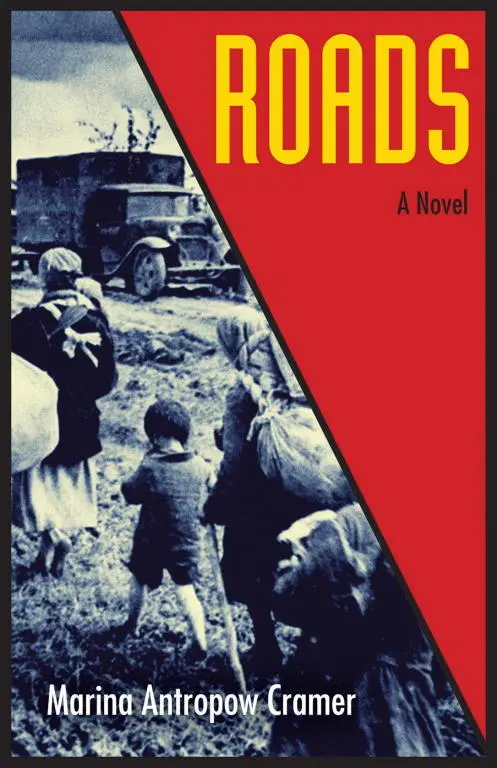
- Название:Roads
- Автор:
- Издательство:Academy Chicago Publishers
- Жанр:
- Год:2017
- Город:Chicago
- ISBN:978-1-61373-558-9
- Рейтинг книги:5 / 5. Голосов: 1
-
Избранное:Добавить в избранное
- Отзывы:
-
Ваша оценка:
Roads: краткое содержание, описание и аннотация
Предлагаем к чтению аннотацию, описание, краткое содержание или предисловие (зависит от того, что написал сам автор книги «Roads»). Если вы не нашли необходимую информацию о книге — напишите в комментариях, мы постараемся отыскать её.
By winter 1945, Allied air raids destroy strategic sites; Dresden, a city of no military consequence, seems safe. The world knows Dresden’s fate.
Roads
Roads — читать онлайн бесплатно полную книгу (весь текст) целиком
Ниже представлен текст книги, разбитый по страницам. Система сохранения места последней прочитанной страницы, позволяет с удобством читать онлайн бесплатно книгу «Roads», без необходимости каждый раз заново искать на чём Вы остановились. Поставьте закладку, и сможете в любой момент перейти на страницу, на которой закончили чтение.
Интервал:
Закладка:
“What nonsense,” she said aloud. How good it is to be alive, indeed. Try to remember that when in line for a half-kilo ration of worm-eaten potatoes, the skins creased like walnuts and about the same size, too.
He came again, always when Galina was working alone.
“The shop is too small to need two attendants at one time,” Zinaida Grigoryevna had declared, conceding that the younger woman’s charm was good for business. “I will open in the mornings; you come later and stay until closing.”
The merchandise was displayed, one of each item, in polished prewar cabinets placed against two walls and the front window. Additional stock was kept on shelves behind the counter, in a haphazard order whose logic was known only to the eccentric owner. But Galina caught on quickly, handling the simple housekeeping and occasional customer with ease.
“When this war ends…,” Zinaida Grigoryevna would sigh, picking up the previous day’s receipts or bringing in a few more handmade toys. She never finished that sentence, to Galina’s growing irritation. Things will return to the way they were? People will have time to play? Children will stop pointing sticks at one another in mock battle and return to the innocent joys of spinning tops and long-haired dolls? She found it increasingly hard to imagine a world without troops in the street, shortages in the shops, fear, and the dull reality of perpetual hunger.
None of this seemed to affect Zinaida Grigoryevna, who had lately discovered the solitary pleasure of writing poetry. In her airy room above the shop, she filled page after page of her old school notebooks, gazing at the familiar view of the Caucasus Mountains sheltering the inland sea. She marveled at the play of light on the Black Sea, watching the sun, wind, and clouds arrange themselves in a stunning infinity of variations.
She composed everywhere, repeating phrases in her head while standing in line for chicken, birds so scrawny some suspected their allotments consisted of the rapidly diminishing pigeon population. She used the rough butcher paper to jot down the words before she lost them. Never stopping to consider whether the work had any value, she contemplated and wrote, day after day, leaving Galina more and more to run the shop alone.
“Will you sing again soon, Fräulein Galina?” Franz put down the bear he’d been playing with, its brightly painted teacup raised halfway to its open mouth, a diminutive samovar resting on a tree stump table. She finished wrapping another soldier’s purchase before turning to answer him.
“Friday evening. We have a new play, a comedy. I will sing before it begins.”
“ Ach , I am on duty until ten o’clock. A pity.” He walked around the small room, examining the contents of the cabinets as if for the first time. “If you will permit me a very”—he paused, searching for the word—“humble suggestion.”
“About my singing?”
“ Nein , nein , the singing, it is perfect. It is about the merchandise, the—how do you say it—the stock.” He studied the disorganized shelves behind the sales counter. “How do you know where things are?”
Galina reddened. “I know where things are,” she shot back. “It’s my job to know.”
“Forgive me, Fräulein. I did not mean…” Franz stepped back, holding both hands palm outward before his chest as if to deflect her protest. “If you had only a little tag, perhaps, with each toy on display, and a number that you could match on the shelf behind you… it would be a system, you see?” He spoke softly, but his voice had a firm edge, a certitude she found irritating. What next? she thought. Numbers on people, maybe, eliminating the need to carry flimsy pieces of paper that could be lost, destroyed, or forged? Is that where this kind of thinking will end?
“We are a country at war, sir. Under enemy occupation. We need food and work and peace. We do not, right now, need a system for arranging toys.” She stopped, shocked by her own foolish audacity, as if she had forgotten that this man, this suave, innocent admirer, could have her detained, arrested, and executed.
“ Ach , you are angry. Forgive me. I want only to help a little. In my country, too, things are hard. People suffer, and many have died. Auf Wiedersehen ,” he started to say, then caught himself. “ Do svidanya .” Franz backed out of the shop, his face showing confusion and a hint of regret.
But she was not looking at him. She closed the door, drew the shade, flipped the sign to CLOSED, and turned off the light. Out in the street, she locked up, deposited the key in Zinaida Grigoryevna’s mailbox, and turned to leave.
He was still there, his back against the building, cap in hand. “May I walk with you?” he asked.
“No!” Did he not understand what kind of girls walked with enemy soldiers, especially with officers? Everyone knew them, the girls who traded the comfort of their bodies for a box of chocolates or a piece of cloth or a pair of stockings only the most daring “companions” had the nerve to wear in the street.
“Please, bitte , I just want to say…” He looked away, as if studying the purple evening sky was the most important thing he needed to be doing at that moment.
“Well?” Galina glanced around. The few people about seemed not to notice them, hurrying to finish their errands in the gathering dusk. She heard the rudeness in her own voice, regretted it. But this was no time or place for polite conversation.
“You are a fine young woman, hardworking and talented, and so beautiful.” Franz brought his gaze back to her face and spoke faster, as if aware of her growing discomfort. “I can get papers for you and your family. Work papers. Germany needs help with farming. Here.” He took a photograph from the black leather billfold in his breast pocket. “Look. Das ist meine Mutti . My mother. She is alone now, with my grandfather. She needs some help.”
Galina started to walk away, then, her curiosity piqued, stopped to glance at the picture. A short, pretty, youthful woman looked back at her, unsmiling, her face framed with tendrils of light wavy hair. “It is a small farm,” he went on. “Near Munich. My father was an engineer before he was killed in the fighting. Now everyone with even a little land must grow some vegetables or grain to help for the war. My mother has little experience of farming, but the need for food is great in my country, too.”
Not just here. Galina decided to ignore the implication.
For the first time since their meeting at the theater, she noticed how young he was, how like a boy, far from home, holding a picture of his mother for her to see. She looked at it again, this time taking in the whitewashed cottage with lace curtains at the window and roses, yes, roses, blooming on a trellis near the open door. Something in her rankled at the bucolic cliché the scene portrayed. This was no picture of need or hardship; it had no relevance to the bleakness of her life at all. She shook her head, took a step back.
Franz seemed to read her unspoken reaction. “This was three years ago, before the Russian bombing. It is not so lovely now. But listen, please. After the war we can marry. I am in love with you, Galina.”
He still held his hat in his hand, like a supplicant, but he looked at her with unwavering confidence, the blue of his eyes clear as morning light. She did not question the honesty of his admiration, and his love of music was clearly genuine. But how did those things translate into love?
These boys—Filip, Franz, Borya, even Vova, the reckless soldier—they seemed to play at everything, their games growing more complicated, with higher stakes and greater risks as they grew older. When would they become men? How did that happen? She wondered what incident, what irrefutable knowledge would turn them into stalwart, dependable people capable of tenderness. Like her father.
Читать дальшеИнтервал:
Закладка:
Похожие книги на «Roads»
Представляем Вашему вниманию похожие книги на «Roads» списком для выбора. Мы отобрали схожую по названию и смыслу литературу в надежде предоставить читателям больше вариантов отыскать новые, интересные, ещё непрочитанные произведения.








Обсуждение, отзывы о книге «Roads» и просто собственные мнения читателей. Оставьте ваши комментарии, напишите, что Вы думаете о произведении, его смысле или главных героях. Укажите что конкретно понравилось, а что нет, и почему Вы так считаете.