Marina Cramer - Roads
Здесь есть возможность читать онлайн «Marina Cramer - Roads» весь текст электронной книги совершенно бесплатно (целиком полную версию без сокращений). В некоторых случаях можно слушать аудио, скачать через торрент в формате fb2 и присутствует краткое содержание. Город: Chicago, Год выпуска: 2017, ISBN: 2017, Издательство: Academy Chicago Publishers, Жанр: Историческая проза, на английском языке. Описание произведения, (предисловие) а так же отзывы посетителей доступны на портале библиотеки ЛибКат.
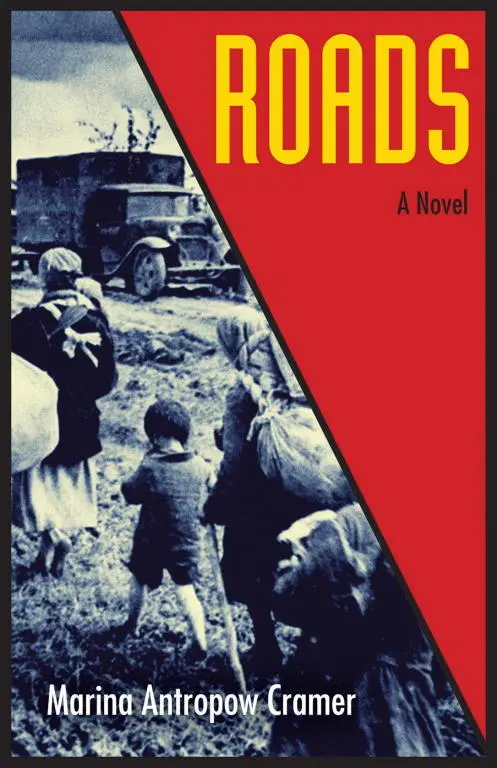
- Название:Roads
- Автор:
- Издательство:Academy Chicago Publishers
- Жанр:
- Год:2017
- Город:Chicago
- ISBN:978-1-61373-558-9
- Рейтинг книги:5 / 5. Голосов: 1
-
Избранное:Добавить в избранное
- Отзывы:
-
Ваша оценка:
Roads: краткое содержание, описание и аннотация
Предлагаем к чтению аннотацию, описание, краткое содержание или предисловие (зависит от того, что написал сам автор книги «Roads»). Если вы не нашли необходимую информацию о книге — напишите в комментариях, мы постараемся отыскать её.
By winter 1945, Allied air raids destroy strategic sites; Dresden, a city of no military consequence, seems safe. The world knows Dresden’s fate.
Roads
Roads — читать онлайн бесплатно полную книгу (весь текст) целиком
Ниже представлен текст книги, разбитый по страницам. Система сохранения места последней прочитанной страницы, позволяет с удобством читать онлайн бесплатно книгу «Roads», без необходимости каждый раз заново искать на чём Вы остановились. Поставьте закладку, и сможете в любой момент перейти на страницу, на которой закончили чтение.
Интервал:
Закладка:
Do not send packages; they will not arrive. All I ask for is a letter from you, to warm my heart. You can write care of my regiment. I hope to receive your letter eventually, even if the hospital is moved. I long for news of home and my dear family.
In my dreams, I sit with you in our clean, orderly kitchen, drinking tea, waiting for Father’s return from his travels. Galya is there, too, singing her sentimental songs, interrupting our conversation in her usual mindless manner. I see now that it is only a sign of her inexperience. She knows nothing of life, nothing at all.
I send you all my love.
Your son, Maksim5
ZINAIDA GRIGORYEVNA KNEW how fortunate she was. If it were not for her father’s status as a beribboned hero of the revolution, there would have been no toy shop to occupy the time of her now certain spinsterhood. She had long since stopped asking exactly what his function was; she only knew that he traveled freely and extensively throughout the Soviet Union and, occasionally, abroad. Something to do with industry, visiting factories, submitting reports, attending conferences in Kostroma, Stalingrad, Vladivostok.
He had served with enough distinction to earn a spacious Moscow apartment and the privilege to call on an Italian tailor from time to time. If his luggage held two or three carefully wrapped porcelain dolls or a fairy-tale marionette (for the grandchildren he would never have), no customs clerk would presume to question their presence, any more than they would cast more than a passing glance at his doeskin gloves or hand-sewn shoes.
Zinaida Grigoryevna was not politically inclined; she did not delve into questions of economic models or political ideologies. Her personal needs were modest, and running the shop had never been about money. She simply loved toys.
And she loved Yalta. Her father’s Party status and her mother’s poor health had created the opportunity for her to visit the renowned resort several times while growing up. When her mother’s advanced condition had reached a stage beyond the help of salt air, healing mineral baths, and a climate as close to paradise as one could find in the northern hemisphere, the two of them stayed on, away from the capital’s dark bone-chilling winters. Her father visited them when he could, dividing his time between Moscow, his bureaucratic obligations, and his sad little family.
When Zinaida Grigoryevna was twenty-six her mother died. A large, ungainly, plain young woman with close-set eyes, a small mouth, and big feet, she claimed to have no interest in marriage at all, especially since no likely candidates seemed to be forthcoming. She convinced her doting father to help her turn a lifelong passion for playthings into a livelihood, securing a choice spot on the broad avenue facing the picturesque seawall.
It turned out to be a wise decision. The new nation struggled to define itself, putting the turmoil of the revolution and civil war behind, looking ahead to an uncertain future marked by agrarian mismanagement and political infighting. In the famine years of the 1930s, life was hard, bread was scarce, meat almost nonexistent. Toys were, and always had been, universal—harmless and, in their own way, necessary. Enjoying the protection of a prominent Party member had its advantages. It was good for business when, inevitably, some comrades proved to be more equal than others.
Before long, Stalin’s isolationist policies made access to imports all but impossible, even for Party members. Official rhetoric worked hard to convince the people that desire for foreign goods was not only decadent but also dangerously unpatriotic. If domestic windup toys or music boxes did not perform as well as their Swiss or Austrian counterparts, blame fell on the perpetual shortage of quality materials and the collective failure to meet production standards. Roll up your sleeves, work harder, show the capitalist enemy what Soviet society can do , went the official line.
When World War II started, factories adapted. Die-cast cars became shell casings; real tanks took precedence over toy models. Undeterred, Zinaida Grigoryevna turned her attention to local artisans.
The toy shop was small, only a single room in one of the still-elegant prerevolutionary two-story houses that lined the main boulevard in Yalta’s business district. Convenient to all the resort attractions—the health spas, the beach, the guest cottages, and the once grand hotels—it continued, even in wartime, to attract a modestly reliable level of trade. The tourists were gone, naturally, but some people still had a little money, no matter how bad things were, and a few seemed to have quite a bit.
Unlike food and clothing, toys were not rationed. The Red Army had been good for business for a while. Now they were in retreat, replaced by homesick German occupation troops with time on their hands and money in their pockets.
“These figurines are well made,” Zinaida Grigoryevna told Ilya, fingering his menagerie of miniature carved bears, squirrels, rabbits, and foxes. “But the rag dolls, no. Tell your wife to sell them in the bazaar.”
Ilya gathered up the unwanted dolls, saying nothing about his young daughter’s, not his wife’s, painstaking work. Who cared about her little hoard of cloth scraps, pieces too small for any other purpose except maybe patchwork, which she did not enjoy doing? The child in her still wanted to play, to lose herself in a world of her own making, singing to herself while she shirred and gathered a bright bit of cloth into a traditional sarafan , adding a wide contrasting hem, pulling a colorful thread to use for embroidery.
Galina’s dolls looked unquestionably homemade, but her work was neat, the little hand-stitched faces sweet in their simplicity. “I could never do this,” Ksenia said, turning her daughter’s handiwork this way and that in her broad hands. “I was always clumsy with a needle. I’d rather chop wood.” She took the dolls to the market, along with her wild berry jam, to sell or trade. And Galina, through her father’s introduction, went to work at the toy shop.
The figurines sold well. People liked their uniqueness, the carefully carved details, the way Ilya’s skilled hand made a scrap of wood look like fur or feathers, adding a realistic eye, an inscrutable expression, with a touch of his knife.
“Can you make toys that move?” Zinaida Grigoryevna asked him, paying now in advance for another delivery of forest creatures. “You know, bears sawing wood, chickens pecking? Peasant toys. The Germans like to send them home to their families.”
The first time Franz came into the toy shop, Galina was dusting the nearly immaculate shelves, her back to the door. She was half-singing a new song she had heard in the park, filling in the spaces between words with uncertain humming. My heart, it is not peace you want… hmm hmm my heart …
“ Spasibo , siertze ,” he prompted, causing her to spin around in surprise, the dust cloth clutched to her chest. One of Ilya’s carved squirrels fell to the floor behind her.
“ Ai ,” she said, “it’s broken. Zinaida Grigoryevna will be angry.”
“May I see it?” Franz took the pieces from her hand and examined the break, tentatively fitting the tail back onto the plump body. “It is nothing. A little glue only is needed. I will buy it, Fräulein.”
“But—”
“My grandfather says squirrels are just rats with fluffy tails, because they chew everything and do much damage. I will send it to him. It will be amusing.”
After he left, the figurine pieces tucked securely in his shirt pocket, she stood a moment, recalling the touch of his fingers against her palm, and the way he nodded politely at the door, waiting until he stepped outside to put the cap back on his head. Siertze , kak horosho na svete zhit’ . The lyrics rushed in from some recess of her memory.
Читать дальшеИнтервал:
Закладка:
Похожие книги на «Roads»
Представляем Вашему вниманию похожие книги на «Roads» списком для выбора. Мы отобрали схожую по названию и смыслу литературу в надежде предоставить читателям больше вариантов отыскать новые, интересные, ещё непрочитанные произведения.








Обсуждение, отзывы о книге «Roads» и просто собственные мнения читателей. Оставьте ваши комментарии, напишите, что Вы думаете о произведении, его смысле или главных героях. Укажите что конкретно понравилось, а что нет, и почему Вы так считаете.