Marina Cramer - Roads
Здесь есть возможность читать онлайн «Marina Cramer - Roads» весь текст электронной книги совершенно бесплатно (целиком полную версию без сокращений). В некоторых случаях можно слушать аудио, скачать через торрент в формате fb2 и присутствует краткое содержание. Город: Chicago, Год выпуска: 2017, ISBN: 2017, Издательство: Academy Chicago Publishers, Жанр: Историческая проза, на английском языке. Описание произведения, (предисловие) а так же отзывы посетителей доступны на портале библиотеки ЛибКат.
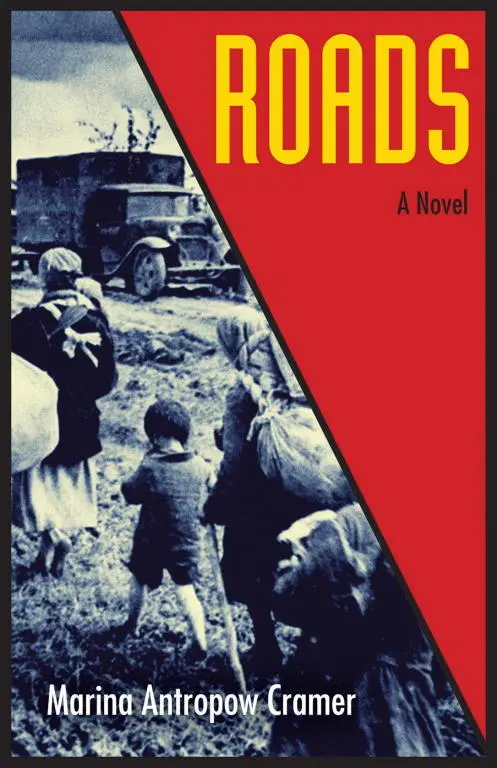
- Название:Roads
- Автор:
- Издательство:Academy Chicago Publishers
- Жанр:
- Год:2017
- Город:Chicago
- ISBN:978-1-61373-558-9
- Рейтинг книги:5 / 5. Голосов: 1
-
Избранное:Добавить в избранное
- Отзывы:
-
Ваша оценка:
Roads: краткое содержание, описание и аннотация
Предлагаем к чтению аннотацию, описание, краткое содержание или предисловие (зависит от того, что написал сам автор книги «Roads»). Если вы не нашли необходимую информацию о книге — напишите в комментариях, мы постараемся отыскать её.
By winter 1945, Allied air raids destroy strategic sites; Dresden, a city of no military consequence, seems safe. The world knows Dresden’s fate.
Roads
Roads — читать онлайн бесплатно полную книгу (весь текст) целиком
Ниже представлен текст книги, разбитый по страницам. Система сохранения места последней прочитанной страницы, позволяет с удобством читать онлайн бесплатно книгу «Roads», без необходимости каждый раз заново искать на чём Вы остановились. Поставьте закладку, и сможете в любой момент перейти на страницу, на которой закончили чтение.
Интервал:
Закладка:
My studies are going well. I have begun to see some patients at the hospital, under a senior doctor’s supervision. Once the initial shock of dealing with the flesh-and-blood application of theoretical knowledge is past, things begin to fall into place. This is the work I was meant to do.
With regards to the family, MaksimKharkov, 16 May 1941
Dearest Mama,
You do not complain, but I can hear the strain behind your cheerful words. I know that life is difficult for you, especially now that Father has lost his job and is away so much, traveling with his wares. I know he always comes back with money and goods, and that your situation is not as desperate as it is with many here, farther north. Surely, part of the reason is climate; you do not have to survive the harsh, killing winters or the mud-swamped spring and autumn that make life miserable for people here.
Is Father aware of the daily threats and privations you suffer? Does he appreciate your boundless ingenuity, your trading trips to the Tatar villages and the endless waiting for rations which may run out before you reach the head of the queue? The increasing presence of the enemy among us must make a difficult situation almost unbearable for you.
Without you, I would not have a room to come home to. Neither Father nor Galya, with all their best intentions, could have done that for me. It was your arm that swung the hammer, your determination that drove in the nails. I will never forget this.
I will be home before your reply reaches me. Looking forward to your warm embrace.
Your loving son, MaksimKharkov, 18 September 1941
Dear Galya,
Thank you for the birthday greeting.
Professor Zorkin has recommended I go to Moscow, to complete my studies with an eminent doctor at the university there. He has arranged the transfer and the travel pass, but suggests I bring as much warm clothing and extra food as I can carry. There are rumors of increased enemy activity north of us, but life cannot wait for rumors, and there are too many conflicting reports. Tell Mama I will come home to collect anything she can find. A good pair of boots would be most welcome, if she can manage it.
It will be a brief visit, one night only. Train travel is difficult and there is no time to waste. At least the weather is still good; the first hard frost has not yet come, followed by the inevitable thaw—the rasputitsa that drowns everything in mud and makes moving about a misery for man and beast, not to mention machinery. It makes one wish for the true start of our infamously brutal Russian winter.
I will see you soon.
Your brother, MaksimPS: Help our mother every way you can.
3
“I SO ADMIRE your singing, Fräulein Galina,” the officer said in heavily accented Russian, taking her hand and bowing formally from the waist. He hesitated as if looking for words, then lapsed into his native German. “ Das ist sehr herrlich . Lovely.”
She had not observed him working his way to the front of the knot of well-wishers surrounding the cast of the evening’s play. Only when he had elbowed past the last row of theatergoers did she recognize the young man who had stood conspicuously on his chair near the back of the hall while she sang. Everyone had seen him, she thought, flattered but also embarrassed at his bold attentiveness to her performance.
He was a short, slender man, with dark-brown hair cut close to a round, boyish head that reached just past Galina’s chin. She could not help noticing how young he was—surely not more than twenty-two or so—and how smoothly the fitted German uniform, with its junior officers’ insignia, set off his toned and compact form.
“What is the song called, the last one?” he asked politely.
“‘Belaya Akatzyia,’” she replied shyly. “‘White Acacia.’ A love song, very sad.”
“All the best love songs are sad, nicht wahr ?” He smiled and released her hand. “I am Franz. I hope I may hear you sing again.”
“Yes,” she said, not sure which part of his statement she had agreed with. Not sure, too, how to interpret the warmth in his voice, and whether to look for meaning in the hot flush flooding her face and neck.
Many Germans came to the little theater’s performances now; word had spread since summer, and the hall was frequently packed to capacity. “We may be at war,” Fyodor had remarked at one of the recent rehearsals. “But these occupation troops need something to do in their spare time. And most of them actually pay for their tickets.”
“The Germans are a refined, cultured people,” Luyba had said in her best leading-lady stage whisper. “Our company may be small and impoverished, but I am sure they recognize the quality of our professional training.”
“ Da . And what a convenient way to look for Gypsies and Jews,” Mishka, whose training was in a decidedly different profession, had growled. “Or haven’t you seen them checking papers during intermission?”
Remembering this conversation, Galina became aware of the people around her. Fyodor and Luyba stood talking to an elderly couple, glancing discreetly in her direction. Mishka, always on his guard, laughing with a few of his buddies, his accordion on the floor at his feet, keeping a wary eye on her. And Filip near the door, at the edge of the crowd, waiting to walk her home.
They made their way through the familiar streets in silence. Filip walked with his shoulders hunched, head down, as if studying the pattern of the lightly falling winter rain on the sidewalk in front of him. Galina kept pace with him easily with quick, short steps, one hand pulling her thin sweater closed against the chill evening breeze.
“What did he say to you?”
“It went well tonight—” They spoke at the same time, not looking at one another, the usual tension of being out in the city after dark magnified by a new awkwardness neither could identify or explain.
“Not bad—” and “Nothing much—” they said together again, their eyes meeting this time. Both laughed spontaneously, relieved and suddenly happy.
“ Papiere , bitte .” The sentry had stepped out of the shadows, catching the young pair by surprise, blocking their way. They produced the necessary documents at once. No one ventured out without their identity papers; it was now as natural as breathing. They stood meekly side by side, but not too close together, while the middle-aged soldier examined the papers, lifting his gaze to rest brazenly on Galina’s features for several interminable moments. She pulled at her head scarf, shielding her face from the now steadily falling rain as much as from the penetrating intrusion of his stare.
He pushed his cap back, laid one finger along her cheek, moving her face from side to side like a photographer looking for a subject’s best angle. Galina froze. Filip! The name filled her head, but her mouth, dry with dread, made no sound. She felt her friend at her side, wooden, useless, dumb. What did she want from him? Any heroic rescue attempt was likely to end badly for them both. They were entirely at the man’s mercy, helpless against his superior strength, and the power evidenced by the pistol at his side. He could do anything he wanted to, with absolute impunity, here on this deserted street corner.
“ Ja …,” he said, drawing out the syllable with palpable menace. She closed her eyes against the sight of her tormentor’s unshaven jowls, holding her breath against the stale, nauseating smell of cigarette smoke and wet wool, hoping he had not seen her fear. Knowing, too, that fear was the one thing she could not conceal, that it was written indelibly on her and that the soldier fed on it, violating her even if he released her unharmed.
Читать дальшеИнтервал:
Закладка:
Похожие книги на «Roads»
Представляем Вашему вниманию похожие книги на «Roads» списком для выбора. Мы отобрали схожую по названию и смыслу литературу в надежде предоставить читателям больше вариантов отыскать новые, интересные, ещё непрочитанные произведения.







Обсуждение, отзывы о книге «Roads» и просто собственные мнения читателей. Оставьте ваши комментарии, напишите, что Вы думаете о произведении, его смысле или главных героях. Укажите что конкретно понравилось, а что нет, и почему Вы так считаете.