Marina Cramer - Roads
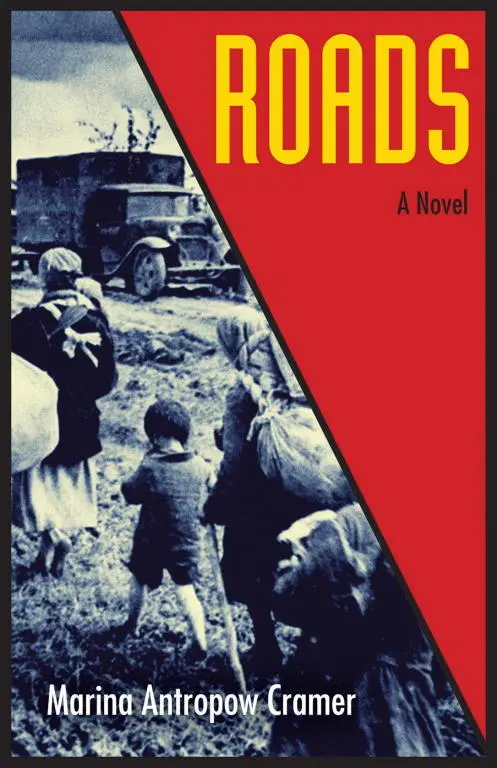
Здесь есть возможность читать онлайн «Marina Cramer - Roads» весь текст электронной книги совершенно бесплатно (целиком полную версию без сокращений). В некоторых случаях можно слушать аудио, скачать через торрент в формате fb2 и присутствует краткое содержание. Город: Chicago, Год выпуска: 2017, ISBN: 2017, Издательство: Academy Chicago Publishers, Жанр: Историческая проза, на английском языке. Описание произведения, (предисловие) а так же отзывы посетителей доступны на портале библиотеки ЛибКат.
- Название:Roads
- Автор:
- Издательство:Academy Chicago Publishers
- Жанр:
- Год:2017
- Город:Chicago
- ISBN:978-1-61373-558-9
- Рейтинг книги:5 / 5. Голосов: 1
-
Избранное:Добавить в избранное
- Отзывы:
-
Ваша оценка:
Roads: краткое содержание, описание и аннотация
Предлагаем к чтению аннотацию, описание, краткое содержание или предисловие (зависит от того, что написал сам автор книги «Roads»). Если вы не нашли необходимую информацию о книге — напишите в комментариях, мы постараемся отыскать её.
By winter 1945, Allied air raids destroy strategic sites; Dresden, a city of no military consequence, seems safe. The world knows Dresden’s fate.
Roads
Roads — читать онлайн бесплатно полную книгу (весь текст) целиком
Ниже представлен текст книги, разбитый по страницам. Система сохранения места последней прочитанной страницы, позволяет с удобством читать онлайн бесплатно книгу «Roads», без необходимости каждый раз заново искать на чём Вы остановились. Поставьте закладку, и сможете в любой момент перейти на страницу, на которой закончили чтение.
Интервал:
Закладка:
“We can’t always get what we need, so we make do. I’m learning new ways to mix colors. It can be challenging,” Filip admitted. “But here is what I wanted to say. We need a singer for the summer season, someone to engage the audience while we change sets between plays. What do you think? Would you do it?”
Galina stared at him, wide-eyed. “Me? Onstage?”
“Why not? Your voice is so fine. People would love to hear you sing.”
Galina gazed into the near distance, where a family of ducks paddled around the lily pond, the fuzzy youngsters following their mother like beads on a string. “Mama would never allow it,” she said decisively. “Why even think about it?”
“Well, what if I… you know… if I were to ask her, to explain…” Filip’s voice trailed off, breaking up into a hoarse crackle he thought he had outgrown. He coughed, twice. “It might help,” he continued, back in control of his vocal cords.
Galina said nothing. She watched the ducks dive in unison for tasty tidbits under the water’s surface, their tail feathers wagging in the air like a line of folk dancers’ scarves. A tall thin man walking a large thin mutt passed their bench, casting a questioning glance at the tense silence between the young people. How does he manage to feed that dog? Galina wondered. He must give it all his meat rations.
She pushed away the irrelevant thought, waited until the man and his dog had moved on down the path, and turned to face Filip, her fingers laced tightly together in her lap. “ Horosho . All right. We can ask. But don’t be surprised at the answer.”
They boarded the tram at Pushkinskaya Street, found a seat at the rear, facing the back of the car. They sat straight as soldiers on parade, their bodies not touching but close enough to feel the heat radiating from each other’s sunbaked skin. “Look at those tracks,” Galina giggled, watching the car glide along its prescribed course through a web of city streets, the parallel silver rails stretching behind as if spun out by the rhythmically clicking wheels. “Like a pair of snail trails in Mama’s garden.”
Filip smiled absently, his attention focused on the people in the street. Some hurried by with paper-wrapped parcels or string shopping bags, in which he spotted the occasional bunch of carrots or beets. Most people, though, were not moving. They stood in long lines that snaked through the streets and around corners, waiting for a loaf of bread, a half kilo of sausage, a pair of ill-fitting shoes, a small measure of rice. Why was that? He knew there were war shortages, that the nation’s defenders had to be fed and that their needs came first. He had heard, too, that the German occupation troops often commandeered shipments of food and supplies to send to their own homeland, now under attack from both east and west. But wasn’t Ukraine a region of limitless resources and efficient collective farms? The newspapers printed photographs of strong, cheerful women, hair tied back with head scarves, filling vacancies in factories and operating farm equipment while the men served in the armed forces, defending the nation against yet another intruder who had not learned the lesson of Napoleon’s ignominious defeat.
Filip understood the need to make sure basic goods were fairly distributed among the people, to discourage greedy hoarding for personal capitalist gain, but was it really necessary to have these lines? He hated waiting, standing in place in all kinds of weather; more and more, these days, he had to perform this deadening duty while his mother stood in another line for another commodity. With school nearly out and summer approaching, he knew he would be spending precious time at this boring activity, taking time from his painting, his stamps, his books, and his theater work.
“We get off here,” Galina said, tapping his arm. Out on the street, she led him briskly through a maze of alleys, skirting groups of playing children. Pairs of old men sat on overturned crates, absorbed in games of chess or dominoes, while lines of washing snapped overhead, strung between second-story windows.
Filip had never seen this part of the city. Away from the vintage architecture of hotels and elegant tourist guesthouses, the shops and government buildings he passed every day going to and from school, here was life as he had never imagined it. He followed Galina into a short cobblestone alley that ended in a small open courtyard, the earth packed down hard by years of daily use, a water pump and shallow trough in the center. The yard was bordered on four sides with identical two-story brick-front houses; a narrow wooden balcony ringed the upper level.
All around him were signs of life—chickens scratched gravely in the dirt, children squatted over a game of marbles. A woman filled battered tin buckets at the pump; a baby wailed; an old man’s voice raised in querulous anger floated on the afternoon air. Filip’s nose was assaulted with an intensity of smells: harsh laundry soap mingled with cooked cabbage, fried fish, baked goods, the sweetness of rotting fruit.
“How many families live here?” he asked, trying to cover his amazement at this concentration of human activity, its messy intensity completely unlike his own quiet neighborhood.
“Eight,” Galina replied. “About forty people, more or less. Someone is always leaving or coming to stay awhile with relatives.” She led him across the yard and stopped in front of an open door. “Wait here a minute. I’ll get Mama.”
Filip listened with growing apprehension to the kitchen sounds drifting out the open window—a lid clanged against a cooking pot, an oven door creaked shut, releasing the tantalizing aroma of baking dough.
He wanted to run, to be anywhere but here. This cauldron of humanity had no relevance at all to his mission. The errand he had invented, which had appeared so inspired in the sanctuary of the group’s wishful discussion, now seemed foolish and impetuous. What did any of this have to do with Galina singing at the theater? He had new stamps to sort, a Victor Hugo novel to finish reading. His mother, back from the day’s shopping expeditions, would be putting down her crochet hook, or pausing in a game of solitaire, beginning to wonder why he was late. He wanted to run, but felt trapped by the maze of streets and did not know the way out. There was nothing to do but wait.
He became aware, through the ceaseless overlay of noise, of a faint rustling off to the left of the door. Turning, he gave an involuntary shudder, then stepped closer, overcome by curiosity, for a better look. A small oblong table placed against the wall of the house held several rough wooden trays covered with wire mesh. The trays were alive with glossy dark-green leaves and white grubs thick as his little finger. He watched, fascinated, while the revolting mass writhed in an orgy of feeding, like maggots in rotting meat.
“Silkworms.” In his absorption, he had not heard Galina come out of the house. “We take the cocoons to a cloth manufacturer in the Tatar settlement, outside of town, in exchange for food and household stuff. They have horse meat and fine leather things, the Tatars. Sometimes my father carves the belts and little boxes with ornamental designs and sells them in the bazaar. Germans pay good money for them, along with Papa’s carved ivory brooches and Yalta mementos.”
“I had no idea,” Filip said, bemused.
“Of what? Where silk comes from, or of how we get by? The worms are not much trouble, as long as we can get mulberry leaves for them to eat, and keep the birds away. Come inside,” she instructed. “Mama would rather not talk in the courtyard.”
“I had no idea,” he repeated. His head buzzed, bombarded by impressions, his eyes opened to a complexity of survival tactics far beyond the scope of government programs or Pioneer guidelines. Here, just beyond the reach of the orderly officialdom that ruled his own household, was another way to live, trading worms for food. It was too much.
Читать дальшеИнтервал:
Закладка:
Похожие книги на «Roads»
Представляем Вашему вниманию похожие книги на «Roads» списком для выбора. Мы отобрали схожую по названию и смыслу литературу в надежде предоставить читателям больше вариантов отыскать новые, интересные, ещё непрочитанные произведения.








Обсуждение, отзывы о книге «Roads» и просто собственные мнения читателей. Оставьте ваши комментарии, напишите, что Вы думаете о произведении, его смысле или главных героях. Укажите что конкретно понравилось, а что нет, и почему Вы так считаете.