Marina Cramer - Roads
Здесь есть возможность читать онлайн «Marina Cramer - Roads» весь текст электронной книги совершенно бесплатно (целиком полную версию без сокращений). В некоторых случаях можно слушать аудио, скачать через торрент в формате fb2 и присутствует краткое содержание. Город: Chicago, Год выпуска: 2017, ISBN: 2017, Издательство: Academy Chicago Publishers, Жанр: Историческая проза, на английском языке. Описание произведения, (предисловие) а так же отзывы посетителей доступны на портале библиотеки ЛибКат.
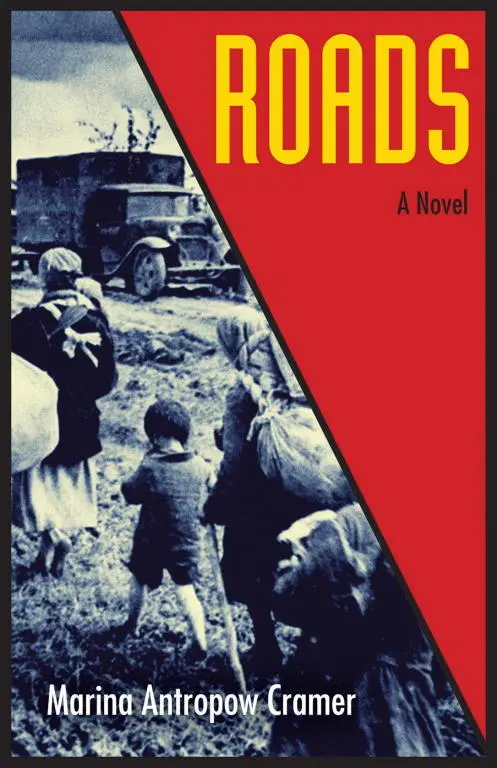
- Название:Roads
- Автор:
- Издательство:Academy Chicago Publishers
- Жанр:
- Год:2017
- Город:Chicago
- ISBN:978-1-61373-558-9
- Рейтинг книги:5 / 5. Голосов: 1
-
Избранное:Добавить в избранное
- Отзывы:
-
Ваша оценка:
Roads: краткое содержание, описание и аннотация
Предлагаем к чтению аннотацию, описание, краткое содержание или предисловие (зависит от того, что написал сам автор книги «Roads»). Если вы не нашли необходимую информацию о книге — напишите в комментариях, мы постараемся отыскать её.
By winter 1945, Allied air raids destroy strategic sites; Dresden, a city of no military consequence, seems safe. The world knows Dresden’s fate.
Roads
Roads — читать онлайн бесплатно полную книгу (весь текст) целиком
Ниже представлен текст книги, разбитый по страницам. Система сохранения места последней прочитанной страницы, позволяет с удобством читать онлайн бесплатно книгу «Roads», без необходимости каждый раз заново искать на чём Вы остановились. Поставьте закладку, и сможете в любой момент перейти на страницу, на которой закончили чтение.
Интервал:
Закладка:
Here young people could play games, listen to music, dance, and enjoy each other’s company. Except for the obligatory portraits of Lenin and Stalin on the wall, the club was not politically oriented and was free and open to all. Someone had found a used phonograph. The city, for the time being, charged no rent, as long as the premises were kept clean and undamaged. Whether the motivation was to provide young people a safe place to be together, or a way for authorities to know where they gathered, was open to interpretation.
Making his way toward the clubhouse after the Pioneer meeting, Filip hoped Galina would come. She had promised, but he knew that her mother could override any plans they made, requiring Galina to help in the house or simply not allowing her to go out at all. Today was an important day, not because of the patriotic holiday, but because he so very much wanted her to hear the records he had brought. He was welcome to visit in her home, but there was no phonograph there, and it was entirely unseemly for her to come to his parents’ apartment, as they all knew. And he did not think he could “borrow” the records a second time.
Immersed in these thoughts, he barely noticed the change in activity around him. People were moving faster, some were running, carrying small children or dragging them by the hand. Had something happened? Filip stopped, bewildered.
He did not register the drone of the engines until the airplane was almost directly over his head. It was a sleek slate-gray apparition, emblazoned with black swastikas. Dark as a storm cloud, it sliced through the sunlit afternoon sky like a fish through water. He was struck by the power of its inescapable presence; it seemed indestructible, commanding the space around it with total authority.
It was magnificent.
How must it feel to be a young man, not much older than his own fifteen years, in control of such a splendid machine, for all the world to see? He stood rooted, unable to take his eyes off the plane, mystified by the dark cylindrical object that emerged from an open hatch in its belly. What kind of odd robotic birth was he witnessing? What did it all mean? How like a scene from a Jules Verne novel, where strange and wonderful things happened in vaguely futuristic settings created by the author’s prodigious imagination. Only this was real, the object now falling rapidly toward the ground.
“Filip!” He felt a hand on his arm, looked down to see Galina’s flushed face, contorted with anxiety. “What are you gaping at? Take shelter!” The air filled with a piercing whine, moving over and past them like an otherworldly siren. Galina yanked at him; they followed a middle-aged woman into a nearby building, down a steep flight of stairs into the basement. “Have you never seen a bomber before?”
“No,” he admitted. “Only in pictures and on stamps.” Becoming aware of other people around him in the murky room, he dropped his voice to a whisper. “It was beautiful.”
Galina stared at him, speechless. She shook her head and sat down on some kind of trunk or crate. In the dim light her eyes glowed like a cat’s in a coal bin.
“It’s all right if you hear them,” a voice from the other end of the room observed to no one in particular. “If you hear the whine, the bomb has already passed. The one that kills you is the one you never hear.”
There was no more conversation after that, only the uneven breathing of twenty or thirty people and, somewhere in the dark recess of the dusty cellar, a quavery voice reciting the Lord’s Prayer. Then silence, punctured by another muffled explosion, the sound of glass breaking, and, somewhere outside, the frenetic barking of a dog. After a few minutes the barking stopped, and the howling began, one dog joined by a chorus of others in a weird call-and-response of raw animal terror. Filip felt Galina shudder beside him at the primal, eerie sound; the hair on the back of his neck prickled at its unearthly timbre.
Someone at the top of the stairs opened the door, and everyone filed out, avoiding each other’s eyes as if they had shared a guilty secret. Outside, a bony black mutt still howled, its muzzle raised to the now empty sky in a classic folkloric silhouette.
“ Molchi , Satanah ,” a man’s rough voice broke the spell. “Shut up, son of Satan. It’s all over.” He picked up a loose stone and lobbed it at the dog. The stone caught the beast in its emaciated hindquarters, making it yelp and slink away.
“Is that your dog?” someone asked.
“Who can afford to keep a dog? This one looks too skinny to eat and too mean to die. Lucky, in its own way.”
The air smelled acrid. Yellowish smoke, licked with receding flames, circled and spiraled up from a shallow crater in the sidewalk. The street had turned to rubble where the bomb had hit, missing a furniture warehouse but damaging the facade on several limestone government buildings. Galina held the back of her hand against her mouth and nose, trying to avoid breathing in the fine ochre dust that seemed to float on the sunbeams of a heedlessly fine Yalta afternoon.
“Watch the glass,” Filip said, his voice muffled by the edge of the Pioneer scarf he had pulled up to mask his face. “Do you want this?” He offered her the immaculately pressed handkerchief his mother had left on his dresser just that morning.
She shook her head, crossed the street to where the air seemed to have cleared a little, and faced him. “Have you no sense? To stand there gaping like a country fool on his first trip to the city, watching a bomb”—she stamped her foot, repeating “a bomb ” in a voice edged with total exasperation—“fall on your head. You would be dead now!”
“I…,” he started, but found he had nothing to say. To admit that he had not recognized the bomb for what it was sounded too stupid, even to his own ears. He shrugged, pressing his lips together, then took the scarf off his neck, folded it neatly, and tucked it, along with the pristine handkerchief, into his pocket. “I thought my father said the Germans are north of here, near Moscow,” he finally managed by way of explanation. “Can we still go to the clubhouse?”
“It’s not the first time they have turned to fly in our direction. You must have had your head buried in your stamp collection,” Galina said grimly, but with the hint of an indulgent smile. “We may as well go to the clubhouse. It may be gone tomorrow.”
The clubhouse was buzzing with excitement. Those who had witnessed the bombing took center stage, describing the experience to the less fortunate ones, who had only heard the explosion. The room resonated with questions and speculations. Why was there only one bomber? Why not a squadron? Was this an isolated incident, or a warning? Maybe it was just an inexperienced pilot who had lost his bearings and needed to lighten his aircraft to conserve fuel so he could get back home. Well, what are we, then? Pieces on a game board? Filip thought. What does it matter whether the attack is deliberate or accidental, to a dead man?
“My uncle says the Germans have moved south, through Czechoslovakia and Ukraine. Crimea could be next, Odessa and Yalta, while most of our troops are engaged to the north, defending the cities,” one boy said soberly.
“Why would the Nazis want Yalta? For the mineral baths, or the figs and melons?” another challenged.
“ Durak . For access to the Black Sea, you fool, with Turkey on the other side.”
A dark-haired girl in a faded blue dress jumped up and cranked the phonograph. “Let’s dance. Pomirat’ tak s mouzikoy . If we must die, let’s at least have music.”
It was a sentiment everyone agreed with. Soon the room was alive with energetic bodies moving to a jazzy polka beat, laughing and twirling, making up new steps, singing along with mindless lyrics that spoke of love and hope and more love and love again. They moved in the moment, their joy as irrepressibly desperate as it was spontaneous.
Читать дальшеИнтервал:
Закладка:
Похожие книги на «Roads»
Представляем Вашему вниманию похожие книги на «Roads» списком для выбора. Мы отобрали схожую по названию и смыслу литературу в надежде предоставить читателям больше вариантов отыскать новые, интересные, ещё непрочитанные произведения.






Обсуждение, отзывы о книге «Roads» и просто собственные мнения читателей. Оставьте ваши комментарии, напишите, что Вы думаете о произведении, его смысле или главных героях. Укажите что конкретно понравилось, а что нет, и почему Вы так считаете.