Marina Cramer - Roads
Здесь есть возможность читать онлайн «Marina Cramer - Roads» весь текст электронной книги совершенно бесплатно (целиком полную версию без сокращений). В некоторых случаях можно слушать аудио, скачать через торрент в формате fb2 и присутствует краткое содержание. Город: Chicago, Год выпуска: 2017, ISBN: 2017, Издательство: Academy Chicago Publishers, Жанр: Историческая проза, на английском языке. Описание произведения, (предисловие) а так же отзывы посетителей доступны на портале библиотеки ЛибКат.
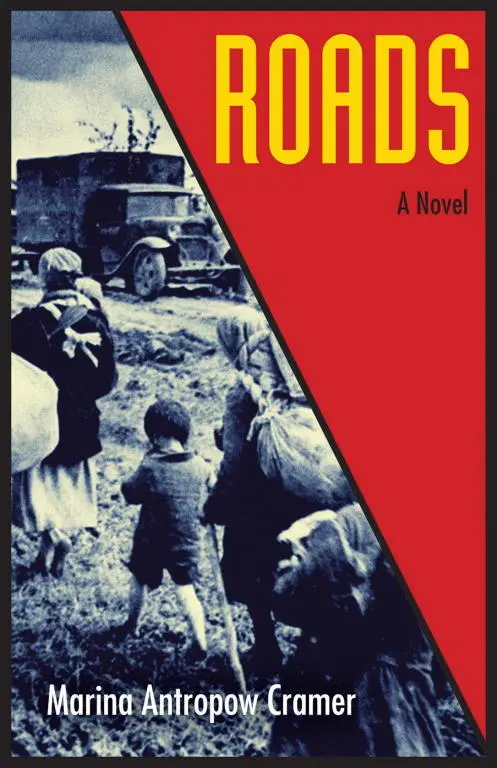
- Название:Roads
- Автор:
- Издательство:Academy Chicago Publishers
- Жанр:
- Год:2017
- Город:Chicago
- ISBN:978-1-61373-558-9
- Рейтинг книги:5 / 5. Голосов: 1
-
Избранное:Добавить в избранное
- Отзывы:
-
Ваша оценка:
Roads: краткое содержание, описание и аннотация
Предлагаем к чтению аннотацию, описание, краткое содержание или предисловие (зависит от того, что написал сам автор книги «Roads»). Если вы не нашли необходимую информацию о книге — напишите в комментариях, мы постараемся отыскать её.
By winter 1945, Allied air raids destroy strategic sites; Dresden, a city of no military consequence, seems safe. The world knows Dresden’s fate.
Roads
Roads — читать онлайн бесплатно полную книгу (весь текст) целиком
Ниже представлен текст книги, разбитый по страницам. Система сохранения места последней прочитанной страницы, позволяет с удобством читать онлайн бесплатно книгу «Roads», без необходимости каждый раз заново искать на чём Вы остановились. Поставьте закладку, и сможете в любой момент перейти на страницу, на которой закончили чтение.
Интервал:
Закладка:
“Good thing we live in a mild climate,” she said, nailing a decorative rug over the fourth wall to conceal the rough exterior surface of the main house. “With the roof in one piece, you and your books will be safe and dry here. And for most of the winter months, you will be in Kharkov, at university.”
“Is there snow in Kharkov?” Galina asked. She had come in through the new outside door, carrying her brother’s desk chair. When no one bothered to reply, she left the room, coming back with a stack of notebooks.
“Is there snow in Kharkov? More than the few flakes we see here—blink and it has melted away?” She poked Maksim in the back with the corners of the books in her arms.
“What a nuisance. Snow, yes,” he started to say, then spun around. “Give me those! Ai , Mama, when will she learn not to touch my things?”
Galina relinquished the notebooks, raised her arms in surrender. “Just trying to help. Tell me about snow.”
“Cold and wet. Walk in it without galoshes and you ruin your shoes. Turns to filthy slush in the road, ice on the sidewalks. Causes train wrecks.” He placed the notebooks on his desk, aligning the corners with methodical precision. “You would tire of it in a week.”
“Well, you can have it. I like the beach, the sun, the sea birds. What do you have in Kharkov, pigeons?”
“Who cares? I’m not there to look at birds. Besides, pigeons are tastier than seagulls, and much easier to catch.” He turned away from her, began arranging books on the shelf his mother had nailed above his narrow desk.
“As if you have ever tried,” Galina muttered. She watched him slide the books this way and that, shifting them in an exacting order known only to himself.
“You must have something else to do,” he said without looking at her. “We are finished here.”
“Thank you, dear sister, for all your help,” she prompted, mimicking his cool tone.
He sighed, took off his glasses, polished their already clean lenses on his shirt sleeve. “Thank you. Now go.”
8
Kharkov, 4 October 1940
Dear Mama,
I have moved out of the dormitory, where there are simply too many distractions. You know I do not care to discuss politics, or the war in Europe, or the state of the world, especially with people I barely know. Too much chatter gets in the way of my studies, even if people talk among themselves and not to me.
Professor Zorkin, my anatomy instructor, helped me find a room in a private apartment, very close to the university. My landlady is a widow, about your age, I would guess, with two sons in the service: one in the army, the other a sailor. In exchange for my weekly meat ration, I receive a plate of soup for my daily dinner and the use of a very small but quiet room. Along with my full bread and tea rations, which I keep for myself, I get by well enough.
Please send some warm clothing and socks, if possible.
Your loving son, MaksimPS: My greetings to Father and Galya. I trust you are all well.
Kharkov, 10 December 1940
Dear Mama,
Thank you for the package. Miraculously, it arrived intact just this morning, along with your letter. The coat, alas, was too small, but I was able to trade it for a proper fur-lined shapka , with earflaps—a little moth-eaten but quite serviceable. At least my head will be warm and dry.
Please thank Galya for the socks. It was clever of her to unravel my old blue vest and reuse the yarn. They are a little snug, and I might have chosen a different color, but I can see they are well made and I am grateful for her efforts.
I have secured a little employment, tutoring the young son of a prominent Party member. The boy has fallen behind in mathematics and his family is afraid he will not pass his exams. I will do what I can, but he is lazy and not too bright. The army may turn out to be the best place for him. But the money is welcome, so tell Father not to worry about me on that account.
Do not respond to this letter; I am not likely to receive your reply before the holiday recess, when I expect to be home with you.
Your son, Maksim9
UNLIKE FILIP, WHOSE FAMILY lived just two streets in from the sea in a government-issued three-room apartment, Galina’s home was inland, too far to walk. In the last year, they had started to spend time together, strolling down to the embankment after school if the weather was clear, watching the waves break against the concrete seawall, talking or not, as the mood struck them.
“Why do they call it Black?” Galina wondered aloud, leaning over the iron guardrail to peer into the water. She had been singing “Chernoye Morye” softly to herself. The new sentimental ballad about the Black Sea had quickly become a popular hit. “It’s so blue, blue, blue.”
“You have to go out on a boat, where the water is deeper,” Filip replied seriously. “Then it looks black.”
“How do you know?” she challenged him, laughing.
“My uncle took me once, on a fishing trip.”
“But that’s not allowed! My papa says no one can sail or fish without special permission.”
“It was a few years ago, when I was small. Maybe he had permission, or maybe it was not required then. I don’t know.” Filip shrugged, impatient with the question. “We went out at sunrise, with a couple of my older cousins.”
“Did you catch anything?”
“Not me. I did not like the fishing. Too messy and smelly, and kind of boring.” He made a face, remembering the ingrained odors that permeated the weathered wood, odors unrelieved by the steady breeze that seemed to blow from all directions at once. “But I liked being on the boat,” he added. “One day I want to really go somewhere, have an adventure, see more than our own shoreline from an inland sea.”
“Let me know when you’re ready to sail to America. I will come see you off.” Galina laughed again, her hair and lashes adorned with beads of sea spray, making her look magically iridescent.
Filip smiled. “How beautiful you are,” he blurted, amazed at his own courage.
“I have to go now.” She was suddenly serious. “It’s washing day. I have to help Mama with the laundry.”
They walked in silence through the shopping district, looking absently in nearly empty store windows. The famine years were over, but since Hitler’s invasion of Poland, Belarus, and Ukraine, goods had become scarce; strict rationing was a fact of daily life. What merchandise there was—toys, household goods, books—seemed to be for the benefit of Yalta’s visitors, who still trickled in, drawn by the salt air and sunny climate. They, and the newly arrived German troops, were the ones who had money to spend in shops.
After Galina boarded the tram that would take her home, Filip walked aimlessly, his hands deep in his pants pockets. His senses were filled with Galina—the open, spirited look of her, the way she smelled faintly of starch and rosewater, the little joyous skip in her step, the curve of her neck when she bent her head over her schoolwork. Filip had stopped offering to help her; she was not troubled by her mediocre grades, moving from one class to the next with just enough effort to get by. “You want to go to university, to be an architect. I only want to sing,” she would say. “Do I need geometry to sing?”
And she sang at every opportunity: traditional folk songs and the new jazzy tunes and romances introduced by popular performers at Sunday bandstand dances in the park. Her voice was pure and sweet; it never failed to tug at his heart. It had an ephemeral beauty but also a concrete quality, as if you could pluck it from the air and hold it in your hand, sift it through your fingers like fine sand. Even now, the fading refrain of “Chernoye Morye” lingered in his ears.
Читать дальшеИнтервал:
Закладка:
Похожие книги на «Roads»
Представляем Вашему вниманию похожие книги на «Roads» списком для выбора. Мы отобрали схожую по названию и смыслу литературу в надежде предоставить читателям больше вариантов отыскать новые, интересные, ещё непрочитанные произведения.







Обсуждение, отзывы о книге «Roads» и просто собственные мнения читателей. Оставьте ваши комментарии, напишите, что Вы думаете о произведении, его смысле или главных героях. Укажите что конкретно понравилось, а что нет, и почему Вы так считаете.