Marina Cramer - Roads
Здесь есть возможность читать онлайн «Marina Cramer - Roads» весь текст электронной книги совершенно бесплатно (целиком полную версию без сокращений). В некоторых случаях можно слушать аудио, скачать через торрент в формате fb2 и присутствует краткое содержание. Город: Chicago, Год выпуска: 2017, ISBN: 2017, Издательство: Academy Chicago Publishers, Жанр: Историческая проза, на английском языке. Описание произведения, (предисловие) а так же отзывы посетителей доступны на портале библиотеки ЛибКат.
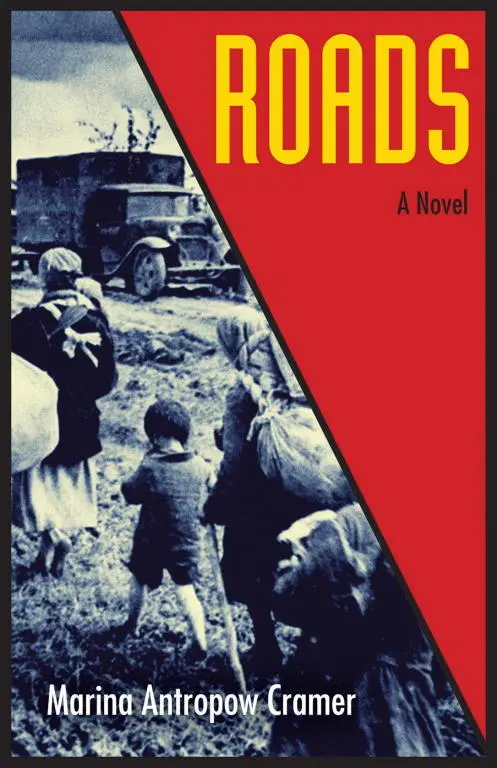
- Название:Roads
- Автор:
- Издательство:Academy Chicago Publishers
- Жанр:
- Год:2017
- Город:Chicago
- ISBN:978-1-61373-558-9
- Рейтинг книги:5 / 5. Голосов: 1
-
Избранное:Добавить в избранное
- Отзывы:
-
Ваша оценка:
Roads: краткое содержание, описание и аннотация
Предлагаем к чтению аннотацию, описание, краткое содержание или предисловие (зависит от того, что написал сам автор книги «Roads»). Если вы не нашли необходимую информацию о книге — напишите в комментариях, мы постараемся отыскать её.
By winter 1945, Allied air raids destroy strategic sites; Dresden, a city of no military consequence, seems safe. The world knows Dresden’s fate.
Roads
Roads — читать онлайн бесплатно полную книгу (весь текст) целиком
Ниже представлен текст книги, разбитый по страницам. Система сохранения места последней прочитанной страницы, позволяет с удобством читать онлайн бесплатно книгу «Roads», без необходимости каждый раз заново искать на чём Вы остановились. Поставьте закладку, и сможете в любой момент перейти на страницу, на которой закончили чтение.
Интервал:
Закладка:
Not knowing quite how he got there, he found himself in front of Avram’s shop. The usual crates of cherries and apricots rested on rough wooden trestles beside the open door, but something was different. The battered, peeling sign (HOUSEHOLD GOODS, PRODUCE, FLOUR, TEA), with its hand-painted whimsical teapot, was gone. In its place hung a garish red board, THE PEOPLE’S STORE spelled out in large white letters. A short, round-faced woman in a dingy brown smock leaned against the doorway, cracking sunflower seeds with her teeth.
“ Shto nado ?” she asked brusquely, popping the last few seeds into her mouth and brushing her large square hands down over an ample stomach. “What do you need?”
“I—I,” Filip stuttered. “Where is Avram?”
“No more Jew store,” the woman said, spitting sunflower shells onto the sidewalk and crossing arms plump as unbaked dough across her bosom. “No more Jew boardinghouse. Rooms for officers only.”
“But where is Avram?” Filip repeated dumbly. “I—I owe him some money.”
“Gone,” she shrugged. “I don’t know where, and I don’t care. Nor should you,” she added, nodding at the Young Pioneer pin on his collar. “If you owe money, you can pay me. The motherland needs you, young man.”
“I… don’t have it with me.” Filip backed away, feeling assaulted by the slogan; it sounded glib and hollow coming from this peasant. Who was this baba anyway? The Pioneers were young and energetic, led by schoolteachers and government clerks. Even the factory workers’ children among them were striving for a better future. From each according to ability, to each according to need. He had repeated the words countless times, thinking he knew their meaning: you serve your country, make your contribution to society, you receive education, wages, housing, food, a pension when you retire. That made sense. But this woman, this crude, seed-crunching uneducated usurper, who was she? She must be the embodiment of “the people,” an amorphous, faceless entity Filip had always assumed had nothing to do with himself and his world. Then where did Avram fit in, and Laila? They had served the neighborhood since before Filip was born, making a modest living in exchange for tireless and cheerful labor. There was room in the Soviet future for them, too. Wasn’t there?
10
FILIP HURRIED. It had not been easy to slip out of the house with his mother’s favorite records; even finding a spare pillowcase to hide them in had taken some doing. But the clubhouse door was not locked, and he was able to hide his package under a table in the vestibule, concealed by a red cloth someone had draped over it in honor of the holiday.
What holiday was it again? He could not remember which fearless leader’s birthday or pivotal struggle was being celebrated. Now he was late for the Young Pioneer meeting at school, and was sure to catch a reprimand from the unit leader. The reprimand did not matter to him as much as the attention—he dreaded being singled out before the group, everyone a witness to his shame.
“…and this is why we have called a special meeting today. Good morning, Comrade! Did you sleep well?” Every head turned to watch Filip, red-faced, sink into the nearest seat amid general laughter.
The leader, a young schoolteacher, held up a restraining hand. “Some may think that a patriotic holiday is a time for personal relaxation. Not so. What the motherland expects of you is personal reflection and ever-greater vigilance. What have you observed this week?” She scanned the room expectantly.
“My mother was up very early to iron a fresh blouse for the ceremony. But my grandfather grumbled, saying he would miss his walk in the park,” a girl in the third row offered.
“Good work. We must help our older citizens to overcome their outdated thought habits. You must do this. And remember, we are all here to help you, to help one another recognize the greater good, and to fight against weakness and negativity.”
Filip squirmed in his seat. When had things changed? He missed the innocence of the earlier meetings, the stories of valor and leadership, the lessons from history. He had loved hearing about the downfall of Napoleon’s prideful exploits, about the heroes of the French Revolution, unafraid to spill the blood of aristocrats in the streets along with their own. He had loved learning how, even in America, the fearless revolutionary George Washington had triumphed against imperialist evil, only to see his efforts sabotaged by greedy capitalist interests. And had not the great Abraham Lincoln, a humble man of the people, laid down his life to lift his black brethren out of bondage? Most of all, Filip missed the songs of his childhood, the songs of brotherhood and hope in a shiny new future, a future as unequivocally pure, true, and logical as a mathematical equation.
Now the meetings had acquired a different character. There would still be a song or two, but the words were harsh, impatient, militant. The rest of the hour was given to sharing—what have you heard in your neighborhood, your building, your home? Who has extra rations, and how did they get them? Every bit of information, no matter how small, was praiseworthy. One child after another rose to report on intimate domestic activities, ridiculously harmless in themselves, that took on a sinister cast in the leader’s cynical suspicious interpretation.
In this, Filip’s efforts were deemed to be nearly worthless. He could see no danger to the state from his mother’s love of opera, even if some of the recordings she treasured were sung in decadent foreign languages. If his own father, a Party member, could tolerate her participation in clandestine religious meetings, from which she returned calm and visibly happy, he could see no reason to expose her to ridicule or punishment. By his early adolescent years, he had gained a reputation as the least observant of dreamers, content to spend his time with books and stamps, deaf to any amount of increased pressure to do his share of reporting on the activities of others.
So he kept quiet, or, when pressed to the limit, made his remarks so vague as to be entirely useless.
“I heard someone say the Bolsheviks were becoming as bad as the old regime,” he’d disclosed at an earlier meeting.
“Where did you hear this? At home?”
“No, in the street.”
“Who said it?”
“I don’t know.”
“A man or a woman?”
“It was a gruff voice. I can’t be sure.”
“You did not see them?”
“No, it was dark, and they were a few people behind me in the bread line.”
“When was this?”
“Last Tuesday, or maybe the week before…”
Dismissed, finally, with a disgusted wave of the hand, he knew he would be safe from questioning for some time to come.
Soon, when he turned sixteen, he would be too old for Young Pioneers. He had already decided not to sign up for membership in the Komsomol, the next level of youth service intended to complete the process of indoctrination, turning out fully formed Soviet citizens ready for Party work. Instead, he would focus his energies on his studies, making his grades so brilliant that his entrance to university would be assured.
After the meeting, there was a short procession around the schoolyard, a few enthusiastic speeches, two or three songs. Then they were free to spend the afternoon at leisure, following a final reminder to think, always, of the good of the nation.
The clubhouse had once been a restaurant and had a working kitchen. There was no extra food, of course, but every one of the twenty or so young people who were regular members tried to contribute a pinch of tea to brew in the communal pot. Lemons grew abundantly in Yalta’s Mediterranean climate, and sometimes, if anyone brought sugar, there would be lemonade.
Читать дальшеИнтервал:
Закладка:
Похожие книги на «Roads»
Представляем Вашему вниманию похожие книги на «Roads» списком для выбора. Мы отобрали схожую по названию и смыслу литературу в надежде предоставить читателям больше вариантов отыскать новые, интересные, ещё непрочитанные произведения.









Обсуждение, отзывы о книге «Roads» и просто собственные мнения читателей. Оставьте ваши комментарии, напишите, что Вы думаете о произведении, его смысле или главных героях. Укажите что конкретно понравилось, а что нет, и почему Вы так считаете.