Marina Cramer - Roads
Здесь есть возможность читать онлайн «Marina Cramer - Roads» весь текст электронной книги совершенно бесплатно (целиком полную версию без сокращений). В некоторых случаях можно слушать аудио, скачать через торрент в формате fb2 и присутствует краткое содержание. Город: Chicago, Год выпуска: 2017, ISBN: 2017, Издательство: Academy Chicago Publishers, Жанр: Историческая проза, на английском языке. Описание произведения, (предисловие) а так же отзывы посетителей доступны на портале библиотеки ЛибКат.
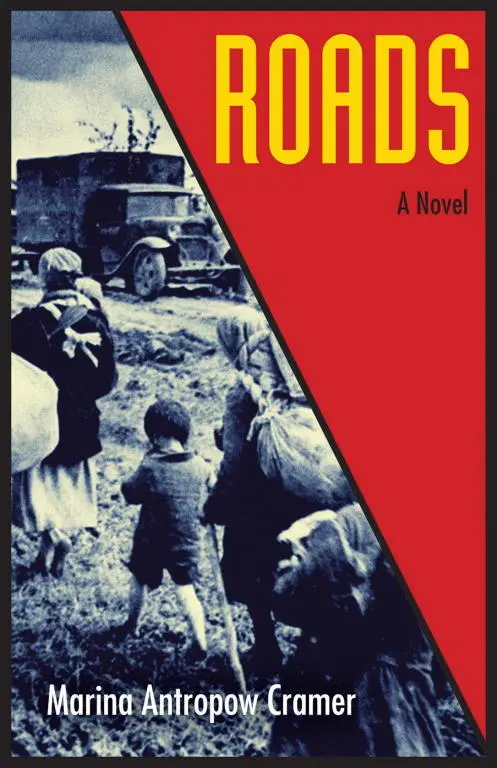
- Название:Roads
- Автор:
- Издательство:Academy Chicago Publishers
- Жанр:
- Год:2017
- Город:Chicago
- ISBN:978-1-61373-558-9
- Рейтинг книги:5 / 5. Голосов: 1
-
Избранное:Добавить в избранное
- Отзывы:
-
Ваша оценка:
Roads: краткое содержание, описание и аннотация
Предлагаем к чтению аннотацию, описание, краткое содержание или предисловие (зависит от того, что написал сам автор книги «Roads»). Если вы не нашли необходимую информацию о книге — напишите в комментариях, мы постараемся отыскать её.
By winter 1945, Allied air raids destroy strategic sites; Dresden, a city of no military consequence, seems safe. The world knows Dresden’s fate.
Roads
Roads — читать онлайн бесплатно полную книгу (весь текст) целиком
Ниже представлен текст книги, разбитый по страницам. Система сохранения места последней прочитанной страницы, позволяет с удобством читать онлайн бесплатно книгу «Roads», без необходимости каждый раз заново искать на чём Вы остановились. Поставьте закладку, и сможете в любой момент перейти на страницу, на которой закончили чтение.
Интервал:
Закладка:
The wedding took place early one Tuesday morning, in one of the two churches still permitted to remain open. Filip’s father, Vadim, had an urgent meeting at work; he sent his regrets and best wishes. His mother, Zoya, was there, along with Galina’s parents and their neighbor, Nina Mihailovna, who served as witness.
Galina wore a borrowed white suit, wide in the shoulders and long in the skirt, but quite presentable if not exactly chic. Zoya had contributed a diminutive pillbox hat and veil. The bride carried a hastily picked bunch of virginal violets.
Filip was in a dark suit, only a little short in the sleeves, the trousers pressed so carefully that the hem marks hardly showed at all. Borya had insisted his friend wear his lucky green tie, even though Filip had two ties of his own to choose from. “I passed all my exams with this tie on,” Borya said. “It will work for you, too.” This is not schoolwork , Filip wanted to point out, but the difference seemed clear and it was simpler to just wear the tie.
The wedding ceremony was shorter than they used to be. Years ago, in a judicial edict that permitted him to keep his post, the Moscow Patriarch had excised all the prayers for the health and well-being of the imperial family, along with other sections deemed toxic to the Communist state. There were no ceremonial crowns for stalwart groomsmen to hold over the heads of the bridal couple. The crowns, along with every other gold object the church possessed, had been confiscated and melted down for the greater good of the state treasury. Filip and Galina held pencil-thin amber candles, spoke their vows, and exchanged rings: narrow brass bands procured by Vadim as his contribution to the festivities. The choir’s part was sung by a lone nun from the convent at the outskirts of the city, the convent permitted to remain in existence solely because of the excellence of their winemaking.
After the ceremony, there was a party for all the courtyard residents and a handful of the couple’s school friends. Even crusty old Uncle Zhora came, and brought his bandura ; he consented to provide music as long as his glass of kvass was never less than half full. Never mind that the drink was of his own making; he had traded a small barrel of the bread beer to Ilya in exchange for a whole pack of German cigarettes. There was meat pie (what kind of meat was a question no one asked), pickled vegetables, beet and potato salad, fresh fruit, and whatever anyone else was able to add to the table. It was, after all, a wedding.
8
MAYBE IF Filip had not been so happy, nothing would have happened.
His married life settled into a succession of contented days. At school, preparing for the tenth grade examinations and the university entrance application to follow, he was as sure of himself as he had ever been.
Galina had no such ambitions. Once married, she had willingly dropped out of school and continued working at Zinaida Grigoryevna’s toy shop. Her earnings made a significant contribution to the household, and her cheerful nature helped lighten the struggle of daily living for everyone in the family. She went about her tasks, sewing, sweeping, cooking, tending the silkworms and the little courtyard garden, humming or singing all the while, filling the house with peace, even if the songs she chose to sing were sad ones.
After school, Filip continued to volunteer with the theater group, sketching backdrops onto both sides of reclaimed cloth for scene changes. Mishka, the black marketeer, had disappeared. There were rumors of capture and execution, of double-dealing between one of the Partisan hideouts in the forest and the Nazi stronghold in town, but no one knew for sure.
A straitlaced woman with a guitar replaced him. Her repertoire was limited to simple tunes, and while she played well enough, she had none of the liveliness Mishka and his accordion provoked by his robust presence. And she had no feeling for comedy at all, only a thin, high voice that could not reach beyond the first few rows of the little hall. Jealous of her art, she refused to play for Galina’s intermission songs. Galina sang without accompaniment, songs of love and betrayal, loss and longing, and people listened; her strong, clear voice filled their eyes with tears and their hearts with joy, in the paradoxical love of suffering that the Russian character is prone to.
Filip usually stood in the wings, listening, often with Borya at his side. Not involved, strictly speaking, with the theater, his friend liked to hang around, sometimes lending a hand with scenery or props.
“That’s my wife,” Filip said once, almost in disbelief, while Galina sang of faded chrysanthemums and of love gone cold.
“I know it. You’re the envy of all the guys at school.” Borya lit a cigarette.
“Including you?”
“Everybody loves Galya. Can you do this?” He inhaled deeply and blew out a perfect smoke ring. They watched it float, growing larger and thinner, its shape shifting this way and that before dissipating into the air.
“No. You’ll have to show me how.”
Most days, Borya would be at the house when Galina returned from work. She would find them playing chess in the yard or poring over Filip’s stamp albums at the little table in the parlor, their heads, the dark and the fair, almost touching.
She envied them their bond, wished she, too, had a friend of the heart. But she had never been one to share girlish confidences; in the troubled times of their existence, everyone lived the same marginal, hardscrabble life. There was nothing to confide.
She was sure Filip and Borya never talked about their inmost feelings—what man would do that? Theirs was an easy, companionable friendship, born of shared interests and aspirations, unfettered by excess sentiment or unreasonable expectations.
Once, Borya brought firewood, dragging the roughly sawed logs from a young tree behind him like a sled on a rope. Filip, seated at the chess board, studying yesterday’s unfinished game, looked up. “Why?” he said, his hand hovering over a pawn, then moving it decisively to block Borya’s rook.
“To repay your mother-in-law for some of the meals you share with me.”
“Huh. Where did you get it?”
“Where the trees grow.” He stood at the board, took the pawn with his knight. “Check.”
Filip groaned. “In the park?”
“No, city boy. In the forest. Trees grow in the forest.”
Ksenia entered the yard from the kitchen, wiping her hands on her apron before reaching for the ax. “Let me do that, Ksenia Semyonovna.” Borya took the ax from her hand. “You go have a cup of tea.”
“How nice you are, Borya. No news?” They knew his parents had been arrested weeks ago, without a word of explanation.
Borya shook his head and went on chopping, expertly splitting the logs into stove-sized wedges. “Give me a hand here, Filip. Stack these over there.”
Filip rose reluctantly from the game. He stacked the firewood near the door, handling the rough edges gingerly to avoid splinters. “ Ai , holera ,” he swore, when the inevitable happened. He regarded the wobbly woodpile with malevolence, sucking the side of his thumb. “My queen took your knight. It’s your move.”
A month or so after Borya turned eighteen, his visits stopped, as did his school attendance. His name did not appear in the list of examination results posted on the announcement board. Maybe he forgot to wear his lucky green tie , Filip thought. He realized that with all the disruptions in his friend’s life, he no longer knew where to look for him.
He missed his chess partner, the easy banter they had enjoyed. Galina was sweet, and he loved being married to her, but she was always busy. His in-laws treated him well enough, but he certainly couldn’t talk to them. He saw his own mother two or three times a week, in the afternoons, and his father only on special occasions. He’ll turn up , he told himself, trying not to imagine all the things that could have caused Borya to vanish. It was not an uncommon occurrence.
Читать дальшеИнтервал:
Закладка:
Похожие книги на «Roads»
Представляем Вашему вниманию похожие книги на «Roads» списком для выбора. Мы отобрали схожую по названию и смыслу литературу в надежде предоставить читателям больше вариантов отыскать новые, интересные, ещё непрочитанные произведения.










Обсуждение, отзывы о книге «Roads» и просто собственные мнения читателей. Оставьте ваши комментарии, напишите, что Вы думаете о произведении, его смысле или главных героях. Укажите что конкретно понравилось, а что нет, и почему Вы так считаете.