Marina Cramer - Roads
Здесь есть возможность читать онлайн «Marina Cramer - Roads» весь текст электронной книги совершенно бесплатно (целиком полную версию без сокращений). В некоторых случаях можно слушать аудио, скачать через торрент в формате fb2 и присутствует краткое содержание. Город: Chicago, Год выпуска: 2017, ISBN: 2017, Издательство: Academy Chicago Publishers, Жанр: Историческая проза, на английском языке. Описание произведения, (предисловие) а так же отзывы посетителей доступны на портале библиотеки ЛибКат.
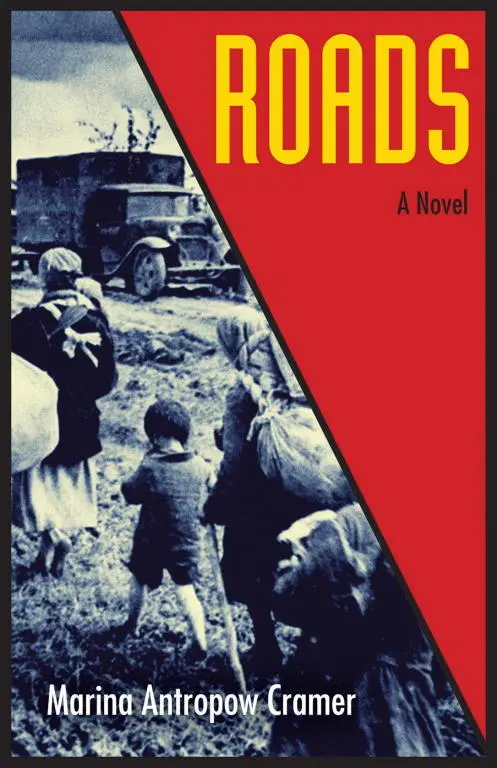
- Название:Roads
- Автор:
- Издательство:Academy Chicago Publishers
- Жанр:
- Год:2017
- Город:Chicago
- ISBN:978-1-61373-558-9
- Рейтинг книги:5 / 5. Голосов: 1
-
Избранное:Добавить в избранное
- Отзывы:
-
Ваша оценка:
Roads: краткое содержание, описание и аннотация
Предлагаем к чтению аннотацию, описание, краткое содержание или предисловие (зависит от того, что написал сам автор книги «Roads»). Если вы не нашли необходимую информацию о книге — напишите в комментариях, мы постараемся отыскать её.
By winter 1945, Allied air raids destroy strategic sites; Dresden, a city of no military consequence, seems safe. The world knows Dresden’s fate.
Roads
Roads — читать онлайн бесплатно полную книгу (весь текст) целиком
Ниже представлен текст книги, разбитый по страницам. Система сохранения места последней прочитанной страницы, позволяет с удобством читать онлайн бесплатно книгу «Roads», без необходимости каждый раз заново искать на чём Вы остановились. Поставьте закладку, и сможете в любой момент перейти на страницу, на которой закончили чтение.
Интервал:
Закладка:
“Stop crying,” Ksenia scolded. “Why take them if you ruin them with your tears?”
Galina dried her eyes. She added her own wedding portrait, the teenaged bride and groom side by side like children playing dress-up in borrowed clothes. That went on top, along with extra copies of everyone’s official passport picture. And that was all. She closed the cardboard folio, tied its brown silk ribbon, shut the suitcase.
“You have the travel permits, Ilya? The letters of introduction?” Ksenia asked.
“Right here,” he patted his breast pocket. “And my share of the money.”
“And I have mine,” she replied. “In case we get separated.”
Filip said nothing about the bills in his pocket, a parting contribution from his father. The photographs of his own family, which Zoya had given him, were tucked safely in his suitcase under his stamp albums.
“ Nu , well then,” Ksenia’s glance swept the room. Was she taking stock, noting the contents of her home, its abandoned furnishings, its familiar floors and walls and windows, never to be seen again? Or was she simply checking for forgotten necessities, making sure nothing essential had been left behind? “Let’s sit.”
They all knew the ancient custom: when all the journey preparations were done, everything packed and waiting at the door, everyone sits down and, after a moment of silence, all rise in unison and leave. No last-minute farewells, no hesitation. Sit. Stand. Go.
Ksenia, Ilya, and Galina turned toward the east corner of the room, where until an hour ago the ikona of Saint Nicholas had hung, and crossed themselves. Filip stood behind, his hands at his sides; he refused to participate in the religious part of the ritual, but made sure no one noticed.
Galina stopped on the threshold for a last glance around the rooms, at the remaining furniture and rugs. “What will happen to our things?”
Her father laid a reassuring hand on her shoulder. “Someone will use them, or sell them. Don’t trouble yourself over a few objects. We’ve had the use of them; now someone else can benefit. Is that suitcase heavy for you?”
“No, Papa. It’s not heavy.”
That wasn’t what I meant , Galina wanted to say. She had no special attachment to these particular things, many of them already old before becoming part of her childhood home. Hers was a more specific curiosity: she wanted to know the people, to touch the coats they would hang on the hooks near the door, see them sleeping in the beds, feel the vibration of their footsteps across the front room carpet, hear their talk and laughter around the kitchen table, smell the food they cooked on the old iron stove. She felt unmoored, suspended between the yawning void that was their future and the unpeopled vacuum they were leaving behind. Maybe we all feel this way , she thought. We just don’t know how to talk about it.
They passed through the courtyard and into the still-sleeping streets, the sun just rising over the distant mountains to the east. If anyone saw them leave, they gave no sign. No one called out a final greeting; no hand moved behind the curtained windows.
They took the early streetcar to the dock. The transport was to sail by barge to Odessa, they had been told, then travel by a succession of trains through Eastern Europe to its German destination. Papers checked, they sat on their luggage for hours in the open boat’s dank interior, talking little, watching other passengers walk the shaky plank and find places for themselves. Waiting.
Galina grasped the side of the boat for balance against the swaying of the antiquated vessel. It smelled of stagnant seawater and rotten fish, underlaid with something industrial, a clinging oily stench that stung the nostrils, unrelieved by the steady breeze from the sea.
“Never mind,” Ksenia said. “We are volunteers. We have good letters of introduction. Didn’t the officer who signed them promise us a farm assignment? It’s hard work, but it’s not factory labor. At least we’ll be in the country, in the fresh air.”
She rose and walked toward the prow, Ilya following a moment later. They stood looking past the harbor at the Black Sea, the gulls gliding in widening circles over its placid waters, a scroll of smoke from a passing freighter unfurling slowly in the cloudless sky. Above them, perched on the edge of its cliff, the celebrated Gull’s Nest Sanatorium kept vigil, the sea on one side and Yalta, their city, on the other. Ilya pushed his cap back, lit a cigarette. Ksenia tucked her hand under his arm. Neither spoke.
“What do I know of farm work?” Filip spat into the greenish foam lapping against the boat’s edge. I’m leaving all my hopes here, everything I love and wish for. Except… He looked at Galina.
She sat motionless, perched on two suitcases, her back not quite touching the damp side of the barge. Only her hands moved, the fingers weaving around each other as if of their own will, composing and delivering mysterious messages. My wife , he thought. Filip studied her face, the radiant beauty of it muted by an expression of such wistfulness, such sorrow, that he felt something shift in him, as if his heart had suddenly disclosed a previously dormant chamber, even as his mind struggled with the enormity of this moment. As though his childhood fell away then, and life, in all its ugliness and random unrelenting progress, crowded in.
All at once, he had so much to say. “Galya…”
“What?” she acknowledged, her stare fixed to the decaying boards at her feet.
The trip passed in a blur. Two armed German guards stood at either end of the barge, smoking and laughing together over the huddled travelers’ heads. Seasickness swept through the crowd, affecting most of the passengers; those who were not afflicted by the boat’s motion were sickened by the spectacle. Vomit was everywhere, slimy underfoot, sticking to shoes and luggage, cascading down people’s clothing in stinking patches that dried almost at once in the blazing afternoon sun.
Ilya was among the few who did not succumb; Ksenia held out longer than most by sheer force of will. Rocked by the slow progress of the barge through seas more turbulent than they appeared, Filip and Galina were able to retch over the side and avoid soiling their clothes.
They reached Odessa with the sun low in the sky, waited dockside while a dozen of their fellow passengers were put to work with buckets of seawater and stiff brooms, cleaning the boat for its return voyage. “ Schnell , russischen Schweine . Pigs. Clean faster,” the guards shouted, while the idle crew looked on, stony-faced, showing neither compassion nor contempt.
Then it was on to the train station, passing through the city’s broad avenues, guards riding with semiautomatic weapons trained on the marching group. Like a grotesque parade that stopped traffic to let it through, ignored by pedestrians who thronged the wide sidewalks in their early evening rush to what? Home, dinner, family?
“If this is how they treat volunteers…,” Filip muttered, but no one replied or even looked at him.
And Odessa! He longed to break away from the humiliating transport march and have even one hour to explore this glittering city. There were no shortages here. The shops were full of goods. Their windows glowed and beckoned, spilling pools of yellow light into the streets filled with people. He watched their faces flicker, passing through light and shadow in a cinematic panorama, searched them in vain for the harried look everyone seemed to wear back home. Why can’t we stay here? There was bread in the bakeries, and cakes, too; meat in the butcher shops. A haberdasher displayed hats and neckties; stylish creations draped on dress shop mannequins tempted the eye. There were toys, furniture, Turkish carpets, glassware, jewelry. Why can’t we stay?
Читать дальшеИнтервал:
Закладка:
Похожие книги на «Roads»
Представляем Вашему вниманию похожие книги на «Roads» списком для выбора. Мы отобрали схожую по названию и смыслу литературу в надежде предоставить читателям больше вариантов отыскать новые, интересные, ещё непрочитанные произведения.











Обсуждение, отзывы о книге «Roads» и просто собственные мнения читателей. Оставьте ваши комментарии, напишите, что Вы думаете о произведении, его смысле или главных героях. Укажите что конкретно понравилось, а что нет, и почему Вы так считаете.