Marina Cramer - Roads
Здесь есть возможность читать онлайн «Marina Cramer - Roads» весь текст электронной книги совершенно бесплатно (целиком полную версию без сокращений). В некоторых случаях можно слушать аудио, скачать через торрент в формате fb2 и присутствует краткое содержание. Город: Chicago, Год выпуска: 2017, ISBN: 2017, Издательство: Academy Chicago Publishers, Жанр: Историческая проза, на английском языке. Описание произведения, (предисловие) а так же отзывы посетителей доступны на портале библиотеки ЛибКат.
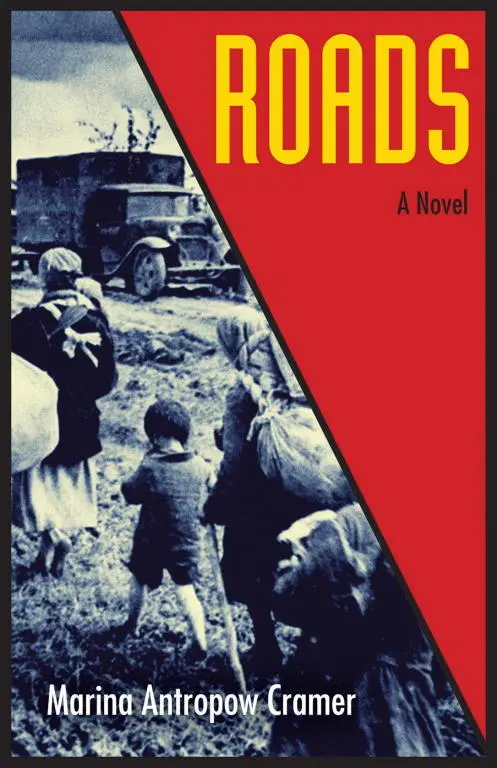
- Название:Roads
- Автор:
- Издательство:Academy Chicago Publishers
- Жанр:
- Год:2017
- Город:Chicago
- ISBN:978-1-61373-558-9
- Рейтинг книги:5 / 5. Голосов: 1
-
Избранное:Добавить в избранное
- Отзывы:
-
Ваша оценка:
Roads: краткое содержание, описание и аннотация
Предлагаем к чтению аннотацию, описание, краткое содержание или предисловие (зависит от того, что написал сам автор книги «Roads»). Если вы не нашли необходимую информацию о книге — напишите в комментариях, мы постараемся отыскать её.
By winter 1945, Allied air raids destroy strategic sites; Dresden, a city of no military consequence, seems safe. The world knows Dresden’s fate.
Roads
Roads — читать онлайн бесплатно полную книгу (весь текст) целиком
Ниже представлен текст книги, разбитый по страницам. Система сохранения места последней прочитанной страницы, позволяет с удобством читать онлайн бесплатно книгу «Roads», без необходимости каждый раз заново искать на чём Вы остановились. Поставьте закладку, и сможете в любой момент перейти на страницу, на которой закончили чтение.
Интервал:
Закладка:
“Look how calm they are. No one is pushing or fighting to get more than the others. And, oh, Filip, you should try this! Their trunks feel like kisses in your hand, so warm and gentle.” She was breathless with delight. “I just wish I could reach the baby.”
“The baby is taking care of itself,” Musa observed, handing her the last of the vegetation within reach. “Look.” True enough, it had stopped shuffling from side to side and was sweeping its little trunk playfully along the ground, snuffling up bits of food the others had let fall. From time to time, this perfectly formed miniature replica of it gigantic elders would look up, holding the tip of its trunk in its mouth, which looked to be perpetually smiling.
When there was no more grass, the elephants moved off, dragging their chains, to huddle together at the far end of the compound, herding the baby into the middle of the group. Galina grew quiet. She moved both hands to her belly. The child turned inside her as if in response to the family scene before her. What kind of world would her little one know? Would she, Galina, be able to care for and protect this child the way these huge placid beasts cared for and protected theirs?
She had Filip, of course, yet however attentive he could sometimes be, he knew nothing, nothing at all. He and Musa were talking about stamps again. She felt more protective of him, she thought, than the other way around. Her mother was an anchor, indispensable to her survival in countless ways, and her father’s tender love lay at the very center of her existence. They had all stayed together through the last harrowing months. She understood, from talking with other refugees, how rare that was.
What if they were separated? How would she manage?
The imminent birth of her child was an unimaginable ordeal; the prospect filled her with dread. Her fears were vague, unarticulated but powerful, chasing each other in an anxious jumble that made her feel suddenly weak. Stay safe —the words, rising out of her murky mood, had the fervent yearning of a prayer, encompassing her innocent child, the little elephant, and all the people she loved.
Galina shuddered. She turned to Musa. Eyes shining, she tucked a stray strand of hair behind her ear. “I will never forget this day.”
“Nor I,” Musa said quietly. He placed a hand on Filip’s shoulder. “Your wife is cold. We should be going. There is a very good stamp dealer near my apartment. We can stop there on the way.”
“I have no…” Filip faltered, torn between responsibility and desire.
“My treat, old man. For old times’ sake.”
While they walked, Musa filled them in; how, after leaving school, he had worked at one of Yalta’s better seaside restaurants, learning the culinary craft and perfecting German in his spare time. They all knew that people from the Tatar villages were less likely to be taken to labor camps, those villages being a key source of provisions and information for the occupying forces. Through the restaurant, Musa had caught the eye of a Nazi colonel who took him on as his personal cook and interpreter, attached him to his staff, and arranged to keep him on when he received orders to return to Germany.
“Then you’re a…” Galina could not get the word traitor out. She blushed deeply and lowered her eyes.
“Call it what you will. You Russians are in a tough spot there, caught between the monster at home and the tyrant who wants his land. Hitler’s plan is to decimate the Slavic population, or reduce it to slavery, working for good Aryan colonizers, while he and his circle enjoy the heavenly Crimean climate and feast on your delectable fruit. Here, take some more of this.” He served them veal schnitzel left over from the colonel’s table, with fresh peas and wide buttered—buttered!—noodles. Galina could not be sure, after the rich dinner and half a glass of wine, whether his hand had brushed her arm by accident or by design. The gesture annoyed her, but she was too dulled by the welcome warmth of the room and the comfort of real food to give it much meaning. Somewhere in the recesses of her mind she felt a vague stirring of urgency; they had to get back to the train station, where she knew her parents would be worried about their long absence. But for the moment, she was blissfully content.
“…the Ukrainians, the ones who work the land, raise the livestock and grow the food, they have it much, much worse,” Musa was saying. He refilled Filip’s wine glass, then his own. “It’s ironic, don’t you think? Persecuting the very people whose labor is most essential to your survival.”
“And the Jews?” Filip ventured, no longer caring how safe it was to talk freely with this man of questionable allegiance. He was unable to stifle his own curiosity; there had been so little reliable information. And the wine had gone to his head.
“Well, yes, the Jews, of course. Unfortunately for them, Hitler has never considered their contribution as essential to society, nothing that can’t be done as well, or better, by beautiful upstanding blue-eyed Christians. No, they can simply be disposed of.” He sipped his wine, then added quickly, noticing how both his guests had gone pale. “I’m not saying I agree. History will sort it out. Right now, it’s everyone for himself. Chocolates? They’re very good. Made right here in Dresden.”
“How do you mean, disposed of?” Filip reached for a bonbon but did not eat it, placing the square confection on the edge of his plate. “We were told they all got passage to Palestine.”
“Palestine,” Musa snorted. “They might be dreaming of Palestine, if the dead can dream.”
“Avram…” Filip blinked rapidly, as if trying to erase the image of the kindly grocer, an echo of the gruff voice rumbling in his ears. “Surely not…”
“I don’t know your Avram, but I doubt his fate was different from the others. Sadly, this is one area where Hitler and our Comrade Stalin were in agreement. I thought you knew. I’m sorry to have spoiled our pleasant evening like this.”
Galina rose and began to clear the dishes. “We must go, Filip. How far is it to the train station?” The uneaten chocolate square fell off the edge of Filip’s plate and rolled, like gambler’s dice, several times before landing facedown on the tablecloth. For a moment, no one spoke.
Musa cleared his throat. “There is a curfew. Nine o’clock. The train station is too far for you to get there in time. The colonel has a car, but I could not use it to drive you there, even if it were available this evening.”
“So let’s go now, quickly!” Just then, the child flipped and kicked, forcing Galina to sit down heavily on her chair. Musa placed a light hand on her shoulder and ran it down her arm. “Don’t touch me,” she said, her eyes steely and her voice expressionless. Coward was the word in her mind, but she restrained herself. She could not wait to get away from this despicable man.
“It’s better if you sleep here. I must leave early myself, to prepare the colonel’s breakfast. I will show you the way.”
They wasted more time arguing, Musa countering all her objections with calm, infuriating logic: “If you are stopped after curfew, you will be detained and miss your train. Your parents will be forced to leave without you.” These last words defeated her; she had to concede there was no alternative. Through it all, Filip remained unaccountably silent.
They placed three chairs against the length of the narrow bed, pulling the mattress partly onto the seats, filling the gap with extra blankets. Galina lay down first, facing the wall, with Filip next to her and Musa on the chairs.
In the morning they took to the streets almost at a run, weaving among preoccupied people on their way to work or some equally pressing purpose. The train station turned out to be closer than Musa had suggested the night before.
Читать дальшеИнтервал:
Закладка:
Похожие книги на «Roads»
Представляем Вашему вниманию похожие книги на «Roads» списком для выбора. Мы отобрали схожую по названию и смыслу литературу в надежде предоставить читателям больше вариантов отыскать новые, интересные, ещё непрочитанные произведения.







Обсуждение, отзывы о книге «Roads» и просто собственные мнения читателей. Оставьте ваши комментарии, напишите, что Вы думаете о произведении, его смысле или главных героях. Укажите что конкретно понравилось, а что нет, и почему Вы так считаете.