Marina Cramer - Roads
Здесь есть возможность читать онлайн «Marina Cramer - Roads» весь текст электронной книги совершенно бесплатно (целиком полную версию без сокращений). В некоторых случаях можно слушать аудио, скачать через торрент в формате fb2 и присутствует краткое содержание. Город: Chicago, Год выпуска: 2017, ISBN: 2017, Издательство: Academy Chicago Publishers, Жанр: Историческая проза, на английском языке. Описание произведения, (предисловие) а так же отзывы посетителей доступны на портале библиотеки ЛибКат.
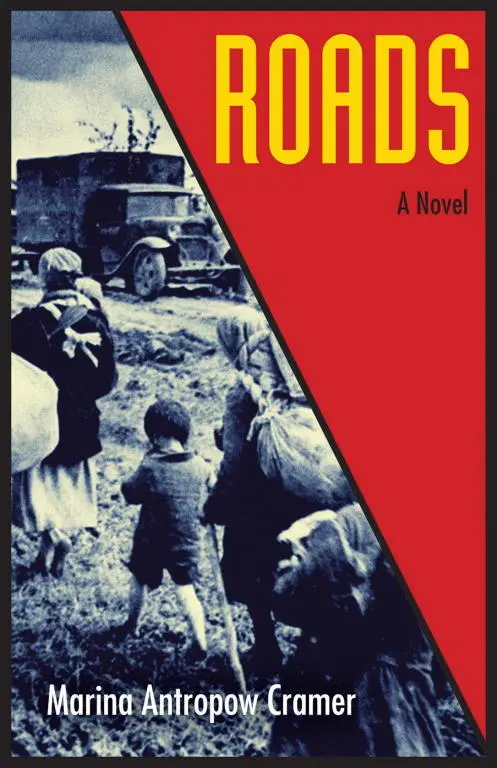
- Название:Roads
- Автор:
- Издательство:Academy Chicago Publishers
- Жанр:
- Год:2017
- Город:Chicago
- ISBN:978-1-61373-558-9
- Рейтинг книги:5 / 5. Голосов: 1
-
Избранное:Добавить в избранное
- Отзывы:
-
Ваша оценка:
Roads: краткое содержание, описание и аннотация
Предлагаем к чтению аннотацию, описание, краткое содержание или предисловие (зависит от того, что написал сам автор книги «Roads»). Если вы не нашли необходимую информацию о книге — напишите в комментариях, мы постараемся отыскать её.
By winter 1945, Allied air raids destroy strategic sites; Dresden, a city of no military consequence, seems safe. The world knows Dresden’s fate.
Roads
Roads — читать онлайн бесплатно полную книгу (весь текст) целиком
Ниже представлен текст книги, разбитый по страницам. Система сохранения места последней прочитанной страницы, позволяет с удобством читать онлайн бесплатно книгу «Roads», без необходимости каждый раз заново искать на чём Вы остановились. Поставьте закладку, и сможете в любой момент перейти на страницу, на которой закончили чтение.
Интервал:
Закладка:
“Galya, from Yalta,” Galina said when they found themselves next to one another.
“Marfa, Korovkino. It’s near Odessa,” the other replied. They looked at each other knowingly, nodded, and smiled.
Later, dressed in their fumigated clothing, which stank strongly of rotten eggs and harshly of ammonia, they sat together on a bench in the dining pavilion, watching the sun sink through the trees. Galina spoke first. “Did he pinch…?”
“Pinch and slap,” Marfa confirmed.
“And stroke…?” Galina touched her breast.
“Oh, yes.”
“That disinfectant.” Both women shuddered, each feeling again the doctor’s brush paint their stubbled heads, linger over their private parts longer than necessary, the putrid substance spreading in a stinging yellow stain over their tender skin.
“And the worst part…” Marfa looked away.
“‘Bend over,’” they said in unison, not daring to look at each other, as if to do so would somehow make them complicit in their own ordeal. The coarse, thickly gloved fingers probing in merciless glee for no good reason except humiliation. It was unspeakable, but they knew no woman in the camp was likely to have escaped that same violation.
“I went in after you,” Galina broke the silence that had fallen between them. “Do you know what he said? ‘Another pregnant cow.’ He looked so disgusted I didn’t know whether to laugh or spit in his face.”
“What nerve.” Marfa pulled at her sweater, which had shrunk in the disinfection, the sleeves now hugging her arms just below the elbows. “And him with those hairs in his ears, like big furry spiders, and that black caterpillar eyebrow across his face. Maybe he fell from the sky, or came out of some hole in the ground. I can’t imagine any woman giving birth to such an urod . What a freak.” They both laughed, and then talked of other things.
2
WHEN IT WAS OVER, when the hot waves had finally stopped ravaging her body, Galina had looked at the attending nurse, her eyes clouded with indelible knowledge. Is this the secret? she’d thought. This thing that only women know, this ripping for which there is no preparation, every fear of which is completely justified? Does every life claw its way toward the light this way? And why?
The German nurse had held out a squalling red-skinned bundle. “Your daughter,” she’d said, all business. “Her name?”
“Katya. Katyusha. Ekaterina for the birth certificate,” Galina had immediately replied. Out of nowhere, a scrap of song had echoed in her head. Katyusha, who walks along the riverbank, sending her message of love and remembrance to her soldier, her sweetheart; she will guard their love while he defends their country. Katyusha.
“Good.” The nurse had nodded as if her approval were needed. “Take the child, please. I must fill out the forms.”
“Give her to my mother,” Galina had sighed in profound exhaustion.
Ksenia had taken the infant and walked up to the bedside. “No. She is your child. She needs you.”
“Oh, Mama. I only want to sleep,” Galina had protested. “I am so, so tired. Put her in the basket, then. I will hold her when I wake up.” She’d started to turn on her side, away from the early spring light filtering through the filmy curtain covering the ward’s single small window.
Ksenia had been adamant. “You must feed her, or she will die. Then you can sleep.”
Galina had taken the child, winced when the prehensile mouth attached to her breast and began to suck. She’d examined the strange face with equanimity—the eyes squinted shut, the barely there nose, a fuzz of dark hair haloing the head, a thread of vein throbbing across the skull. A piglet , she’d thought. She looks like nothing if not a piglet.
She had felt a stirring of affection at the comparison. Vague scenes, impressions, really, from her early childhood floated up: a wooden three-room izba in the country, chickens roosting under the eaves, a pig in a fenced enclosure, the smell of earth, hay, manure, and flowers in bloom blending into an unforgettable rustic perfume. She’d felt overwhelmed with nostalgia for this uncomplicated happiness. Would there ever be anything as good as this remembered life, this life before famine, before city tenements, before fear?
Galina had felt her mother’s hand on her arm, looked up as Ksenia wiped away the tears she had not been aware of with a corner of the sheet. “Now the other breast,” Ksenia had said softly. “Then you both can sleep.”
Galina had switched the infant to the other side, detaching the pink mouth with an instinctive pinch of her fingers against her breast, surprising herself with her grasp of this bit of primal knowledge. “ Kto t’y ? Who are you?” she’d said out loud, watching the child ease into her rhythm, walnut-sized fists clenched as if ready for battle.
“ Bist du …” The evening nurse said something Galina did not understand. Are you comfortable? Well? Warm? The nurse smiled vaguely and settled the freshly bathed, diapered, and swaddled infant in Galina’s arms. “She is hungry now, then sleep. For you, too.” That was clear enough. Again, she used the informal du form, addressing the young mother as if she were a child or a servant or a member of the family, though she herself was only a few years older.
Was it just women’s solidarity, a tacit admission into the universal club of mothers? Galina thought she’d heard an underlying hint of superiority, a touch of derision, but could not be sure. The four other women in the half-filled ward spoke easily among themselves, ignoring the Russian stranger in their midst, admiring each other’s babies, their bright laughter impermeable as a wall of stone.
She wondered where they would be going, these women, in a few days. She imagined their homes, kitchens stocked with household necessities, parlors, no matter how small, filled with furniture. Pictures on the walls, figurines on a shelf, maybe a rug on the floor. Bedrooms with blankets and pillows. Doors between rooms, to open or close. Windows giving a view onto dormant gardens ready to receive the seeds of a new harvest, waiting for spring flowers. Flowers don’t recognize war , she thought. Give them rain and sun, and they bloom.
She wanted to ask the women: Where will your baby sleep when you go home? Is there a crib, a soft embroidered coverlet, fresh diapers, little shirts and gowns and slippers? Toys? But no one looked at her, and anyway, she didn’t have the words.
Galina looked at her baby’s tiny face, its tightly shut eyes, the lips nearly translucent with the effort of sucking. Single-minded—or no, not minded at all, she realized, just surrendering with a ferocious tenacity to the instinctive act that made the difference between tentative life and certain death.
Soon Mama will come , she thought, and we can talk about what to do. Maybe she would have answers to some of the questions that continued to plague Galina, even in her sleep. Where can I live with my baby? How can I work to keep us alive? Where are Papa and Filip?
Galina rested her head on the pillow, her mind thick with drowsiness but crowded with recollections. She could still hear the clattering train packed with human cargo, its whistle stilled by wartime regulations, speeding into the abyss of a night made darker by the glow of Dresden burning behind them. The puzzling journey, marked by unexplained delays, the train stopped for hours between stations without food or water, and only the heat of their massed bodies to keep them from freezing. The persistent glimmer of hope, unredeemed by any reasonable evidence, that somehow the worst was now behind them. They had lived through internment in a succession of labor camps, endured myriad humiliations; they had wandered blindly in a hostile, unfamiliar land as vagrants and, occasionally, thieves. They had lost nearly all their pitiful possessions.
Читать дальшеИнтервал:
Закладка:
Похожие книги на «Roads»
Представляем Вашему вниманию похожие книги на «Roads» списком для выбора. Мы отобрали схожую по названию и смыслу литературу в надежде предоставить читателям больше вариантов отыскать новые, интересные, ещё непрочитанные произведения.











Обсуждение, отзывы о книге «Roads» и просто собственные мнения читателей. Оставьте ваши комментарии, напишите, что Вы думаете о произведении, его смысле или главных героях. Укажите что конкретно понравилось, а что нет, и почему Вы так считаете.