Michael Shaara - The Killer Angels
Здесь есть возможность читать онлайн «Michael Shaara - The Killer Angels» весь текст электронной книги совершенно бесплатно (целиком полную версию без сокращений). В некоторых случаях можно слушать аудио, скачать через торрент в формате fb2 и присутствует краткое содержание. Жанр: Историческая проза, на английском языке. Описание произведения, (предисловие) а так же отзывы посетителей доступны на портале библиотеки ЛибКат.
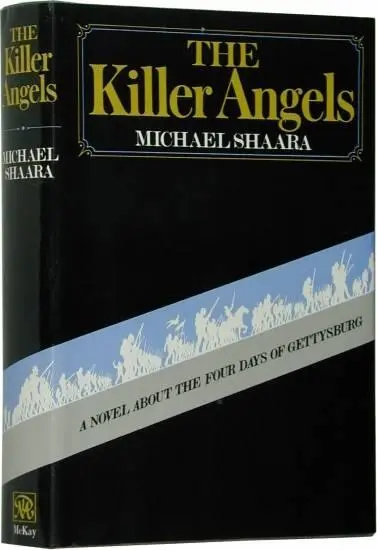
- Название:The Killer Angels
- Автор:
- Жанр:
- Год:неизвестен
- ISBN:нет данных
- Рейтинг книги:5 / 5. Голосов: 1
-
Избранное:Добавить в избранное
- Отзывы:
-
Ваша оценка:
The Killer Angels: краткое содержание, описание и аннотация
Предлагаем к чтению аннотацию, описание, краткое содержание или предисловие (зависит от того, что написал сам автор книги «The Killer Angels»). Если вы не нашли необходимую информацию о книге — напишите в комментариях, мы постараемся отыскать её.
Reading about the past is rarely so much fun as on these pages.
The Killer Angels — читать онлайн бесплатно полную книгу (весь текст) целиком
Ниже представлен текст книги, разбитый по страницам. Система сохранения места последней прочитанной страницы, позволяет с удобством читать онлайн бесплатно книгу «The Killer Angels», без необходимости каждый раз заново искать на чём Вы остановились. Поставьте закладку, и сможете в любой момент перейти на страницу, на которой закончили чтение.
Интервал:
Закладка:
”I know, Captain. It’s a weight, isn’t it? Well. You lead on as best you can. If you get nervous, call. But I don’t want us observed.”
”Yes, sir, very good, sir.” He rode off.
Longstreet took out a treasured cigar, lighted it, chomped it. Stuart. He ought to be court-martialed.
Would you do it? Court-martial Stuart?
Yes, I would.
Seriously? Or are you just talking?
Longstreet thought a moment. Lee wouldn’t. Lee won’t.
But I would.
The long march began at around noon, the sun high in a cloudless sea of burning haze. A messenger came in from Law: he had joined Hood’s column back at Willoughby Run. A superb march. Longstreet sent his compliments, hoped Hood got him the water. On little things like that-a cup of water-battles were decided. Generalship? How much of a factor is it, really?
He rode in the dust of a blazing road, brooding in his saddle. The hot meat had fired him. He rode alone, and then there was cheering behind him, raw, hoarse cheering from dusty throats, and there was Lee-the old man with the slight smile, the eyes bright with new vigor, revived, the fight coming up to warm him like sunrise.
”General.” Longstreet touched his cap.
”You don’t mind if I accompany you?” Lee said in the gravely formal gentleman’s way.
Longstreet bowed. “Glad to have you with us.” There was a peculiar hilarity in Longstreet’s breast, the mulish foolish hungry feeling you get just before an assault. There was a certain wild independence in the air, blowing like a hot wind inside his head. He felt an absurd impulse to josh old Lee, to pat him on the back and ruffle the white hair and tell immoral stories. He felt foolish, fond and hungry. Lee looked at him and abruptly smiled, almost a grin, a sudden light blazing in black round eyes.
”Heat reminds me of Mexico,” Longstreet said. Visions of those days rolled and boiled: white smoke blowing through broken white buildings, wild-haired Pickett going over the wall, man’s face with pools of dirt in the eyes, sky wheeling in black blotches, silver blotches, after the wound. Lieutenant Longstreet: for distinguished service on the field of battle…
”Yes, but there it was very dry.” Lee squinted upward.
”And I believe it was warmer. Yes, it was undoubtedly warmer.”
”That was a good outfit. There were some very good men in that outfit.”
”Yes,” Lee said.
”Some of them are up ahead now, waiting for us.”
And the past flared again in Longstreet’s mind, and the world tilted, and for a moment they were all one army again, riding with old friends through the white dust toward Chapultepec. And then it was past. He blinked, grimaced, looked at Lee. The old man was gazing silently ahead into the rising dust.
”It troubles me sometimes,” Longstreet said. His mind rang a warning, but he went on grimly, as you ride over rocks. “They’re never quite the enemy, those boys in blue.”
”I know,” Lee said.
”I used to command those boys,” Longstreet said.
”Difficult thing to fight men you used to command.”
Lee said nothing.
”Swore an oath too,” Longstreet said. He shook his head violently. Strange thought to have, at the moment. “I must say, there are times when I’m troubled. But… couldn’t fight against home. Not against your own family. And yet… we broke the vow.” Lee said, “Let’s not think on this today.”
”Yes,” Longstreet said. There was a moment of dusty silence. He grumbled to himself: why did you start that? Why talk about that now? Damn fool.
Then Lee said, “There was a higher duty to Virginia. That was the first duty. There was never any doubt about that.”
”Guess not,” Longstreet said. But we broke the vow.
Lee said, “The issue is in God’s hands. We will live with His decision, whichever way it goes.”
Longstreet glanced at the dusty face, saw a shadow cross the eyes like a passing wing. Lee said, “I pray it will be over soon.”
”Amen,” Longstreet said.
They rode for a while in silence, a tiny island in the smoky stream of marching men. Then Lee said slowly, in a strange, soft, slow tone of voice, “Soldiering has one great trap.”
Longstreet turned to see his face. Lee was riding slowly ahead, without expression. He spoke in that same slow voice.
”To be a good soldier you must love the army. But to be a good officer you must be willing to order the death of the thing you love. This is… a very hard thing to do. No other profession requires it. That if one reason why there are so very few good officers. Although there are many good men.”
Lee rarely lectured. Longstreet sensed a message beyond it. He waited. Lee said, “We don’t fear our own deaths, you and I.” He smiled slightly, then glanced away. “We protect ourselves out of military necessity, not fear. You, sir, do not protect yourself enough and must give thought to it. I need you. But the point is, we are afraid to die. We are prepared for our own deaths and for the deaths of comrades. We learn that at the Point. But I have seen this happen: We are not prepared for as many deaths as we have to face, inevitably as the war goes on. There comes a time…”
He paused. He had been gazing straight ahead, away from Longstreet. Now, black-eyed, he turned back, glanced once quickly into Longstreet’s eyes, then looked away.
”We are never prepared for so many to die. So you understand? No one is. We expect some chosen few. We expect an occasional empty chair, a toast to dear departed comrades. Victory celebrations for most of us, a hallowed death for a few. But the war goes on. And the men die. The price gets ever higher. Some officers… can pay no longer. We are prepared to lose some of us.” He paused again. “But never all of us. Surely not all of us. But… that is the trap. You can hold nothing back when you attack. You must commit yourself totally. And yet, if they all die, a man must ask himself, will it have been worth it?”
Longstreet felt a coldness down his spine. He had never heard Lee speak this way. He had not known Lee thought of this kind of thing. He said, “You think I feel too much for the men.”
”Oh no,” Lee shook his head quickly. “Not too much. I did not say ‘too much’.” But I… was just speaking.”
Longstreet thought: Possibly? But his mind said: No. It is not that. That’s the trap all right, but it’s not my trap. Not yet. But he thinks I love the men too much. He thinks that’s where all the talk of defense comes from. My God… But there’s no time.
Lee said, “General, you know, I’ve not been well lately.”
That was so unlike him that Longstreet turned to stare. But the face was calm, composed, watchful. Longstreet felt a rumble of unexpected affection. Lee said, “I hope my illness has not affected my judgment. I rely on you always to tell me the truth as you see it.”
”Of course.”
”No matter how much I disagree.”
Longstreet shrugged.
”I want this to be the last battle,” Lee said. He took a deep breath. He leaned forward slightly and lowered his voice, as if to confide something terribly important. “You know, General, under this beard I’m not a young man.”
Longstreet chuckled, grumbled, rubbed his nose.
A courier came toiling down the dusty lane, pushing his horse through the crowded troops. The man rode to Lee. In this army Lee was always easy to find. The courier, whom Longstreet did not recognize, saluted, then for some unaccountable reason took off his hat, stood bareheaded in the sun, yellow hair plastered wetly all over his scalp.
”Message from General Hood, sir.”
”Yes.” Politely, Lee waited.
”The General says to tell you that the Yankees are moving troops up on the high Rocky Hill, the one to the right. And there’s a signal team up there.” Lee nodded, gave his compliments.
Читать дальшеИнтервал:
Закладка:
Похожие книги на «The Killer Angels»
Представляем Вашему вниманию похожие книги на «The Killer Angels» списком для выбора. Мы отобрали схожую по названию и смыслу литературу в надежде предоставить читателям больше вариантов отыскать новые, интересные, ещё непрочитанные произведения.






Обсуждение, отзывы о книге «The Killer Angels» и просто собственные мнения читателей. Оставьте ваши комментарии, напишите, что Вы думаете о произведении, его смысле или главных героях. Укажите что конкретно понравилось, а что нет, и почему Вы так считаете.