Michael Shaara - The Killer Angels
Здесь есть возможность читать онлайн «Michael Shaara - The Killer Angels» весь текст электронной книги совершенно бесплатно (целиком полную версию без сокращений). В некоторых случаях можно слушать аудио, скачать через торрент в формате fb2 и присутствует краткое содержание. Жанр: Историческая проза, на английском языке. Описание произведения, (предисловие) а так же отзывы посетителей доступны на портале библиотеки ЛибКат.
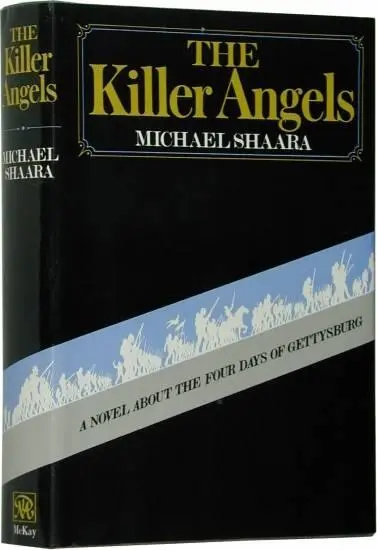
- Название:The Killer Angels
- Автор:
- Жанр:
- Год:неизвестен
- ISBN:нет данных
- Рейтинг книги:5 / 5. Голосов: 1
-
Избранное:Добавить в избранное
- Отзывы:
-
Ваша оценка:
The Killer Angels: краткое содержание, описание и аннотация
Предлагаем к чтению аннотацию, описание, краткое содержание или предисловие (зависит от того, что написал сам автор книги «The Killer Angels»). Если вы не нашли необходимую информацию о книге — напишите в комментариях, мы постараемся отыскать её.
Reading about the past is rarely so much fun as on these pages.
The Killer Angels — читать онлайн бесплатно полную книгу (весь текст) целиком
Ниже представлен текст книги, разбитый по страницам. Система сохранения места последней прочитанной страницы, позволяет с удобством читать онлайн бесплатно книгу «The Killer Angels», без необходимости каждый раз заново искать на чём Вы остановились. Поставьте закладку, и сможете в любой момент перейти на страницу, на которой закончили чтение.
Интервал:
Закладка:
Wofford had come up.
They all stood together, waiting. The old man who was guarding the clothing of that one Mississippi regiment was asleep against the rail fence, his mouth open. Longstreet rode forward with Barksdale. The man was eager to go in.
McLaws moved back and forth, checking the line.
There were woods in front of them, to the left a gray farmhouse. The men were scattered all through the trees, red pennants dipped down, rifles bristling like black sticks.
Longstreet saw a shell burst in the woods ahead, another, another. The Yanks knew they were there, knew they were coming. God, did Meade have the whole Union Army here?
Against my two divisions?
McLaws came up. Even McLaws was getting nervous “Well, sir? When do I go in?”
”Calmly,” Longstreet said, “calmly” He stared through his glasses. He could see through the trees a Union battery firing from an orchard on the far side of the road. He said, “We’ll all go in directly.” Something in Longstreet was savage now; he enjoyed holding them back, the savage power. He could feel the fire building in McLaws, in Barksdale, as water builds behind a damn.
But it was the point of an echelon attack. You begin on one side. The enemy is pressed and begins to move troops there. At the right moment your attack opens in another place. The enemy does not know where to move troops now, or to move any at all. He delays. He is upset where he is, not quite so definite. With luck, you catch him on the move. He does not realize the attack is en echelon for a while; he thinks perhaps it is a diversion, and he will be hit on another flank. So he waits, and then gradually he is enveloped where he is, and if his line was thin to begin with, you have not allowed him to concentrate, and if he gambled and concentrated, then he is very weak somewhere, and somewhere you break through. So restraint was necessary now, and Longstreet got down off the horse and sat astride the fence for a while, chatting, the fire growing all around him, shells coming down in the woods ahead, beginning to fall in the field around him, and McLaws stood there blinking and Barksdale running fingers through his hair.
”Not yet, not yet,” Longstreet said cheerily, but he got back on his horse and began riding slowly forward into the trees. In the dark of the trees he could smell splintered wood and see white upturned faces with wide white dirty flowers and he looked out to see a battery working steadily, firing into the woods. He heard the first moans but saw no dead.
Almost time now. At his elbow, Barksdale was saying something, pleading. The Mississippi boys were staring not at Barksdale but at Longstreet. Longstreet looked down.
”Well,” he said, “I guess it’s time. If you’re ready, sir, why don’t you go take that battery, that battery right there?”
He pointed. Barksdale screamed, waved his hat. The men rose. Barksdale formed them in line, the shells zipping the leaves above them. They stepped out of the woods, Barksdale in front, on foot, forbidden to ride, and Longstreet saw them go off across the field and saw the enemy fire open up, a whole fence suddenly puff into white smoke, and the bullets whirred by and clipped among the leaves and thunked the trees, and Longstreet rode out into the open and took off his hat. Barksdale was going straight for the guns, running, screaming, far out in front, alone, as if in a race with all the world, hair streaming like a white torch.
Longstreet rode behind him, his hat off, waving, screaming, Go! Go you Mississippi! Go!
4. CHAMBERLAIN.
… heard the cannon begin. sat up. Kilrain sat up.
Tom Chamberlain went on sleeping, mouth open, saintly young, at peace..
Chamberlain said, “That’s mostly in the west.”
Kilrain cocked his head, listening. “I thought the Rebs were all up at Gettysburg.” He looked at Chamberlain, eyes dark. “You don’t suppose they’re flanking us again.”
The cannons were blossoming, filling the air with thunder, far enough away to soften and roll, not angry yet, but growing.
”At Chancellorsville they came in on the right. This time they could be on the left.”
”Do you think they’ll ever learn, our goddamn generals?”
Chamberlain shook his head. “Wait.”
The men in the field were stirring. Some of the newer men were pulling the tent halves down, but the others, professionals, had rolled over and were staring m the direction of the firing. The corn popper remained asleep.
Chamberlain thought: Alert the men? Some of them were looking to him. One stood up, yawned, stretched, glanced unconcernedly in his direction. Not yet. Chamberlain put the novel away.
Kilrain said, “That’s a whole division.
Chamberlain nodded.
”Good thing their artillery aint very good.
A rider had come over the crest of the hill, was loping down through the tall grass among the boulders. Chamberlain stood up. The courier saluted.
”Colonel Vincent’s compliments, sir. You are instructed to form your regiment.”
Chamberlain did not ask what was going on. He felt a coolness spreading all the way through him. He began buttoning his shirt as the courier rode off-no hurry, why hurry?-and began slipping on the belt and saber. When he was done with that he began smoothing his hair, yawned, grinned, turned to Tozier.
”Sergeant, have the Regiment fall in.”
He looked down on Tom, sleeping Tom. Mom’s favorite.
He’ll be all right. Did not want to wake him. Delayed a moment, buttoned his collar. Hot day for that. Shadows growing longer. Cool soon. He nudged Tom with his foot.
Tom groaned, licked his lips, groaned again, opened his eyes.
”Hey, Lawrence.” He blinked and sat up, heard the thunder. “What’s happening?”
”Let’s go,” Chamberlain said.
”Right.” He jumped to his feet. Chamberlain walked out into the sun. Some of the men were in line, forming by companies. The Regiment was bigger now; Chamberlain was glad of the new men. Ellis Spear had come sleepily up, disarranged, eyes wide. Chamberlain told him to bring everybody, cooks and prisoners, sick-call people. Chamberlain took a deep breath, smelled wet grass, hay, felt his heart beating, looked up into God’s broad sky, shivered as a thrill passed through him. He looked down through the woods.
The whole Brigade was forming.
And nothing happened. The guns thundered beyond the hill. They were in line, waiting. Chamberlain looked at his watch. Not quite four. The men were remarkably quiet, most of them still sleepy. Sergeant Ruel Thomas, an orderly, reported from sick call. Chamberlain nodded formally.
Meade had ordered every soldier to action, even the Provost Guards. This was it, the last great effort. Don’t think now: rest.
Here, at last, was Vincent, riding at a gallop down the long slope. He reined up, the horse rising and kicking the air. All the faces watched him.
”Colonel, column of fours. Follow me.”
Chamberlain gave the order, mounted, feeling weak. No strength in his arms. Vincent gave orders to aides: they galloped away. Vincent said, “They’re attacking the left flank. Sickles has got us in one hell of a jam.”
They began moving up the slope. The Twentieth Maine came after them, four abreast. Vincent was shaking his handsome head.
”Damn fool. Unbelievable. But I must say, remarkably beautiful thing to see.”
They moved up between rocks. The artillery fire was growing, becoming massive. They found a narrow road leading upward: high ground ahead. Vincent spurred his horse, waved to Chamberlain to come on. They galloped across a wooden bridge, a dark creek, then up a narrow farm road. The firing was louder. A shell tore through the trees ahead, smashed a limb, blasted rock. Fragments spattered the air.
Читать дальшеИнтервал:
Закладка:
Похожие книги на «The Killer Angels»
Представляем Вашему вниманию похожие книги на «The Killer Angels» списком для выбора. Мы отобрали схожую по названию и смыслу литературу в надежде предоставить читателям больше вариантов отыскать новые, интересные, ещё непрочитанные произведения.






Обсуждение, отзывы о книге «The Killer Angels» и просто собственные мнения читателей. Оставьте ваши комментарии, напишите, что Вы думаете о произведении, его смысле или главных героях. Укажите что конкретно понравилось, а что нет, и почему Вы так считаете.