Michael Shaara - The Killer Angels
Здесь есть возможность читать онлайн «Michael Shaara - The Killer Angels» весь текст электронной книги совершенно бесплатно (целиком полную версию без сокращений). В некоторых случаях можно слушать аудио, скачать через торрент в формате fb2 и присутствует краткое содержание. Жанр: Историческая проза, на английском языке. Описание произведения, (предисловие) а так же отзывы посетителей доступны на портале библиотеки ЛибКат.
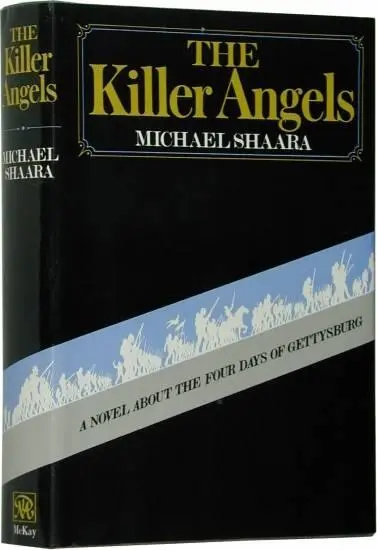
- Название:The Killer Angels
- Автор:
- Жанр:
- Год:неизвестен
- ISBN:нет данных
- Рейтинг книги:5 / 5. Голосов: 1
-
Избранное:Добавить в избранное
- Отзывы:
-
Ваша оценка:
The Killer Angels: краткое содержание, описание и аннотация
Предлагаем к чтению аннотацию, описание, краткое содержание или предисловие (зависит от того, что написал сам автор книги «The Killer Angels»). Если вы не нашли необходимую информацию о книге — напишите в комментариях, мы постараемся отыскать её.
Reading about the past is rarely so much fun as on these pages.
The Killer Angels — читать онлайн бесплатно полную книгу (весь текст) целиком
Ниже представлен текст книги, разбитый по страницам. Система сохранения места последней прочитанной страницы, позволяет с удобством читать онлайн бесплатно книгу «The Killer Angels», без необходимости каждый раз заново искать на чём Вы остановились. Поставьте закладку, и сможете в любой момент перейти на страницу, на которой закончили чтение.
Интервал:
Закладка:
”I want you to attack en echelon, to take Cemetery Hill in reverse. Hill will support you with Pender and Anderson.
Heth’s Division will be in reserve. It had a hard day yesterday. Ewell’s people will demonstrate, to keep them from reinforcing against you.”
”All right,” Longstreet said. “But I don’t have Pickett. I have only Hood and McLaws.”
Lee said, “You will have to go in without him.”
Longstreet said stubbornly, “Law’s Brigade is still coming up. I must have Law.”
”How long will that take?”
”At least another hour.”
”All right.” Lee nodded. His head bobbed tightly; he was blinking.
”It will take time to position the men, the artillery.”
”At your discretion. General.”
”Sir.” Longstreet bowed slightly.
”Let us go to the map.” Lee turned back toward the table. “I am suspicious of written orders since that affair at Sharpsburg.”
Back at the map table men waited for them expectantly.
Someone told a joke; there was a ripple of laughter. Lee did not seem to notice.
McLaws and Hood were at a table, along with A. P. Hill. Hill had looked well in the morning, but he did not look well now. Lee bent down over the map. He said, “You will attack up at Emmitsburg Road, up Cemetery Ridge, passing in front of the Rocky Hill. Your objective will be to get in the rear of the Union Army.”
McLaws bent over the map. He was a patient man, stubborn and slow, not brilliant, but a dependable soldier.
He had a deep streak of sloppy sentimentality to him and he loved to sit around fires singing sad songs of home. He tended to be a bit pompous at times, but he was reliable.
Lee said to McLaws, “Well, General, do you think you can carry this line?”
McLaws shrugged, glanced briefly at Longstreet. He was well aware of Longstreet’s theory of defensive tactics. He said pontifically, “Well, sir, I know of nothing to prevent my taking that line, but then, of course, I haven’t seen it myself. I wouldn’t mind taking out a line of skirmishers to reconnoiter the position.”
”Unnecessary,” Longstreet said. “Waste of time. We’ve had scouts out all morning. Let’s get on with it, General. I don’t want you to leave your Division.”
McLaws looked to Lee. Lee nodded.
”Yes. Well, we will step off in echelon, from right to left.
Ewell will wait until he hears your artillery. The left of your advance will be on the Emmitsburg Road. Your right will sweep under those rocky heights.”
”We’ll have enfilade fire coming down on us.”
”Not for long,” Lee said. “You’ll be up over the ridge and take them in the rear. When you are heavily engaged, Ewell will take them in front.”
Longstreet nodded. It might work. Heavy loss, but it might work.
Hood, who had been silent, said suddenly, softly, “General Lee?”
They turned to face him. Lee considered him a fine tactician, and more than that. Hood was a man you listened to. He said, in that soft voice, “General, I’d like to send one brigade around those rocky heights. I think I can get into their wagon trains back there.”
Lee shook his head quickly, raised a hand as if warding him off.
”Let’s concentrate. General, concentrate. I can’t risk losing a brigade.”
Hood said nothing, glanced at Longstreet. McLaws was not quite sure where to post his Division. They discussed that for a while, and then explained it to Hill. Longstreet turned suddenly to Sorrel, who was standing by.
”Major, I need something to eat.”
”To eat, sir? Of course, sir. What would you like, sir?”
”Marching food,” Longstreet said, “I don’t give a damn what.”
Sorrel moved off. Longstreet looked up and saw Harry Heth, a white bandage on his head, standing weakly by a tree, looking down vacantly to the map table, trying to comprehend.
”How are you. Harry?” Longstreet said.
Heth turned, squinted, blinked. “I’m fine,” he said.
”What’s happening? Are you going to attack? Where’s my Division?”
Lee said, “Your Division will not fight today. General. I want you to rest.” There was that tone in his voice, that marvelous warmth, that made them all look not at Heth but at Lee, the gray beard, the dark-eyed, the old man, the fighter.
”Sir, I’m fine,” Heth said. But he could not even stand without the hand on the tree.
Lee smiled. “Of course, sir. But I would rather you rested. We will soon be needing you.” He turned back to the table. “Gentlemen?” he said.
They moved out. Alexander was off to place the artillery.
McLaws moved out to join his Division. Hood walked for a moment at Longstreet’s side.
”We marched all night,” Hood said. “Took a two hour break, from two A.M. to four, then marched again to get here.”
”I know,” Longstreet said.
”Law’s people will come even farther, with no rest. It’s twenty-four miles to Guilford. He left at three A.M. When he gets here he’ll be pretty tired.” Hood squinted at the sun.
”Not that it makes much difference, I guess. But one thing, General. Everybody here’s had first crack at the water. I want to round some up for Law’s boys when they arrive. They’ll be thirsty, wells may be dry.”
”See to it,” Longstreet said. “Any way you can.” He paused, watched the men around him moving into motion, men mounting on horses, cannon moving past and swinging into position, the artillery people beginning to dig trenches alongside the guns. He said, “Your idea of moving to the right was sound, but his mind was set. Well, we’ll do what we can.” He turned. At moments like this it was difficult to look a man in the eye. He put out his hand.
”Well, Sam, let’s go to it. Take care of yourself.”
Hood took the hand, held it for a moment. Sometimes you touched a man like this and it was the last time, and the next time you saw him he was cold and white and bloodless and the warmth was gone forever.
Hood said, “And you, Pete.” He walked away, thin, awkward, long bony strides. Longstreet thought: Best soldier in the army. If it can be done, he will do it. He and Pickett. My two. Oh God, there’s not enough of them. We have to spend them like gold, in single pieces. Once they’re gone, there will be no more.
Sorrel appeared with a tin plate, a steaming slab of meat.
”What’s that?” Longstreet sniffed.
”Bit of steak, sir. Compliments of Major Moses.”
Longstreet picked it up in his fingers, too hot, sucked the ends of his fingers: delicious.
”Major Moses thought you wanted fighting food, sir.”
Longstreet ate with slow delight. Hot food for a hot day.
Will be much hotter later on.
Longstreet moved toward his command. The corps was to be led into position by Lee’s engineer. Captain Johnston, who had scouted the area this morning. Lee had gone off to see Ewell, to explain the attack to him. Longstreet told Johnston, “Time doesn’t matter here. What matters is surprise. We must go on unobserved. We’re hitting them on the flank. If they see us coming they’ll have time to swing round their artillery and it’ll be a damn slaughter. So you take your time. Captain, but I don’t want us observed.”
Johnston saluted, his face strained. “Sir,” he said, “may I make a point?”
”Make away.”
”General Lee has ordered me to conduct you to the field. But, sir, I scouted the Union position this morning, not the roads leading to it. I don’t know much more about how to get there than you do.”
Longstreet sighed. Stuart’s fault. If there were cavalry here, the roads and routes would be known. Longstreet said, “All right. Captain. But anything you know is more than I know.”
”But, sir. General Lee is giving me responsibility for an entire corps.” Johnston sweated.
Читать дальшеИнтервал:
Закладка:
Похожие книги на «The Killer Angels»
Представляем Вашему вниманию похожие книги на «The Killer Angels» списком для выбора. Мы отобрали схожую по названию и смыслу литературу в надежде предоставить читателям больше вариантов отыскать новые, интересные, ещё непрочитанные произведения.







Обсуждение, отзывы о книге «The Killer Angels» и просто собственные мнения читателей. Оставьте ваши комментарии, напишите, что Вы думаете о произведении, его смысле или главных героях. Укажите что конкретно понравилось, а что нет, и почему Вы так считаете.