Ken Follett - World Without End
Здесь есть возможность читать онлайн «Ken Follett - World Without End» весь текст электронной книги совершенно бесплатно (целиком полную версию без сокращений). В некоторых случаях можно слушать аудио, скачать через торрент в формате fb2 и присутствует краткое содержание. Жанр: Историческая проза, на английском языке. Описание произведения, (предисловие) а так же отзывы посетителей доступны на портале библиотеки ЛибКат.
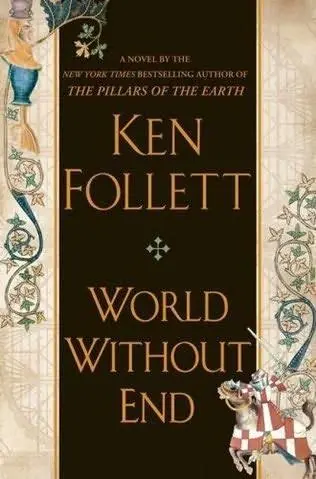
- Название:World Without End
- Автор:
- Жанр:
- Год:неизвестен
- ISBN:нет данных
- Рейтинг книги:5 / 5. Голосов: 1
-
Избранное:Добавить в избранное
- Отзывы:
-
Ваша оценка:
World Without End: краткое содержание, описание и аннотация
Предлагаем к чтению аннотацию, описание, краткое содержание или предисловие (зависит от того, что написал сам автор книги «World Without End»). Если вы не нашли необходимую информацию о книге — напишите в комментариях, мы постараемся отыскать её.
Ken Follett has 90 million readers worldwide. The Pillars of the Earth is his bestselling book of all time. Now, eighteen years after the publication of The Pillars of the Earth, Ken Follett has written the most-anticipated sequel of the year, World Without End.
In 1989 Ken Follett astonished the literary world with The Pillars of the Earth, a sweeping epic novel set in twelfth-century England centered on the building of a cathedral and many of the hundreds of lives it affected. Critics were overwhelmed-"it will hold you, fascinate you, surround you" (Chicago Tribune)-and readers everywhere hoped for a sequel.
World Without End takes place in the same town of Kingsbridge, two centuries after the townspeople finished building the exquisite Gothic cathedral that was at the heart of The Pillars of the Earth. The cathedral and the priory are again at the center of a web of love and hate, greed and pride, ambition and revenge, but this sequel stands on its own. This time the men and women of an extraordinary cast of characters find themselves at a crossroad of new ideas-about medicine, commerce, architecture, and justice. In a world where proponents of the old ways fiercely battle those with progressive minds, the intrigue and tension quickly reach a boiling point against the devastating backdrop of the greatest natural disaster ever to strike the human race-the Black Death.
Three years in the writing, and nearly eighteen years since its predecessor, World Without End breathes new life into the epic historical novel and once again shows that Ken Follett is a masterful author writing at the top of his craft.
World Without End — читать онлайн бесплатно полную книгу (весь текст) целиком
Ниже представлен текст книги, разбитый по страницам. Система сохранения места последней прочитанной страницы, позволяет с удобством читать онлайн бесплатно книгу «World Without End», без необходимости каждый раз заново искать на чём Вы остановились. Поставьте закладку, и сможете в любой момент перейти на страницу, на которой закончили чтение.
Интервал:
Закладка:
“You do more than that,” Merthin had said. “Your presence comforts people. You’re calm and knowledgeable, and you talk about things they understand, swelling and confusion and pain – you don’t try to impress them with jargon about humours, which just makes them feel more ignorant and powerless and frightened. When you’re there, they feel that everything possible is being done; and that’s what they want.”
“I hope you’re right.”
If anything, Merthin was understating. More than once he had seen a hysterical man or woman change, after just a few calming moments with Caris, into a sensible person capable of coping with whatever should happen.
Her inborn gift had been augmented, since the advent of the plague, by an almost supernatural reputation. Everyone for miles around knew that she and her nuns had carried on caring for the sick, despite the risk to themselves, even when the monks had fled. They thought she was a saint.
The atmosphere inside the castle compound was subdued. Those who had routine tasks were performing them: fetching firewood and water, feeding horses and sharpening weapons, baking bread and butchering meat. Many others – secretaries, men-at-arms, messengers – sat around doing nothing, waiting for news from the sick room.
The rooks cawed a sarcastic welcome as Merthin and Caris crossed the inner bridge to the keep. Merthin’s father, Sir Gerald, always claimed to be directly descended from Jack and Aliena’s son, Earl Thomas. As Merthin counted the steps to the great hall, placing his feet carefully in the smooth hollows worn by thousands of boots, he reflected that his ancestors had probably trodden on just these old stones. To him, such notions were intriguing but trivial. By contrast his brother Ralph was obsessed with restoring the family to its former glory.
Caris was ahead of him, and the sway of her hips as she climbed the steps made his lips twitch in a smile. He was frustrated by not being able to sleep with her every night, but the rare occasions when they could be alone together were all the more thrilling. Yesterday they had spent a mild spring afternoon making love in a sunlit forest glade, while the horses grazed nearby, oblivious to their passion.
It was an odd relationship, but then she was an extraordinary woman: a prioress who doubted much of what the church taught; an acclaimed healer who rejected medicine as practised by physicians; and a nun who made enthusiastic love to her man whenever she could get away with it. If I wanted a normal relationship, Merthin told himself, I should have picked a normal girl.
The hall was full of people. Some were working, laying down fresh straw, building up the fire, preparing the table for dinner; and others were simply waiting. At the far end of the long room, sitting near the foot of the staircase that led up to the earl’s private quarters, Merthin saw a well-dressed girl of about fifteen. She stood up and came towards them with a rather stately walk, and Merthin realized she must be Lady Philippa’s daughter. Like her mother she was tall, with an hourglass figure. “I am the Lady Odila,” she said with a touch of hauteur that was pure Philippa. Despite her composure, the skin around her young eyes was red and creased with crying. “You must be Mother Caris. Thank you for coming to attend my father.”
Merthin said: “I’m the alderman of Kingsbridge, Merthin Bridger. How is Earl William?”
“He is very ill, and both my brothers have been laid low.” Merthin recalled that the earl and countess had two boys of nineteen and twenty or thereabouts. “My mother asks that the lady prioress should come to them immediately.”
Caris said: “Of course.”
Odila went up the stairs. Caris took from her purse a strip of linen cloth and fastened it over her nose and mouth, then followed.
Merthin sat on a bench to wait. Although he was reconciled to infrequent sex, that did not stop him looking out eagerly for extra opportunities, and he surveyed the building with a keen eye, figuring out the sleeping arrangements. Unfortunately the house had a traditional layout. This large room, the great hall, would be where almost everyone ate and slept. The staircase presumably led to a solar, a bedroom for the earl and countess. Modern castles had a whole suite of apartments for family and guests, but there appeared to be no such luxury here. Merthin and Caris might lie side by side tonight, on the floor here in the hall, but they could do nothing more than sleep, not without causing a scandal.
After a while, Lady Philippa emerged from the solar and came down the stairs. She entered a room like a queen, aware that all eyes were on her, Merthin always thought. The dignity of her posture only emphasized the alluring roundness of her hips and her proud bosom. However, today her normally serene face was blotchy and her eyes were red. Her fashionably piled hairstyle was slightly awry, with stray locks of hair escaping from her headdress, adding to her air of glamorous distraction.
Merthin stood up and look at her expectantly.
She said: “My husband has the plague, as I feared; and so do both my sons.”
The people around murmured in dismay.
It might turn out to be no more than the last remnants of the epidemic, of course; but it could just as easily be the start of a new outbreak – God forbid, Merthin thought.
He said: “How is the earl feeling?”
Philippa sat on the bench next to him. “Mother Caris has eased his pain. But she says he’s near the end.”
Their knees were almost touching. He felt the magnetism of her sexuality, even though she was drowning in grief and he was dizzy with love for Caris. “And your sons?” he said.
She looked down at her lap, as if studying the pattern of gold and silver threads woven into her blue gown. “The same as their father.”
Merthin said quietly: “This is very hard for you, my lady, very hard.”
She gave him a wary glance. “You’re not like your brother, are you.”
Merthin knew that Ralph had been in love with Philippa, in his own obsessive way, for many years. Did she realize that? Merthin did not know. Ralph had chosen well, he thought. If you were going to have a hopeless love, you might as well pick someone singular. “Ralph and I are very different,” he said neutrally.
“I remember you as youngsters. You were the cheeky one – you told me to buy a green silk to match my eyes. Then your brother started a fight.”
“I sometimes think the younger of two brothers deliberately tries to be the opposite of the elder, just to differentiate himself.”
“It’s certainly true of my two. Rollo is strong-willed and assertive, like his father and grandfather; and Rick has always been sweet-natured and obliging.” She began to cry. “Oh, God, I’m going to lose them all.”
Merthin took her hand. “You can’t be sure what will happen,” he said gently. “I caught the plague in Florence, and I survived. My daughter didn’t catch it at all.”
She looked up at him. “And your wife?”
Merthin looked down at their entwined hands. Philippa’s was perceptibly more wrinkled than his, he saw, even though there was only four years’ difference in their ages. He said: “Silvia died.”
“I pray to God that I will catch it. If all my men die, I want to go too.”
“Surely not.”
“It’s the fate of noblewomen to marry men they don’t love – but I was lucky, you see, in William. He was chosen for me, but I loved him from the start.” Her voice began to fail her. “I couldn’t bear to have someone else…”
“You feel that way now, of course.” It was odd to be talking like this while her husband was still alive, Merthin thought. But she was so stricken by grief that she had little thought for niceties, and said just what was in her mind.
Читать дальшеИнтервал:
Закладка:
Похожие книги на «World Without End»
Представляем Вашему вниманию похожие книги на «World Without End» списком для выбора. Мы отобрали схожую по названию и смыслу литературу в надежде предоставить читателям больше вариантов отыскать новые, интересные, ещё непрочитанные произведения.










Обсуждение, отзывы о книге «World Without End» и просто собственные мнения читателей. Оставьте ваши комментарии, напишите, что Вы думаете о произведении, его смысле или главных героях. Укажите что конкретно понравилось, а что нет, и почему Вы так считаете.