Ken Follett - World Without End
Здесь есть возможность читать онлайн «Ken Follett - World Without End» весь текст электронной книги совершенно бесплатно (целиком полную версию без сокращений). В некоторых случаях можно слушать аудио, скачать через торрент в формате fb2 и присутствует краткое содержание. Жанр: Историческая проза, на английском языке. Описание произведения, (предисловие) а так же отзывы посетителей доступны на портале библиотеки ЛибКат.
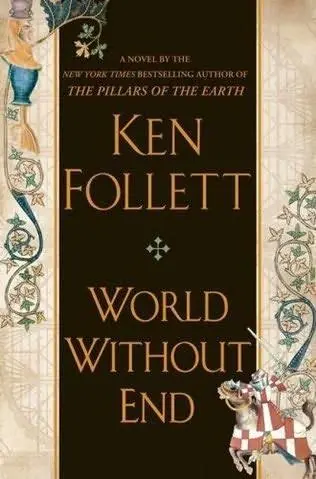
- Название:World Without End
- Автор:
- Жанр:
- Год:неизвестен
- ISBN:нет данных
- Рейтинг книги:5 / 5. Голосов: 1
-
Избранное:Добавить в избранное
- Отзывы:
-
Ваша оценка:
World Without End: краткое содержание, описание и аннотация
Предлагаем к чтению аннотацию, описание, краткое содержание или предисловие (зависит от того, что написал сам автор книги «World Without End»). Если вы не нашли необходимую информацию о книге — напишите в комментариях, мы постараемся отыскать её.
Ken Follett has 90 million readers worldwide. The Pillars of the Earth is his bestselling book of all time. Now, eighteen years after the publication of The Pillars of the Earth, Ken Follett has written the most-anticipated sequel of the year, World Without End.
In 1989 Ken Follett astonished the literary world with The Pillars of the Earth, a sweeping epic novel set in twelfth-century England centered on the building of a cathedral and many of the hundreds of lives it affected. Critics were overwhelmed-"it will hold you, fascinate you, surround you" (Chicago Tribune)-and readers everywhere hoped for a sequel.
World Without End takes place in the same town of Kingsbridge, two centuries after the townspeople finished building the exquisite Gothic cathedral that was at the heart of The Pillars of the Earth. The cathedral and the priory are again at the center of a web of love and hate, greed and pride, ambition and revenge, but this sequel stands on its own. This time the men and women of an extraordinary cast of characters find themselves at a crossroad of new ideas-about medicine, commerce, architecture, and justice. In a world where proponents of the old ways fiercely battle those with progressive minds, the intrigue and tension quickly reach a boiling point against the devastating backdrop of the greatest natural disaster ever to strike the human race-the Black Death.
Three years in the writing, and nearly eighteen years since its predecessor, World Without End breathes new life into the epic historical novel and once again shows that Ken Follett is a masterful author writing at the top of his craft.
World Without End — читать онлайн бесплатно полную книгу (весь текст) целиком
Ниже представлен текст книги, разбитый по страницам. Система сохранения места последней прочитанной страницы, позволяет с удобством читать онлайн бесплатно книгу «World Without End», без необходимости каждый раз заново искать на чём Вы остановились. Поставьте закладку, и сможете в любой момент перейти на страницу, на которой закончили чтение.
Интервал:
Закладка:
Wulfric took over. He ran past her and easily caught up with David. He scooped the boy up in his arms. But he was too late to catch Sam, who ran laughing in among the scattered houses.
The horsemen were reined in by the church. As Sam ran towards them, Ralph nudged his horse forward, then leaned down from the saddle and picked the boy up by his shirt. Sam gave a shout of fright.
Gwenda screamed.
Ralph sat the boy on his horse’s wither.
Wulfric, carrying David, came to a stop in front of Ralph.
Ralph said: “Your son, I presume.”
Gwenda was appalled. She was afraid for her son. It would be beneath Ralph’s dignity to attack a child, but there might be an accident. And there was another danger.
Seeing Ralph and Sam together, Wulfric might realize they were father and son.
Sam was still a little boy, of course, with a child’s body and face, but he had Ralph’s thick hair and dark eyes, and his bony shoulders were wide and square.
Gwenda looked at her husband. Wulfric’s expression showed no sign that he had seen what was so obvious to her. She surveyed the faces of the other villagers. They seemed oblivious to the stark truth – except for Vi Bailiff, who was giving Gwenda a hard stare. That old battleaxe might have guessed. But no one else had – yet.
Will came forward and addressed the visitors. “Good day to you, sirs. I’m Will, the bailiff of Outhenby. May I ask-”
“Shut your mouth, bailiff,” said Ralph. He pointed at Wulfric. “What is he doing here?”
Gwenda sensed a slight easing of tension as the other villagers realized they were not the target of the lord’s wrath.
Will replied: “My lord, he’s a labourer, hired on the authority of the prioress of Kingsbridge-”
“He’s a runaway, and he’s got to come home,” Ralph said.
Will fell silent, frightened.
Carl Shaftesbury said: “And what authority do you claim for this demand?”
Ralph peered at Carl, as if memorizing his face. “Watch your tongue, or I’ll disfigure the other side of your face.”
Will said nervously: “We don’t want any bloodshed.”
“Very wise, bailiff,” said Ralph. “Who is this insolent peasant?”
“Never you mind who I am, knight,” said Carl rudely. “I know who you are. You’re Ralph Fitzgerald, and I saw you convicted of rape and sentenced to death at Shiring court.”
“But I’m not dead, am I?” Ralph said.
“You should be, though. And you have no feudal rights over labourers. If you try to use force, you’ll be taught a sharp lesson.”
Several people gasped. This was a reckless way to speak to an armed knight.
Wulfric said: “Be quiet, Carl. I don’t want you killed for my sake.”
“It’s not for your sake,” Carl said. “If this thug is allowed to drag you off, next week someone will come for me. We have to stick together. We’re not helpless.”
Carl was a big man, taller than Wulfric and almost as broad, and Gwenda could see that he meant what he said. She was appalled. If they started fighting there would be terrible violence – and her Sam was still sitting on the horse with Ralph. “We’ll just go with Ralph,” she said frantically. “It will be better.”
Carl said: “No, it won’t. I’m going to stop him taking you away, whether you want me to or not. It’s for my own good.”
There was a murmur of assent. Gwenda looked around. Most of the men were holding shovels or hoes, and they looked ready to swing them, though they also looked scared.
Wulfric turned his back on Ralph and spoke in a low, urgent voice. “You women, take the children into the church – quickly, now!”
Several women snatched up toddlers and grabbed youngsters by the arms. Gwenda stayed where she was, and so did several of the younger women. The villagers instinctively moved closer together, standing shoulder to shoulder.
Ralph and Alan looked disconcerted. They had not expected to face a crowd of fifty or more belligerent peasants. But they were on horseback, so they could get away any time they wanted.
Ralph said: “Well, perhaps I’ll just take this little boy to Wigleigh.”
Gwenda gasped with horror.
Ralph went on: “Then, if his parents want him, they can come back where they belong.”
Gwenda was beside herself. Ralph had Sam, and he could ride away at any moment. She fought down a hysterical scream. If he turned his horse, she decided, she would throw herself at him and try to drag him off the saddle. She moved a step closer.
Then, behind Ralph and Alan, she saw the oxen. Harry Ploughman was driving them through the village from the other end. Eight massive beasts lumbered up to the scene in front of the church, then stopped, looking around dumbly, not knowing which way to go. Harry stood behind them. Ralph and Alan found themselves in a triangular trap, hemmed in by the villagers, the oxen and the stone church.
Harry had planned this to stop Ralph riding away with Wulfric and herself, Gwenda guessed. But the tactic did just as well for this situation.
Carl said: “Put the child down, Sir Ralph, and go in peace.”
The trouble was, Gwenda thought, it was now difficult for Ralph to back down without losing face. He was going to have to do something to avoid looking foolish, which was the ultimate horror for proud knights. They talked all the time about their honour, but that meant nothing – they were thoroughly dishonourable when it suited them. What they really prized was their dignity. They would rather die than be humiliated.
The tableau was frozen for several moments: the knight and the child on the horse, the mutinous villagers, and the dumb oxen.
Then Ralph lowered Sam to the ground.
Tears of relief came to Gwenda’s eyes.
Sam ran to her, threw his arms around her waist and began to cry.
The villagers relaxed, the men lowering their shovels and hoes.
Ralph pulled on his horse’s reins and shouted: “Hup! Hup!” The horse reared. He dug in his spurs and rode straight at the crowd. They scattered. Alan rode behind him. The villagers desperately threw themselves out of the way, ending up in tangled heaps on the muddy ground. They were trampled by one another but not, miraculously, by the horses.
Ralph and Alan laughed loudly as they rode out of the village, as if the entire encounter had been nothing more than a huge joke.
But, in reality, Ralph had been shamed.
And that, Gwenda felt sure, meant that he would be back.
68
Earlscastie had not changed. Twelve years ago, Merthin recalled, he had been asked to demolish the old fortress and build a new, modern palace fit for an earl in a peaceful country. But he had refused, preferring to design the new bridge at Kingsbridge. Since then, it seemed, the project had languished, for here was the same figure-eight wall with two drawbridges, and the old-fashioned keep ensconced in the upper loop, where the family lived like frightened rabbits at the end of a burrow, unaware that there was no longer any danger from the fox. The place must have been much the same in the days of Lady Aliena and Jack Builder.
Merthin was with Caris, who had been summoned here by the countess, Lady Philippa. Earl William had fallen sick, and Philippa thought her husband had the plague. Caris had been dismayed. She had thought the plague was over. No one had died of it in Kingsbridge for six weeks.
Caris and Merthin had set out immediately. However, the messenger had taken two days to travel from Earlscastie to Kingsbridge, and they had taken the same time to get here, so the likelihood was that the earl would now be dead, or nearly so. “All I will be able to do is give him some poppy essence to ease the final agony,” Caris had said as they rode along.
Читать дальшеИнтервал:
Закладка:
Похожие книги на «World Without End»
Представляем Вашему вниманию похожие книги на «World Without End» списком для выбора. Мы отобрали схожую по названию и смыслу литературу в надежде предоставить читателям больше вариантов отыскать новые, интересные, ещё непрочитанные произведения.
Обсуждение, отзывы о книге «World Without End» и просто собственные мнения читателей. Оставьте ваши комментарии, напишите, что Вы думаете о произведении, его смысле или главных героях. Укажите что конкретно понравилось, а что нет, и почему Вы так считаете.