Ken Follett - World Without End
Здесь есть возможность читать онлайн «Ken Follett - World Without End» весь текст электронной книги совершенно бесплатно (целиком полную версию без сокращений). В некоторых случаях можно слушать аудио, скачать через торрент в формате fb2 и присутствует краткое содержание. Жанр: Историческая проза, на английском языке. Описание произведения, (предисловие) а так же отзывы посетителей доступны на портале библиотеки ЛибКат.
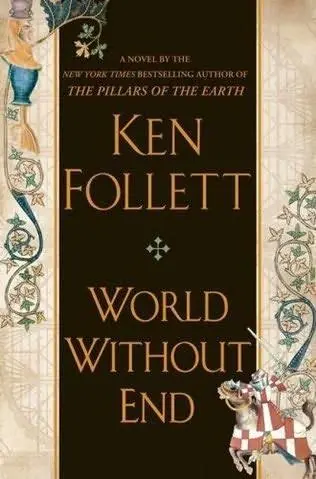
- Название:World Without End
- Автор:
- Жанр:
- Год:неизвестен
- ISBN:нет данных
- Рейтинг книги:5 / 5. Голосов: 1
-
Избранное:Добавить в избранное
- Отзывы:
-
Ваша оценка:
World Without End: краткое содержание, описание и аннотация
Предлагаем к чтению аннотацию, описание, краткое содержание или предисловие (зависит от того, что написал сам автор книги «World Without End»). Если вы не нашли необходимую информацию о книге — напишите в комментариях, мы постараемся отыскать её.
Ken Follett has 90 million readers worldwide. The Pillars of the Earth is his bestselling book of all time. Now, eighteen years after the publication of The Pillars of the Earth, Ken Follett has written the most-anticipated sequel of the year, World Without End.
In 1989 Ken Follett astonished the literary world with The Pillars of the Earth, a sweeping epic novel set in twelfth-century England centered on the building of a cathedral and many of the hundreds of lives it affected. Critics were overwhelmed-"it will hold you, fascinate you, surround you" (Chicago Tribune)-and readers everywhere hoped for a sequel.
World Without End takes place in the same town of Kingsbridge, two centuries after the townspeople finished building the exquisite Gothic cathedral that was at the heart of The Pillars of the Earth. The cathedral and the priory are again at the center of a web of love and hate, greed and pride, ambition and revenge, but this sequel stands on its own. This time the men and women of an extraordinary cast of characters find themselves at a crossroad of new ideas-about medicine, commerce, architecture, and justice. In a world where proponents of the old ways fiercely battle those with progressive minds, the intrigue and tension quickly reach a boiling point against the devastating backdrop of the greatest natural disaster ever to strike the human race-the Black Death.
Three years in the writing, and nearly eighteen years since its predecessor, World Without End breathes new life into the epic historical novel and once again shows that Ken Follett is a masterful author writing at the top of his craft.
World Without End — читать онлайн бесплатно полную книгу (весь текст) целиком
Ниже представлен текст книги, разбитый по страницам. Система сохранения места последней прочитанной страницы, позволяет с удобством читать онлайн бесплатно книгу «World Without End», без необходимости каждый раз заново искать на чём Вы остановились. Поставьте закладку, и сможете в любой момент перейти на страницу, на которой закончили чтение.
Интервал:
Закладка:
He looked angry, but Caris pretended not to notice that. “Hello, Ralph,” she said as amiably as she could. “This is an unexpected pleasure. Welcome to Kingsbridge.”
“Never mind all that,” he said rudely. He walked up to where she sat and stood aggressively close. “Do you realize you’re ruining the peasantry of the entire county?”
Another figure followed him in and stood by the door, a big man with a small head, and Caris recognized his long-time sidekick, Alan Fernhill. Both were armed with swords and daggers. Caris was acutely aware that she was alone in the palace. She tried to defuse the scene. “Would you like some ham, Ralph? I’ve just finished dinner.”
Ralph was not to be diverted. “You’ve been stealing my peasants!”
“Peasants, or pheasants?”
Alan Fernhill burst out laughing.
Ralph reddened and looked more dangerous, and Caris wished she had not made that joke. “If you poke fun at me you’ll be sorry,” he said.
Caris poured ale into a cup. “I’m not laughing at you,” she said. “Tell me exactly what’s on your mind.” She offered him the ale.
Her shaking hand betrayed her fear, but he ignored the cup and wagged his finger at her. “Labourers have been disappearing from my villages – and when I inquire after them, I find they have moved to villages belonging to you, where they get higher wages.”
Caris nodded. “If you were selling a horse, and two men wanted to buy it, wouldn’t you give it to the one who offered the higher price?”
“That’s not the same.”
“I think it is. Have some ale.”
With a sudden sideswipe of his hand, he knocked the cup from her grasp. It fell to the floor, the ale spilling into the straw. “They’re my labourers.”
Her hand was bruised, but she tried to ignore the pain. She bent down, picked up the cup and set it on the sideboard. “Not really,” she said. “If they’re labourers, that means you’ve never given them any land, so they have the right to go elsewhere.”
“I’m still their lord, damn it! And another thing. I offered a tenancy to a free man the other day and he refused it, saying he could get a better bargain from Kingsbridge Priory.”
“Same thing, Ralph. I need all the people I can get, so I give them what they want.”
“You’re a woman, you don’t think things through. You can’t see that it will all end with everyone paying more for the same peasants.”
“Not necessarily. Higher wages might attract some of those who at present do no work at all – outlaws, for example, or those vagabonds who go around living off what they find in plague-emptied villages. And some who are now labourers might become tenants, and work harder because they’re cultivating their own land.”
He banged the table with his fist, and she blinked at the sudden noise. “You’ve no right to change the old ways!”
“I think I have.”
He grabbed the front of her robe. “Well, I’m not putting up with it!”
“Take your hands off me, you clumsy oaf,” she said.
At that moment, Brother Thomas came in. “You sent for me – what the devil is going on here?”
He stepped smartly across the room, and Ralph let go of Caris’s robe as if it had suddenly caught fire. Thomas had no weapons and only one arm, but he had got the better of Ralph once before; and Ralph was scared of him.
Ralph took a step back, then realized he had revealed his fear, and looked ashamed. “We’re done here!” he said loudly, and turned to the door.
Caris said: “What I’m doing in Outhenby and elsewhere is perfectly legitimate, Ralph.”
“It’s interfering with the natural order!” he said.
“There’s no law against it.”
Alan opened the door for his master.
“You wait and see,” said Ralph, and he went out.
67
In March that year, 1349, Gwenda and Wulfric went with Nathan Reeve to the midweek market at the small town of Northwood.
They were working for Sir Ralph now. Gwenda and Wulfric had escaped the plague, so far, but several of Ralph’s labourers had died of it, so he needed help; and Nate, the bailiff of Wigleigh, had offered to take them on. He could afford to pay normal wages, whereas Perkin had been giving them nothing more than their food.
As soon as they announced they were going to work for Ralph, Perkin discovered that he could now afford to pay them normal wages – but he was too late.
On this day they took a cartload of logs from Ralph’s forest to sell in Northwood, a town that had had a timber market since time immemorial. The boys, Sam and David, went with them: there was no one else to look after them. Gwenda did not trust her father, and her mother had died two years ago. Wulfric’s parents were long dead.
Several other Wigleigh folk were at the market. Father Gaspard was buying seeds for his vegetable garden, and Gwenda’s father, Joby, was selling freshly killed rabbits.
Nate, the bailiff, was a stunted man with a twisted back, and he could not lift logs. He dealt with customers while Wulfric and Gwenda did the lifting. At midday he gave them a penny to buy their dinner at the Old Oak, one of the taverns around the square. They got bacon boiled with leeks and shared it with the boys. David, at eight years of age, still had a child’s appetite, but Sam was a fast-growing ten and perpetually hungry.
While they were eating, they overheard a conversation that caught Gwenda’s attention.
There was a group of young men standing in a corner, drinking large tankards of ale. They were all poorly dressed, except one with a bushy blond beard who had the superior clothes of a prosperous peasant or a village craftsman: leather trousers, good boots and a new hat. The sentence that caused Gwenda to prick up her ears was: “We pay two pence a day for labourers at Outhenby.”
She listened hard, trying to learn more, but caught only scattered words. She had heard that some employers were offering more than the traditional penny a day, because of the shortage of workers caused by the plague. She had hesitated to believe such stories, which sounded too good to be true.
She said nothing for the moment to Wulfric, who had not heard the magic words, but her heart beat faster. She and her family had endured so many years of poverty. Was it possible that life might get better for them?
She had to find out more.
When they had eaten, they sat on a bench outside, watching the boys and some other children running around the broad trunk of the tree that gave the tavern its name. “Wulfric,” she said quietly. “What if we could earn two pence a day – each?”
“How?”
“By going to Outhenby.” She told him what she had overheard. “It could be the beginning of a new life for us,” she finished.
“Am I never to get back my father’s lands, then?”
She could have hit him with a stick. Did he really still think that was going to happen? How foolish could he be?
She tried to make her voice as gentle as possible. “It’s twelve years since you were disinherited,” she said. “In that time Ralph has become more and more powerful. And there’s never been the least sign that he might mellow towards you. What do you think the chances are?”
He did not answer that question. “Where would we live?”
“They must have houses in Outhenby.”
“But will Ralph let us go?”
“He can’t stop us. We’re labourers, not serfs. You know that.”
“But does Ralph know it?”
“Let’s not give him the chance to object.”
“How could we manage that?”
“Well…” She had not thought this through, but now she saw that it would have to be done precipitately. “We could leave today, from here.”
Читать дальшеИнтервал:
Закладка:
Похожие книги на «World Without End»
Представляем Вашему вниманию похожие книги на «World Without End» списком для выбора. Мы отобрали схожую по названию и смыслу литературу в надежде предоставить читателям больше вариантов отыскать новые, интересные, ещё непрочитанные произведения.

Обсуждение, отзывы о книге «World Without End» и просто собственные мнения читателей. Оставьте ваши комментарии, напишите, что Вы думаете о произведении, его смысле или главных героях. Укажите что конкретно понравилось, а что нет, и почему Вы так считаете.