Ken Follett - World Without End
Здесь есть возможность читать онлайн «Ken Follett - World Without End» весь текст электронной книги совершенно бесплатно (целиком полную версию без сокращений). В некоторых случаях можно слушать аудио, скачать через торрент в формате fb2 и присутствует краткое содержание. Жанр: Историческая проза, на английском языке. Описание произведения, (предисловие) а так же отзывы посетителей доступны на портале библиотеки ЛибКат.
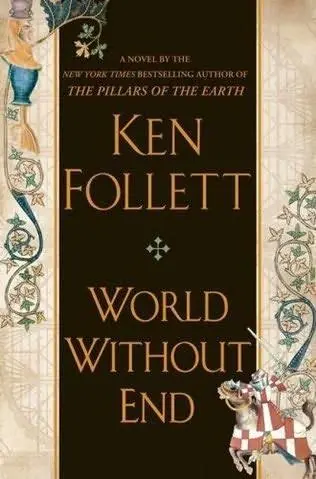
- Название:World Without End
- Автор:
- Жанр:
- Год:неизвестен
- ISBN:нет данных
- Рейтинг книги:5 / 5. Голосов: 1
-
Избранное:Добавить в избранное
- Отзывы:
-
Ваша оценка:
World Without End: краткое содержание, описание и аннотация
Предлагаем к чтению аннотацию, описание, краткое содержание или предисловие (зависит от того, что написал сам автор книги «World Without End»). Если вы не нашли необходимую информацию о книге — напишите в комментариях, мы постараемся отыскать её.
Ken Follett has 90 million readers worldwide. The Pillars of the Earth is his bestselling book of all time. Now, eighteen years after the publication of The Pillars of the Earth, Ken Follett has written the most-anticipated sequel of the year, World Without End.
In 1989 Ken Follett astonished the literary world with The Pillars of the Earth, a sweeping epic novel set in twelfth-century England centered on the building of a cathedral and many of the hundreds of lives it affected. Critics were overwhelmed-"it will hold you, fascinate you, surround you" (Chicago Tribune)-and readers everywhere hoped for a sequel.
World Without End takes place in the same town of Kingsbridge, two centuries after the townspeople finished building the exquisite Gothic cathedral that was at the heart of The Pillars of the Earth. The cathedral and the priory are again at the center of a web of love and hate, greed and pride, ambition and revenge, but this sequel stands on its own. This time the men and women of an extraordinary cast of characters find themselves at a crossroad of new ideas-about medicine, commerce, architecture, and justice. In a world where proponents of the old ways fiercely battle those with progressive minds, the intrigue and tension quickly reach a boiling point against the devastating backdrop of the greatest natural disaster ever to strike the human race-the Black Death.
Three years in the writing, and nearly eighteen years since its predecessor, World Without End breathes new life into the epic historical novel and once again shows that Ken Follett is a masterful author writing at the top of his craft.
World Without End — читать онлайн бесплатно полную книгу (весь текст) целиком
Ниже представлен текст книги, разбитый по страницам. Система сохранения места последней прочитанной страницы, позволяет с удобством читать онлайн бесплатно книгу «World Without End», без необходимости каждый раз заново искать на чём Вы остановились. Поставьте закладку, и сможете в любой момент перейти на страницу, на которой закончили чтение.
Интервал:
Закладка:
Merthin said: “I see what happened. Jonquil lay here in the church, in his coffin, prior to burial. While the other monks were at dinner, Godwyn and Philemon opened the coffin and took the body out. They dug up Saul’s tomb and tumbled Jonquil in on top of Saul’s coffin. They closed the grave. Then they put the cathedral treasures in Jonquil’s coffin and closed it again.”
Thomas said: “So we have to dig up Jonquil’s grave.”
Caris glanced up at the windows of the church. They were dark. Night had fallen while they were opening the tomb of Saul. “We could leave it until morning,” she said.
Both men were silent for a long moment, then Thomas said: “Let’s get it over with.”
Caris went to the kitchen, picked two branches from the firewood pile, lit them at the fire, then returned to the church.
As the three of them went outside they heard Godwyn cry: “And the winepress of the wrath of God was trodden outside the city, and the grapes gave forth blood, and the land was flooded to the height of the horses’ bridles.”
Caris shuddered. It was a vile image from the Revelation of St John the Divine, and it disgusted her. She tried to put it out of her mind.
They walked quickly to the cemetery in the red light of the torches. Caris was relieved to be away from that wall painting and out of earshot of Godwyn’s mad ravings. They found Jonquil’s headstone and began to excavate.
The two men had already dug two graves for the novices and re-dug Saul’s. This was their fourth since dinner time. Merthin looked tired and Thomas was sweating heavily. But they worked on doggedly. Slowly the hole got deeper and the pile of earth beside it rose higher. At last a shovel struck wood.
Caris passed Merthin the crowbar, then she knelt on the edge of the pit, holding both torches. Merthin prised open the coffin lid and threw it out of the grave.
There was no corpse in the box.
Instead it was packed tightly with bags and boxes. Merthin opened a leather bag and pulled out a jewelled crucifix. “Hallelujah,” he said wearily.
Thomas opened a box to reveal a row of parchment rolls, packed tightly together like fish in a crate: the charters.
Caris felt a weight of worry roll off her shoulders. She had got the nunnery charters back.
Thomas put his hand into another bag. When he looked at what he had got hold of, it was a skull. He gave a fearful cry and dropped it.
“St Adolphus,” Merthin said in a matter-of-fact voice. “Pilgrims travel hundreds of miles to touch the box that holds his bones.” He picked up the skull. “Lucky us,” he said, and put it back into the bag.
“If I may make a suggestion?” said Caris. “We have to carry this stuff all the way back to Kingsbridge in a cart. Why don’t we leave it in the coffin? It’s packed already, and the casket may serve to deter thieves.”
“Good idea,” Merthin said. “We’ll just lift the coffin out of the grave.”
Thomas returned to the priory and brought ropes, and they lifted the coffin out of the hole. They re-fixed the lid, then tied the ropes around the box in order to drag it across the ground and into the church.
As they were about to start, they heard a scream.
Caris let out a cry of fear.
They all looked towards the church. A figure was running towards them, eyes staring, blood coming from its mouth. Caris suffered a moment of utter terror when she suddenly believed every foolish superstition she had ever heard about spirits. Then she realized she was looking at Godwyn. Somehow he had found the strength to rise from his death bed. He had staggered out of the church and seen their torches, and now in his madness he was running towards them.
They watched him, transfixed.
He stopped and looked at the coffin, then at the empty grave, and in the restless torchlight Caris thought she saw a glimmer of understanding on his grimacing face. Then he seemed to lose his strength, and he collapsed. He fell on the mound of earth beside Jonquil’s empty grave, then he rolled down the mound and into the pit.
They all stepped forward and looked into the grave.
Godwyn lay there on his back, looking up at them with open, sightless eyes.
66
As soon as Caris got back to Kingsbridge, she decided to leave again.
The image of St-John-in-the-Forest that stayed with her was not the graveyard, nor the corpses Merthin and Thomas had dug up, but the neat fields with no one tilling them. As she rode home, with Merthin beside her and Thomas driving the cart, she saw a lot of land in the same state, and she foresaw a crisis.
The monks and nuns got most of their income from rents. Serfs grew crops and raised livestock on land belonging to the priory and, instead of paying a knight or an earl for the privilege, they paid the prior or prioress. Traditionally they brought a portion of their harvest to the cathedral – a dozen sacks of flour, three sheep, a calf, a cartload of onions – but nowadays most people paid cash.
If no one was cultivating the land, there would be no rent paid, obviously. And then what would the nuns eat?
The cathedral ornaments, the money and the charters she had retrieved from St-John-in-the-Forest were stashed safely in the new, secret treasury that Mother Cecilia had commissioned Jeremiah to build in a place where no one could easily find it. All the ornaments had been found except one, a gold candlestick given by the chandlers’ guild, the group that represented the wax-candle makers of Kingsbridge. That had disappeared.
Caris held a triumphant Sunday service featuring the rescued bones of the saint. She put Thomas in charge of the boys in the orphanage – some of them were old enough to require a strong male presence. She herself moved into the prior’s palace, thinking with pleasure how appalled the late Godwyn would be that it was occupied by a woman. Then, as soon as she had dealt with these details, she went to Outhenby.
The vale of Outhen was a fertile valley of heavy clay soil a day’s journey from Kingsbridge. It had been given to the nuns a hundred years ago by a wicked old knight making a last-gasp attempt to win forgiveness for a lifetime of sins. Five villages stood at intervals along the banks of the river Outhen. On either side the great fields covered the land and the lower slopes of the hills.
The fields were divided into strips allocated to different families. As she had feared, many strips were not being cultivated. The plague had changed everything, but no one had had the brains – or perhaps the courage – to reorganize farming in the light of the new circumstances. Caris herself would have to do that. She had a rough idea of what was required, and she would work out the details as she went along.
With her was Sister Joan, a young nun recently out of her novitiate. Joan was a bright girl who reminded Caris of herself ten years ago – not in appearance, for she was black-haired and blue-eyed, but in her questioning mind and brisk scepticism.
They rode to the largest of the villages, Outhenby. The bailiff for the whole valley, Will, lived there in a large timber house next to the church. He was not at home, but they found him in the farthest field, sowing oats; a big, slow-moving man. The next strip had been left fallow, and wild grass and weeds were poking up, grazed by a few sheep.
Will Bailiff visited the priory several times a year, usually to bring the rents from the villages, so he knew Caris; but he was disconcerted to meet her on his home ground. “Sister Caris!” he exclaimed when he recognized her. “What brings you here?”
“I’m Mother Caris now, Will, and I’ve come to make sure the nuns’ lands are being properly husbanded.”
“Ah.” He shook his head. “We’re doing our best, as you see, but we’ve lost so many men that it’s very, very difficult.”
Читать дальшеИнтервал:
Закладка:
Похожие книги на «World Without End»
Представляем Вашему вниманию похожие книги на «World Without End» списком для выбора. Мы отобрали схожую по названию и смыслу литературу в надежде предоставить читателям больше вариантов отыскать новые, интересные, ещё непрочитанные произведения.

Обсуждение, отзывы о книге «World Without End» и просто собственные мнения читателей. Оставьте ваши комментарии, напишите, что Вы думаете о произведении, его смысле или главных героях. Укажите что конкретно понравилось, а что нет, и почему Вы так считаете.