Ken Follett - World Without End
Здесь есть возможность читать онлайн «Ken Follett - World Without End» весь текст электронной книги совершенно бесплатно (целиком полную версию без сокращений). В некоторых случаях можно слушать аудио, скачать через торрент в формате fb2 и присутствует краткое содержание. Жанр: Историческая проза, на английском языке. Описание произведения, (предисловие) а так же отзывы посетителей доступны на портале библиотеки ЛибКат.
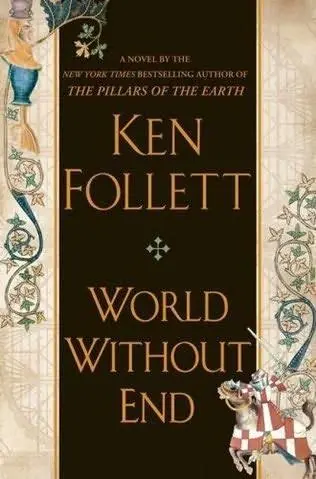
- Название:World Without End
- Автор:
- Жанр:
- Год:неизвестен
- ISBN:нет данных
- Рейтинг книги:5 / 5. Голосов: 1
-
Избранное:Добавить в избранное
- Отзывы:
-
Ваша оценка:
World Without End: краткое содержание, описание и аннотация
Предлагаем к чтению аннотацию, описание, краткое содержание или предисловие (зависит от того, что написал сам автор книги «World Without End»). Если вы не нашли необходимую информацию о книге — напишите в комментариях, мы постараемся отыскать её.
Ken Follett has 90 million readers worldwide. The Pillars of the Earth is his bestselling book of all time. Now, eighteen years after the publication of The Pillars of the Earth, Ken Follett has written the most-anticipated sequel of the year, World Without End.
In 1989 Ken Follett astonished the literary world with The Pillars of the Earth, a sweeping epic novel set in twelfth-century England centered on the building of a cathedral and many of the hundreds of lives it affected. Critics were overwhelmed-"it will hold you, fascinate you, surround you" (Chicago Tribune)-and readers everywhere hoped for a sequel.
World Without End takes place in the same town of Kingsbridge, two centuries after the townspeople finished building the exquisite Gothic cathedral that was at the heart of The Pillars of the Earth. The cathedral and the priory are again at the center of a web of love and hate, greed and pride, ambition and revenge, but this sequel stands on its own. This time the men and women of an extraordinary cast of characters find themselves at a crossroad of new ideas-about medicine, commerce, architecture, and justice. In a world where proponents of the old ways fiercely battle those with progressive minds, the intrigue and tension quickly reach a boiling point against the devastating backdrop of the greatest natural disaster ever to strike the human race-the Black Death.
Three years in the writing, and nearly eighteen years since its predecessor, World Without End breathes new life into the epic historical novel and once again shows that Ken Follett is a masterful author writing at the top of his craft.
World Without End — читать онлайн бесплатно полную книгу (весь текст) целиком
Ниже представлен текст книги, разбитый по страницам. Система сохранения места последней прочитанной страницы, позволяет с удобством читать онлайн бесплатно книгу «World Without End», без необходимости каждый раз заново искать на чём Вы остановились. Поставьте закладку, и сможете в любой момент перейти на страницу, на которой закончили чтение.
Интервал:
Закладка:
Bailiffs always said that times were difficult – but in this case it was true.
Caris dismounted. “Walk with me and tell me about it.” A few hundred yards away, on the gentle slope of a hillside, she saw a peasant ploughing with a team of eight oxen. He halted the team and looked at her curiously, so she headed that way.
Will began to recover his composure. Walking alongside her, he said: “A woman of God, such as yourself, can’t be expected to know much about tilling the soil, of course; but I’ll do my best to explain the finer points.”
“That would be kind.” She was used to being condescended to by men of Will’s type. She had found that it was best not to challenge them, but rather to lull them into a false sense of security. That way, she learned more. “How many men have you lost to the plague?”
“Oh, many men.”
“How many?”
“Well, now, let me see, there was William Jones, and his two sons; then Richard Carpenter, and his wife-”
“I don’t need to know their names,” she said, controlling her exasperation. “How many, roughly speaking?”
“I’d have to think about that.”
They had reached the plough. Managing the eight-ox team was a skilled job, and ploughmen were often among the more intelligent villagers. Caris addressed the young man. “How many people in Outhenby have died of the plague?”
“About two hundred, I’d say.”
Caris studied him. He was short but muscular, with a bushy blond beard. He had a cocksure look, as young men often did. “Who are you?” she asked.
“My name is Harry, and my father was Richard, holy sister.”
“I am Mother Caris. How do you work out that figure of two hundred?”
“There’s forty-two dead here in Outhenby, by my reckoning. It’s just as bad in Ham and Shortacre, making about a hundred and twenty. Longwater escaped completely, but every soul in Oldchurch is dead but old Roger Breton, which is about eighty people, making two hundred.”
She turned to Will. “Out of about how many in the whole valley?”
“Ah, now, let me see…”
Harry Ploughman said: “A thousand, near enough, before the plague.”
Will said: “That’s why you see me sowing my own strip, which should be done by labourers – but I have no labourers. They’ve all died.”
Harry said: “Or they’ve gone to work elsewhere for higher wages.”
Caris perked up. “Oh? Who offers higher wages?”
“Some of the wealthier peasants in the next valley,” Will said indignantly. “The nobility pay a penny a day, which is what labourers have always got and always should; but there are some people who think they can do as they please.”
“But they get their crops sowed, I suppose,” Caris said.
“But there’s right and wrong, Mother Caris,” said Will.
Caris pointed to the fallow strip where the sheep were. “And what about that land? Why has it not been ploughed?”
Will said: “That belonged to William Jones. He and his sons died, and his wife went to live with her sister in Shiring.”
“Have you looked for a new tenant?”
“Can’t get them, mother.”
Harry interjected again. “Not on the old terms, anyhow.”
Will glared at him, but Caris said: “What do you mean?”
“Prices have fallen, you see, even though it’s spring when corn is usually dear.”
Caris nodded. That was how markets worked, everyone knew: if there were fewer buyers, the price fell. “But people must live somehow.”
“They don’t want to grow wheat and barley and oats – but they have to grow what they’re told, at least in this valley. So a man looking for a tenancy would rather go elsewhere.”
“And what will he get elsewhere?”
Will interrupted angrily: “They want to do as they please.”
Harry answered Caris’s question. “They want to be free tenants, paying cash rent, rather than serfs working one day a week on the lord’s land; and they want to be able to grow different crops.”
“What crops?”
“Hemp, or flax, or apples and pears – things they know they can sell at the market. Maybe something different every year. But that’s never been allowed in Outhenby.” Harry seemed to recollect himself, and added: “No offence to your holy order, Mother Prioress, nor to Will Bailiff, an honest man as everyone knows.”
Caris saw how it was. Bailiffs were always conservative. In good times, it hardly mattered: the old ways sufficed. But this was a crisis.
She assumed her most authoritative manner. “All right, listen carefully, now, Will, and I’ll tell you what you’re going to do.” Will looked startled: he had thought he was being consulted, not commanded. “First, you are to stop ploughing the hillsides. It’s foolish when we’ve got good land uncultivated.”
“But-”
“Be quiet and listen. Offer every tenant an exchange, acre for acre, good valley bottom instead of hillside.”
“Then what will we do with the hillside?”
“Convert it to grazing, cattle on the lower slopes and sheep on the higher. You don’t need many men for that, just a few boys to herd them.”
“Oh,” said Will. It was plain that he wanted to argue, but he could not immediately think of an objection.
Caris went on: “Next, any valley-bottom land that is still untenanted should be offered as a free tenancy with cash rent to anyone who will take it on.” A free tenancy meant that the tenant was not a serf, and did not have to work on the lord’s land, or get his permission to marry or build a house. All he had to do was pay his rent.
“You’re doing away with all the old customs.”
She pointed at the fallow strip. “The old customs are letting my land go to waste. Can you think of another way to stop this happening?”
“Well,” said Will, and there was a long pause; then he shook his head silently.
“Thirdly, offer wages of two pence a day to anyone who will work the land.”
“Two pence a day!”
Caris felt she could not rely on Will to implement these changes vigorously. He would drag his feet and invent excuses. She turned to the cocksure ploughman. She would make him the champion of her reforms. “Harry, I want you to go to every market in the county over the next few weeks. Spread the word that anyone who is on the move can do well in Outhenby. If there are labourers looking for wages I want them to come here.”
Harry grinned and nodded, though Will still looked a bit dazed.
“I want to see all this good land growing crops this summer,” she said. “Is that clear?”
“Yes.” said Will. “Thank you, Mother Prioress.”
Caris went through all the charters with Sister Joan, making a note of the date and subject of each. She decided to have them copied, one by one – the idea Godwyn had proposed, though he had only pretended to be copying them as a pretext for taking them away from the nuns. But it was a sound notion. The more copies there were, the harder it was for a valuable document to disappear.
She was intrigued by a deed dated 1327 which assigned to the monks the large farm near Lynn, in Norfolk, that they called Lynn Grange. The gift was made on condition the priory took on, as a novice monk, a knight called Sir Thomas Langley.
Caris was taken back to her childhood, and the day she had ventured into the wood with Merthin, Ralph and Gwenda, and they had seen Thomas receive the wound that had caused him to lose his arm.
She showed the charter to Joan, who shrugged and said: “It’s usual for such a gift to be made when someone from a wealthy family becomes a monk.”
“But look who the donor is.”
Joan looked again. “Queen Isabella!” Isabella was the widow of Edward II and the mother of Edward III. “What’s her interest in Kingsbridge?”
Читать дальшеИнтервал:
Закладка:
Похожие книги на «World Without End»
Представляем Вашему вниманию похожие книги на «World Without End» списком для выбора. Мы отобрали схожую по названию и смыслу литературу в надежде предоставить читателям больше вариантов отыскать новые, интересные, ещё непрочитанные произведения.
Обсуждение, отзывы о книге «World Without End» и просто собственные мнения читателей. Оставьте ваши комментарии, напишите, что Вы думаете о произведении, его смысле или главных героях. Укажите что конкретно понравилось, а что нет, и почему Вы так считаете.