Ken Follett - World Without End
Здесь есть возможность читать онлайн «Ken Follett - World Without End» весь текст электронной книги совершенно бесплатно (целиком полную версию без сокращений). В некоторых случаях можно слушать аудио, скачать через торрент в формате fb2 и присутствует краткое содержание. Жанр: Историческая проза, на английском языке. Описание произведения, (предисловие) а так же отзывы посетителей доступны на портале библиотеки ЛибКат.
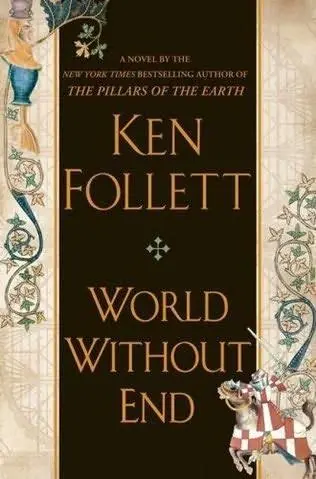
- Название:World Without End
- Автор:
- Жанр:
- Год:неизвестен
- ISBN:нет данных
- Рейтинг книги:5 / 5. Голосов: 1
-
Избранное:Добавить в избранное
- Отзывы:
-
Ваша оценка:
World Without End: краткое содержание, описание и аннотация
Предлагаем к чтению аннотацию, описание, краткое содержание или предисловие (зависит от того, что написал сам автор книги «World Without End»). Если вы не нашли необходимую информацию о книге — напишите в комментариях, мы постараемся отыскать её.
Ken Follett has 90 million readers worldwide. The Pillars of the Earth is his bestselling book of all time. Now, eighteen years after the publication of The Pillars of the Earth, Ken Follett has written the most-anticipated sequel of the year, World Without End.
In 1989 Ken Follett astonished the literary world with The Pillars of the Earth, a sweeping epic novel set in twelfth-century England centered on the building of a cathedral and many of the hundreds of lives it affected. Critics were overwhelmed-"it will hold you, fascinate you, surround you" (Chicago Tribune)-and readers everywhere hoped for a sequel.
World Without End takes place in the same town of Kingsbridge, two centuries after the townspeople finished building the exquisite Gothic cathedral that was at the heart of The Pillars of the Earth. The cathedral and the priory are again at the center of a web of love and hate, greed and pride, ambition and revenge, but this sequel stands on its own. This time the men and women of an extraordinary cast of characters find themselves at a crossroad of new ideas-about medicine, commerce, architecture, and justice. In a world where proponents of the old ways fiercely battle those with progressive minds, the intrigue and tension quickly reach a boiling point against the devastating backdrop of the greatest natural disaster ever to strike the human race-the Black Death.
Three years in the writing, and nearly eighteen years since its predecessor, World Without End breathes new life into the epic historical novel and once again shows that Ken Follett is a masterful author writing at the top of his craft.
World Without End — читать онлайн бесплатно полную книгу (весь текст) целиком
Ниже представлен текст книги, разбитый по страницам. Система сохранения места последней прочитанной страницы, позволяет с удобством читать онлайн бесплатно книгу «World Without End», без необходимости каждый раз заново искать на чём Вы остановились. Поставьте закладку, и сможете в любой момент перейти на страницу, на которой закончили чтение.
Интервал:
Закладка:
It was a scary thought. They had both lived their entire lives in Wigleigh. Wulfric had never even moved house. Now they were contemplating going to live in a village they had never seen without even going back to say goodbye.
But Wulfric was worrying about something else. He pointed at the hunchbacked bailiff, crossing the square to the chandler’s shop. “What would Nathan say?”
“We won’t tell him what we’re planning. We’ll give him some story – say we want to stay here overnight, for some reason, and return home tomorrow. That way, nobody will know where we are. And we’ll never go back to Wigleigh.”
“Never go back,” Wulfric said despondently.
Gwenda controlled her impatience. She knew her husband. Once Wulfric was set on a course he was unstoppable, but he took a long time to decide. He would come round to this idea eventually. He was not closed-minded, just cautious and deliberate. He hated to make decisions in a rush – whereas she thought it was the only way.
The young man with the blond beard came out of the Old Oak. Gwenda looked around: none of the Wigleigh folk was in sight. She stood up and accosted the man. “Did I hear you say something about two pence a day for labourers?” she said.
“That’s right, mistress,” he replied. “In the vale of Outhenby, just half a day south-west of here. We need all we can get.”
“Who are you?”
“I’m the ploughman of Outhenby. My name is Harry.”
Outhenby must be a large and prosperous village to have a ploughman all of its own, Gwenda reasoned. Most ploughmen worked for a group of villages. “And who is lord of the manor?”
“The prioress of Kingsbridge.”
“Caris!” That was wonderful news. Caris could be trusted. Gwenda’s spirits lifted further.
“Yes, she is the current prioress,” Harry said. “A very determined woman.”
“I know.”
“She wants her fields cultivated so that she can feed the sisters, and she’s not listening to excuses.”
“Do you have houses at Outhenby for labourers to live in? With their families?”
“Plenty, unfortunately. We’ve lost many people to the plague.”
“You said it was south-west of here.”
“Take the southerly road to Badford, then follow the Outhen upstream.”
Caution returned to Gwenda. “I’m not going,” she said quickly.
“Ah. Of course.” He did not believe her.
“I was really asking on behalf of a friend.” She turned away.
“Well, tell your friend to come as soon as he can – we’ve got spring ploughing and sowing to finish yet.”
“All right.”
She felt slightly dizzy, as if she had taken a draught of strong wine. Two pence a day – working for Caris – and miles away from Ralph, Perkin and flirty Annet! It was a dream.
She sat back down beside Wulfric. “Did you hear all that?” she asked him.
“Yes,” he said. He pointed to a figure standing by the tavern door. “And so did he.”
Gwenda looked. It was her father.
“Put that horse in the traces,” Nate said to Wulfric around mid-afternoon. “It’s time to go home.”
Wulfric said: “We’ll be needing our wages for the week so far.”
“You’ll be paid on Saturday as usual,” Nate said dismissively. “Hitch that nag.”
Wulfric did not move towards the horse. “I’ll trouble you to pay me today,” he insisted. “I know you’ve got the money, you’ve sold all that timber.”
Nate turned and looked directly at him. “Why should you be paid early?” he said irritably.
“Because I shan’t be returning to Wigleigh with you tonight.”
Nate was taken aback. “Why not?”
Gwenda took over. “We’re going to Melcombe,” she said.
“What?” Nate was outraged. “People like you have no business travelling to Melcombe!”
“We met a fisherman who needs crew for two pence a day.” Gwenda had worked out this story to throw any pursuit off the scent.
Wulfric added: “Our respects to Sir Ralph, and may God be with him in the future.”
Gwenda added: “But we don’t expect to see him ever again.” She said it just to hear the sweet sound of it: never to see Ralph again.
Nathan said indignantly: “He may not wish you to leave!”
“We’re not serfs, we have no land. Ralph cannot forbid us.”
“You’re the son of a serf,” Nathan said to Wulfric.
“But Ralph denied me my inheritance,” Wulfric replied. “He cannot now demand my fealty.”
“It’s a dangerous thing for a poor man to stand on his rights.”
“That’s true,” Wulfric conceded. “But I’m doing it, all the same.”
Nate was beaten. “You shall hear more of this,” he said.
“Would you like me to put the horse to the cart?”
Nate scowled. He could not do it himself. Because of his back, he had difficulty with complicated physical tasks, and the horse was taller than he. “Yes, of course,” he said.
“I’ll be glad to. Would you kindly pay me first?”
Looking furious, Nate took out his purse and counted six silver pennies.
Gwenda took the money and Wulfric hitched up the horse.
Nate drove away without another word.
“Well!” said Gwenda. “That’s done.” She looked at Wulfric. He was smiling broadly. She asked him: “What is it?”
“I don’t know,” he said. “I feel as if I’ve been wearing a collar for years, and suddenly it’s been taken off.”
“Good.” That was how she wanted him to feel. “Now let’s find a place to stay the night.”
The Old Oak was in a prime position in the market square, and charged top prices. They walked around the little town looking for somewhere cheaper. Eventually they went into the Gate House, where Gwenda negotiated accommodation for the four of them – supper, a mattress on the floor and breakfast – for a penny. The boys would need a decent night’s sleep and some breakfast if they were to walk all morning.
She could hardly sleep for excitement. She was also worried. What was she taking her family to? She had only the word of one man, a stranger, for what they would find when they reached Outhenby. She really ought to have sought confirmation before committing herself.
But she and Wulfric had been stuck in a hole for ten years, and Harry Ploughman of Outhenby was the first person to offer them a way out of it.
The breakfast was meagre: thin porridge and watery cider. Gwenda bought a big loaf of new bread for them to eat on the road, and Wulfric filled his leather flask with cold water from a well. They passed through the city gate an hour after sunrise and set off on the road south.
As they walked, she thought about Joby, her father. As soon as he learned that she had not returned to Wigleigh, he would remember the conversation he had overheard, and he would guess she had gone to Outhenby. He would not be fooled by the story about Melcombe: he was an accomplished deceiver himself, too experienced to be taken in by a simple ruse. But would anyone think to ask him where she had gone? Everyone knew she never spoke to her father. And, if they did ask him, would he blurt out what he suspected? Or would some vestige of paternal feeling cause him to protect her?
There was nothing she could do about it, so she put him out of her mind.
It was good weather for travelling. The ground was soft with recent rain, and there was no dust; but today was a dry day with fitful sunshine, neither cold nor hot. The boys quickly grew tired, especially David, the younger, but Wulfric was good at distracting them with songs and rhymes, quizzing them about the names of trees and plants, playing number games and telling stories.
Gwenda could hardly believe what they had done. This time yesterday, it had looked as if their life would never change: hard work, poverty and frustrated aspirations would be their lot for ever. Now they were on the road to a new life.
Читать дальшеИнтервал:
Закладка:
Похожие книги на «World Without End»
Представляем Вашему вниманию похожие книги на «World Without End» списком для выбора. Мы отобрали схожую по названию и смыслу литературу в надежде предоставить читателям больше вариантов отыскать новые, интересные, ещё непрочитанные произведения.

Обсуждение, отзывы о книге «World Without End» и просто собственные мнения читателей. Оставьте ваши комментарии, напишите, что Вы думаете о произведении, его смысле или главных героях. Укажите что конкретно понравилось, а что нет, и почему Вы так считаете.