Ken Follett - World Without End
Здесь есть возможность читать онлайн «Ken Follett - World Without End» весь текст электронной книги совершенно бесплатно (целиком полную версию без сокращений). В некоторых случаях можно слушать аудио, скачать через торрент в формате fb2 и присутствует краткое содержание. Жанр: Историческая проза, на английском языке. Описание произведения, (предисловие) а так же отзывы посетителей доступны на портале библиотеки ЛибКат.
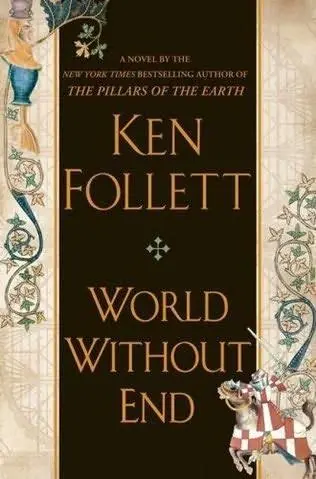
- Название:World Without End
- Автор:
- Жанр:
- Год:неизвестен
- ISBN:нет данных
- Рейтинг книги:5 / 5. Голосов: 1
-
Избранное:Добавить в избранное
- Отзывы:
-
Ваша оценка:
World Without End: краткое содержание, описание и аннотация
Предлагаем к чтению аннотацию, описание, краткое содержание или предисловие (зависит от того, что написал сам автор книги «World Without End»). Если вы не нашли необходимую информацию о книге — напишите в комментариях, мы постараемся отыскать её.
Ken Follett has 90 million readers worldwide. The Pillars of the Earth is his bestselling book of all time. Now, eighteen years after the publication of The Pillars of the Earth, Ken Follett has written the most-anticipated sequel of the year, World Without End.
In 1989 Ken Follett astonished the literary world with The Pillars of the Earth, a sweeping epic novel set in twelfth-century England centered on the building of a cathedral and many of the hundreds of lives it affected. Critics were overwhelmed-"it will hold you, fascinate you, surround you" (Chicago Tribune)-and readers everywhere hoped for a sequel.
World Without End takes place in the same town of Kingsbridge, two centuries after the townspeople finished building the exquisite Gothic cathedral that was at the heart of The Pillars of the Earth. The cathedral and the priory are again at the center of a web of love and hate, greed and pride, ambition and revenge, but this sequel stands on its own. This time the men and women of an extraordinary cast of characters find themselves at a crossroad of new ideas-about medicine, commerce, architecture, and justice. In a world where proponents of the old ways fiercely battle those with progressive minds, the intrigue and tension quickly reach a boiling point against the devastating backdrop of the greatest natural disaster ever to strike the human race-the Black Death.
Three years in the writing, and nearly eighteen years since its predecessor, World Without End breathes new life into the epic historical novel and once again shows that Ken Follett is a masterful author writing at the top of his craft.
World Without End — читать онлайн бесплатно полную книгу (весь текст) целиком
Ниже представлен текст книги, разбитый по страницам. Система сохранения места последней прочитанной страницы, позволяет с удобством читать онлайн бесплатно книгу «World Without End», без необходимости каждый раз заново искать на чём Вы остановились. Поставьте закладку, и сможете в любой момент перейти на страницу, на которой закончили чтение.
Интервал:
Закладка:
She thought of the house where she had lived with Wulfric for ten years. She had not left much behind: a few cooking pots, a stack of newly chopped firewood, half a ham and four blankets. She had no clothes other than what she was wearing, and neither did Wulfric or the boys; no jewellery, ribbons, gloves or combs. Ten years ago, Wulfric had had chickens and pigs in his yard, but they had gradually been eaten or sold during the years of penury. Their meagre possessions could be replaced with a week’s wages at the promised Outhenby rates.
In accordance with Harry’s directions they took the road south to a muddy ford across the Outhen, then turned west and followed the river upstream. As they progressed, the river narrowed, until the land funnelled between two ranges of hills. “Good, fertile soil,” Wulfric said. “It’ll need the heavy plough, though.”
At noon they came to a large village with a stone church. They went to the door of a timber manor house next to the church. With trepidation, Gwenda knocked. Was she about to be told that Harry Ploughman did not know what he was talking about, and there was no work here? Had she made her family walk half a day for nothing? How humiliating it would be to have to return to Wigleigh and beg to be taken on again by Nate Reeve.
A grey-haired woman came to the door. She looked at Gwenda with the suspicious glare that villagers everywhere gave to strangers. “Yes?”
“Good day, mistress,” Gwenda said. “Is this Outhenby?”
“It is.”
“We’re labourers looking for work. Harry Ploughman told us to come here.”
“Did he, now?”
Was there something wrong, Gwenda wondered, or was this woman just a grumpy old cow? She almost asked the question out loud. Stopping herself, she said: “Does Harry live at this house?”
“Certainly not,” the woman replied. “He’s just a ploughman. This is the bailiff’s house.”
Some conflict between bailiff and ploughman, Gwenda guessed. “Perhaps we should see the bailiff, then.”
“He’s not here.”
Patiently, Gwenda said: “Would you be kind enough to tell us where we might find him?”
The woman pointed across the valley. “North Field.”
Gwenda turned to look in the direction indicated. When she turned back, the woman had disappeared into the house.
Wulfric said: “She didn’t seem pleased to see us.”
“Old women hate change,” Gwenda commented. “Let’s find this bailiff.”
“The boys are tired.”
“They can rest soon.”
They set off across the fields. There was plenty of activity on the strips. Children were picking stones off ploughed land, women were sowing seeds and men were carting manure. Gwenda could see the ox team in the distance, eight mighty beasts patiently dragging the plough through the wet, heavy soil.
They came upon a group of men and women trying to move a horse-drawn harrow that had got stuck in a ditch. Gwenda and Wulfric joined in pushing it out. Wulfric’s broad back made the difference, and the harrow was freed.
All the villagers turned and looked at Wulfric. A tall man with an old burn mark disfiguring one side of his face said amiably: “You’re a useful fellow – who are you?”
“I’m Wulfric, and my wife is Gwenda. We’re labourers looking for work.”
“You’re just what we need, Wulfric,” the man said. “I’m Carl Shaftesbury.” He stuck out his hand to shake. “Welcome to Outhenby.”
Ralph came eight days later.
Wulfric and Gwenda had moved into a small, well-built house with a stone chimney and an upstairs bedroom where they could sleep separately from the boys. They got a wary reception from the older, more conservative villagers – notably Will Bailiff and his wife, Vi, who had been so rude to them on the day they arrived. But Harry Ploughman and the younger set were excited by the changes and glad to have help in the fields.
They were paid two pence a day, as promised, and Gwenda looked forward eagerly to the end of their first full week, when they each got twelve pence – a shilling! – double the highest sum they had ever earned. What would they do with all that money?
Neither Wulfric nor Gwenda had worked anywhere but Wigleigh, and they were surprised to find that not all villages were the same. The ultimate authority here was the prioress of Kingsbridge, and that made a difference. Ralph’s rule was personal and arbitrary: appealing to him was hazardous. By contrast, Outhenby folk seemed to know what the prioress would want in most situations, and they could settle disputes by figuring out what she would say if asked to adjudicate.
A mild disagreement of this kind was going on when Ralph came.
They were all walking home from the fields at sundown, the adults work-weary, the children running on ahead, and Harry Ploughman bringing up the rear with the unharnessed oxen. Carl Shaftesbury, the man with the burned face, who was a newcomer like Gwenda and Wulfric, had caught three eels at dawn for his family’s supper, as it was Friday. The question was whether labourers had the same right as tenants to take fish from the Outhen river on fast days. Harry Ploughman said the privilege extended to all Outhenby residents. Vi Bailiff said that tenants owed customary dues to the landlord, which labourers did not, and those who had extra duties should have extra privileges.
Will Bailiff was called upon for a decision, and he ruled against his wife. “I believe the Mother Prioress would say that if the church wishes people to eat fish, then fish must be provided for them to eat,” he said; and that was accepted by everyone.
Looking towards the village, Gwenda saw two horsemen.
A cold wind gusted suddenly.
The visitors were half a mile away across the fields, and heading for the houses at an angle to the path the villagers were taking. She could tell they were men-at-arms. They had big horses and their clothes looked bulky – men of violence generally wore heavily padded coats. She nudged Wulfric.
“I’ve seen them,” he said grimly.
Such men had no casual reason to come to a village. They despised the people who grew the crops and cared for the livestock. They normally visited only to take from the peasants those things they were too proud to provide for themselves, bread and meat and drink. Their view of what they were entitled to, or how much they should pay, always differed from that of the peasants; so there was invariably trouble.
Within the next couple of minutes all the villagers saw them, and the group went quiet. Gwenda noticed that Harry turned the oxen slightly and headed for the far end of the village, though she could not immediately guess why.
Gwenda felt sure the two men had come to find runaway labourers. She found herself praying they would turn out to be the former employers of Carl Shaftesbury or one of the other newcomers. However, as the villagers came closer to the horsemen she recognized Ralph Fitzgerald and Alan Fernhill, and her heart sank.
This was the moment she had dreaded. She had known there was a chance Ralph would find out where they had gone: her father could make a good guess, and he could not be relied upon to keep his mouth shut. And although Ralph had no right to take them back, he was a knight and a nobleman, and such people generally did as they pleased.
It was too late to run. The group was walking along a path between broad ploughed fields: if some of them broke away and fled, Ralph and Alan would immediately see them and give chase; and then Gwenda and her family would lose whatever protection they might gain from being with other villagers. They were trapped in the open.
She called to her boys: “Sam! David! Come here!”
They did not hear, or did not want to, and they ran on. Gwenda went after them, but they thought it was a game, and tried to outrun her. They were almost at the village now, and she found she was too tired to catch them. Almost in tears, she shouted: “Come back!”
Читать дальшеИнтервал:
Закладка:
Похожие книги на «World Without End»
Представляем Вашему вниманию похожие книги на «World Without End» списком для выбора. Мы отобрали схожую по названию и смыслу литературу в надежде предоставить читателям больше вариантов отыскать новые, интересные, ещё непрочитанные произведения.



Обсуждение, отзывы о книге «World Without End» и просто собственные мнения читателей. Оставьте ваши комментарии, напишите, что Вы думаете о произведении, его смысле или главных героях. Укажите что конкретно понравилось, а что нет, и почему Вы так считаете.