Ken Follett - World Without End
Здесь есть возможность читать онлайн «Ken Follett - World Without End» весь текст электронной книги совершенно бесплатно (целиком полную версию без сокращений). В некоторых случаях можно слушать аудио, скачать через торрент в формате fb2 и присутствует краткое содержание. Жанр: Историческая проза, на английском языке. Описание произведения, (предисловие) а так же отзывы посетителей доступны на портале библиотеки ЛибКат.
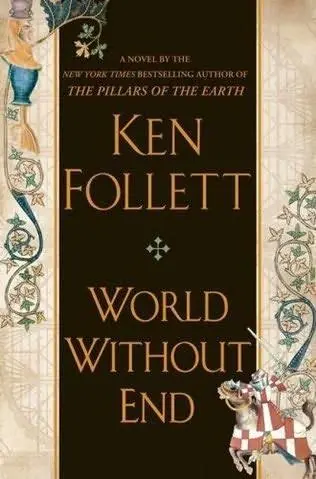
- Название:World Without End
- Автор:
- Жанр:
- Год:неизвестен
- ISBN:нет данных
- Рейтинг книги:5 / 5. Голосов: 1
-
Избранное:Добавить в избранное
- Отзывы:
-
Ваша оценка:
World Without End: краткое содержание, описание и аннотация
Предлагаем к чтению аннотацию, описание, краткое содержание или предисловие (зависит от того, что написал сам автор книги «World Without End»). Если вы не нашли необходимую информацию о книге — напишите в комментариях, мы постараемся отыскать её.
Ken Follett has 90 million readers worldwide. The Pillars of the Earth is his bestselling book of all time. Now, eighteen years after the publication of The Pillars of the Earth, Ken Follett has written the most-anticipated sequel of the year, World Without End.
In 1989 Ken Follett astonished the literary world with The Pillars of the Earth, a sweeping epic novel set in twelfth-century England centered on the building of a cathedral and many of the hundreds of lives it affected. Critics were overwhelmed-"it will hold you, fascinate you, surround you" (Chicago Tribune)-and readers everywhere hoped for a sequel.
World Without End takes place in the same town of Kingsbridge, two centuries after the townspeople finished building the exquisite Gothic cathedral that was at the heart of The Pillars of the Earth. The cathedral and the priory are again at the center of a web of love and hate, greed and pride, ambition and revenge, but this sequel stands on its own. This time the men and women of an extraordinary cast of characters find themselves at a crossroad of new ideas-about medicine, commerce, architecture, and justice. In a world where proponents of the old ways fiercely battle those with progressive minds, the intrigue and tension quickly reach a boiling point against the devastating backdrop of the greatest natural disaster ever to strike the human race-the Black Death.
Three years in the writing, and nearly eighteen years since its predecessor, World Without End breathes new life into the epic historical novel and once again shows that Ken Follett is a masterful author writing at the top of his craft.
World Without End — читать онлайн бесплатно полную книгу (весь текст) целиком
Ниже представлен текст книги, разбитый по страницам. Система сохранения места последней прочитанной страницы, позволяет с удобством читать онлайн бесплатно книгу «World Without End», без необходимости каждый раз заново искать на чём Вы остановились. Поставьте закладку, и сможете в любой момент перейти на страницу, на которой закончили чтение.
Интервал:
Закладка:
“Of course.”
“We should leave today,” she said decisively. “It’s Sunday, so we’re not losing any work.” She glanced at the church windows, estimating the time of day. “It’s not yet noon – we could cover a good distance before nightfall. Who knows, we could be working in a new place tomorrow morning.”
“I agree,” Wulfric said. “There’s no telling how fast Ralph might move.”
“Say nothing to anyone. We’ll go home, pick up whatever we want to take with us and just slip away.”
“All right.”
They reached the door and stepped outside into the sunshine, and Gwenda saw that it was already too late.
Six men on horseback were waiting outside the church: Ralph, his sidekick Alan, a tall man in London clothes, and three dirty, scarred, evil-looking ruffians of the kind that could be hired for a few pennies in any low tavern.
Ralph caught Gwenda’s eye and smiled triumphantly.
Gwenda looked around desperately. A few days ago the men of the village had stood shoulder to shoulder against Ralph and Alan – but this was different. They were up against six men, not two. The villagers were unarmed, coming out of church, whereas previously they had been returning from the fields with tools in their hands. And, most important, on that first occasion they had believed they had right on their side, whereas today they were not so sure.
Several men met her eye and looked quickly away. That confirmed her suspicion. The villagers would not fight today.
Gwenda was so disappointed that she felt weak. Fearing that she might fall down, she leaned on the stonework of the church porch for support. Her heart had turned into something heavy and cold and damp, like a clod from a winter grave. A grim hopelessness possessed her completely.
For a few days they had been free. But it had just been a dream. And now the dream was over.
Ralph rode slowly through Wigleigh, leading Wulfric by a rope around his neck.
They arrived late in the afternoon. For speed, Ralph had let the two small boys ride, sharing the horses of the hired men. Gwenda was walking behind. Ralph had not bothered to tie her in any way. She could be relied upon to follow her children.
Because it was Sunday, most of the Wigleigh folk were outside their houses, enjoying the sun, as Ralph had anticipated. They all stared in horrified silence at the dismal procession. Ralph hoped the sight of Wulfric’s humiliation might deter others from going in search of higher wages.
They reached the small manor house that had been Ralph’s home before he moved to Tench Hall. He released Wulfric and sent him and his family off to their old home. He paid off the hired men, then took Alan and Sir Gregory into the manor house.
It was kept clean and ready for his visits. He ordered Vira to bring wine then prepare supper. It was too late now to go on to Tench: they could not get there before nightfall.
Gregory sat down and stretched out his long legs. He seemed like a man who could make himself comfortable anywhere. His straight dark hair was now tweeded with grey, but his long nose with its flared nostrils still gave him a supercilious look. “How do you feel that went?” he said.
Ralph had been thinking about the new ordinance all the way home, and he had his answer ready. “It’s not going to work,” he said.
Gregory raised his eyebrows. “Oh?”
Alan said: “I agree with Sir Ralph.”
“Reasons?”
Ralph said: “First of all, it’s difficult to find out where the runaways have gone.”
Alan put in: “It was only by luck that we traced Wulfric. Someone had overheard him and Gwenda planning where to go.”
“Second,” Ralph went on, “recovering them is too troublesome.”
Gregory nodded. “I suppose we have been all day at it.”
“And I had to hire those ruffians and get them horses. I can’t spend my time and money chasing all over the countryside after runaway labourers.”
“I see that.”
“Third, what is to stop them running away again next week?”
Alan said: “If they keep their mouths shut about where they’re headed, we might never find them.”
“The only way it will work,” Ralph said, “is if someone can go to a village, find out who the migrants are and punish them.”
Gregory said: “You’re talking about a sort of Commission of Labourers.”
“Exactly. Appoint a panel in each county, a dozen or so men who go from place to place ferreting out runaways.”
“You want someone else to do the work for you.”
It was a taunt, but Ralph was careful not to appear stung. “Not necessarily – I’ll be one of the commissioners, if you wish. It’s just the way the job is to be done. You can’t reap a field of grass one blade at a time.”
“Interesting,” said Gregory.
Vira brought a jug and some goblets, and poured wine for the three of them.
Gregory said: “You’re a shrewd man, Sir Ralph. You’re not a Member of Parliament, are you?”
“No.”
“Pity. I think the king would find your counsel helpful.”
Ralph tried not to beam with pleasure. “You’re very kind.” He leaned forward. “Now that Earl William is dead, there is of course a vacancy-” He saw the door open, and broke off.
Nate Reeve came in. “Well done, Sir Ralph, if I may say so!” he said. “Wulfric and Gwenda back in the fold, the two hardest-working people we’ve got.”
Ralph was annoyed with Nate for interrupting at such a crucial moment. He said irritably: “I trust the village will now be able to pay more of its dues.”
“Yes, sir… if they stay.”
Ralph frowned. Nate had immediately fastened on the weakness in his position. How was he going to keep Wulfric in Wigleigh? He could not chain a man to a plough all day and all night.
Gregory spoke to Nate. “Tell me, bailiff, do you have a suggestion for your lord?”
“Yes, sir, I do.”
“I thought you might.”
Nate took that as an invitation. Addressing Ralph, he said: “There is one thing you could do that would guarantee that Wulfric would stay here in Wigleigh until the day he dies.”
Ralph sensed a trick, but had to say: “Go on.”
“Give him back the lands his father held.”
Ralph would have yelled at him, except that he did not want to give Gregory a bad impression. Controlling his anger, he said firmly: “I don’t think so.”
“I can’t get a tenant for the land,” Nate persisted. “Annet can’t manage it, and she has no male relations living.”
“I don’t care,” said Ralph. “He can’t have the land.”
Gregory said: “Why not?”
Ralph did not want to admit that he still held a grudge against Wulfric because of a fight twelve years ago. Gregory had formed a good impression of Ralph, and Ralph did not want to spoil it. What would the king’s counsellor think of a knight who acted against his own interests in pursuit of a boyhood squabble? He cast about for a plausible excuse. “It would seem to be rewarding Wulfric for running away,” he said finally.
“Hardly,” said Gregory. “From what Nate says, you’d be giving him something that no one else wants.”
“All the same, it sends the wrong signal to the other villagers.”
“I think you’re being too scrupulous,” Gregory said. He was not the kind of man to keep his opinions tactfully to himself. “Everyone must know you’re desperate for tenants,” he went on. “Most landlords are. The villagers will see that you’re simply acting in your own interest, and consider that Wulfric is the lucky beneficiary.”
Nate added: “Wulfric and Gwenda will work twice as hard ii they’ve got their own land.”
Ralph felt cornered. He was desperate to look good in Gregory’s eyes. He had started but not finished a discussion about the earldom. He could not put that at risk just because of Wulfric.
Читать дальшеИнтервал:
Закладка:
Похожие книги на «World Without End»
Представляем Вашему вниманию похожие книги на «World Without End» списком для выбора. Мы отобрали схожую по названию и смыслу литературу в надежде предоставить читателям больше вариантов отыскать новые, интересные, ещё непрочитанные произведения.

Обсуждение, отзывы о книге «World Without End» и просто собственные мнения читателей. Оставьте ваши комментарии, напишите, что Вы думаете о произведении, его смысле или главных героях. Укажите что конкретно понравилось, а что нет, и почему Вы так считаете.