Robert Harris - Lustrum
Здесь есть возможность читать онлайн «Robert Harris - Lustrum» весь текст электронной книги совершенно бесплатно (целиком полную версию без сокращений). В некоторых случаях можно слушать аудио, скачать через торрент в формате fb2 и присутствует краткое содержание. Жанр: Историческая проза, на английском языке. Описание произведения, (предисловие) а так же отзывы посетителей доступны на портале библиотеки ЛибКат.
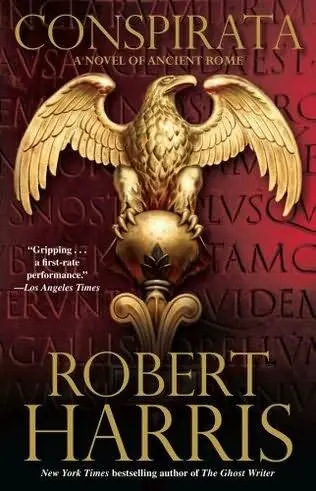
- Название:Lustrum
- Автор:
- Жанр:
- Год:неизвестен
- ISBN:нет данных
- Рейтинг книги:3 / 5. Голосов: 1
-
Избранное:Добавить в избранное
- Отзывы:
-
Ваша оценка:
Lustrum: краткое содержание, описание и аннотация
Предлагаем к чтению аннотацию, описание, краткое содержание или предисловие (зависит от того, что написал сам автор книги «Lustrum»). Если вы не нашли необходимую информацию о книге — напишите в комментариях, мы постараемся отыскать её.
Lustrum — читать онлайн бесплатно полную книгу (весь текст) целиком
Ниже представлен текст книги, разбитый по страницам. Система сохранения места последней прочитанной страницы, позволяет с удобством читать онлайн бесплатно книгу «Lustrum», без необходимости каждый раз заново искать на чём Вы остановились. Поставьте закладку, и сможете в любой момент перейти на страницу, на которой закончили чтение.
Интервал:
Закладка:
'Now, gentlemen, it is clear to me where my own interest lies. If you adopt the motion of Caesar, since he is a populist, I shall have less reason to fear the attacks of the people, because I shall be doing what he has proposed. Whereas if you adopt the alternative, I fear that more trouble may be brought down upon my head. But let the interests of the republic count for more than considerations of danger to myself. We must do what is right. Answer me this: if the head of a household were to find his children killed by a slave, his wife murdered and his house burned, and did not inflict the supreme penalty in return, would he be thought kindly and compassionate or the most inhuman and cruel of men not to avenge their suffering? To my mind, a man who does not soften his own grief and suffering by inflicting similar distress upon the man responsible is unfeeling and has a heart of stone. I support the proposal of Silanus.'
Caesar quickly rose to intervene. 'But surely the flaw in the consul's argument is that the accused have not committed any such acts – they are being condemned for their intentions, rather than for anything they have done.'
'Exactly!' cried a voice from the other side of the chamber, and all heads turned to Cato.
If the vote had been taken at this point, I have little doubt that Caesar's proposal would have carried the day, regardless of the consul's view. The prisoners would have been packed off across Italy, to rot or be reprieved according to the caprices of politics, and Cicero's future would have worked out very differently. But just as the outcome seemed assured, there arose from the benches near the back of the temple a familiar gaunt and illkempt apparition, his hair all awry, his shoulders bare despite the cold, his sinewy arm stretched out to indicate his desire to intervene.
'Marcus Porcius Cato,' said Cicero uneasily, for one could never be sure which way Cato's rigid logic would lead him. 'You wish to speak?'
'Yes, I wish to speak,' said Cato. 'I wish to speak because someone has to remind this house of exactly what it is we're facing. The whole point, gentlemen, is precisely that we're not dealing with crimes that have been committed, but with crimes that are planned. For that very reason it will be no good trying to invoke the law afterwards – we shall all have been slaughtered!' There was a murmur of acknowledgement: he spoke the truth. I glanced up at Cicero. He was also nodding. 'Too many sitting here,' proclaimed Cato, his voice rising, 'are more concerned for their villas and their statues than they are for their country. In heaven's name, men, wake up! Wake up while there's still time, and lend a hand to defend the republic! Our liberty and lives are at stake! At such a time does anyone here dare talk to me of clemency and compassion?'
He came down the gangway barefoot and stood in the aisle, that harsh and remorseless voice grating away like a blade on a grindstone. It was as if his famous great-grandfather had just stepped out of his grave and was shaking his furious grey locks at us.
'Do not imagine, gentlemen, that it was by force of arms that our ancestors transformed a petty state into this great republic. If it were so, it would now be at the height of its glory, since we have more subjects and citizens, more arms and horses, than they ever had. No, it was something else entirely that made them great – something we entirely lack. They were hard workers at home, just rulers abroad, and to the senate they brought minds that were not racked by guilt or enslaved by passion. That is what we've lost. We pile up riches for ourselves while the state is bankrupt and we idle away our lives, so that when an assault is made upon the republic there's no one left to defend it.
'A plot has been hatched by citizens of the highest rank to set fire to their native city. Gauls, the deadliest foes of everything Roman, have been called to arms. The hostile army and its leader are ready to descend upon us. And you're still hesitating and unable to decide how to treat public enemies taken within your own walls?' He literally spat out his sarcasm, showering the senators nearest him with phlegm. 'Why then, I suggest you take pity on them – they are young men led astray by ambition. Armed though they are, let them go. But mind what you're doing with your clemency and compassion – if they draw the sword, it will be too late to do anything about it. Oh yes, you say, the situation is certainly ugly, but you're not afraid of it. Nonsense! You're quaking in your shoes! But you're so indolent and weak that you stand irresolute, each waiting for someone else to act – no doubt trusting to the gods. Well, I tell you, vows and womanish supplications won't secure divine aid. Only vigilance and action can achieve success.
'We're completely encircled. Catilina and his army are ready to grip us by the throat. Our enemies are living in the very heart of the city. That is why we must act quickly. This therefore is my proposal, Consul. Write it down well, scribe: Whereas by the criminal designs of wicked citizens the republic has been subjected to serious danger; and whereas, by testimony and confession, the accused stand convicted of planning massacre, arson and other foul atrocities against their fellow citizens: that, having admitted their criminal intention, they should be put to death as if they had been caught in the actual commission of capital offences, in accordance with ancient custom.'
For thirty years I attended debates in the senate and I witnessed many great and famous speeches. But I never saw one – not one: not even close – that rivalled in its effects that brief intervention by Cato. What is great oratory, after all, except the distillation of emotion into exact words? Cato said what a majority of men were feeling but had not the language to express, even to themselves. He admonished them, and they loved him for it. All across the temple, senators rose from their seats applauding and went to stand beside their hero to indicate that he had their support. He was no longer the eccentric on the back bench. He was the rock and bone and sinew of the old republic. Cicero looked on in astonishment. As for Caesar, he jumped up demanding the right to reply, and actually started making a speech. But everyone could see that his true intention was to talk out Cato's motion and prevent a vote, for the light was very low now and shadows were deep across the chamber. There were shouts of rage from those around Cato, and some jostling, and several of the knights who had been watching from the doorway rushed in with their swords drawn. Caesar was twisting his shoulders back and forth to throw off the hands that were trying to pull him down, and still he kept on speaking. The knights looked to Cicero for instruction. All it would have taken was a nod from him, or a raised finger, and Caesar would have been run through on the spot. And for the briefest of instants he did hesitate. But then he shook his head, Caesar was released, and in the chaos he must have rushed from the temple, for I lost sight of him after that. Cicero came down off his dais. Striding along the aisle, shouting at the senators, he and his lictors separated the combatants, pushed a few of them back into their places, and when some sort of order had been restored he returned to his chair.
'Gentlemen,' he said, his face as white as milk in the darkness, his voice very thin and strained, 'the sentiment of the house is clear. Marcus Cato's motion passes. The sentence is death.'
Speed was now vital. The condemned men had to be moved quickly to the execution chamber before their friends and supporters realised their fate. To fetch each prisoner, Cicero placed a former consul at the head of a detachment of guards: Catulus went for Cethegus, Torquatus for Capito, Piso for Caeparius and Lepidus for Statilius. After settling the details, and requesting that the other senators remain in their places while the deed was done, he himself went off last of all to collect the most senior of the accused, Lentulus Sura.
Читать дальшеИнтервал:
Закладка:
Похожие книги на «Lustrum»
Представляем Вашему вниманию похожие книги на «Lustrum» списком для выбора. Мы отобрали схожую по названию и смыслу литературу в надежде предоставить читателям больше вариантов отыскать новые, интересные, ещё непрочитанные произведения.










Обсуждение, отзывы о книге «Lustrum» и просто собственные мнения читателей. Оставьте ваши комментарии, напишите, что Вы думаете о произведении, его смысле или главных героях. Укажите что конкретно понравилось, а что нет, и почему Вы так считаете.