Robert Harris - Lustrum
Здесь есть возможность читать онлайн «Robert Harris - Lustrum» весь текст электронной книги совершенно бесплатно (целиком полную версию без сокращений). В некоторых случаях можно слушать аудио, скачать через торрент в формате fb2 и присутствует краткое содержание. Жанр: Историческая проза, на английском языке. Описание произведения, (предисловие) а так же отзывы посетителей доступны на портале библиотеки ЛибКат.
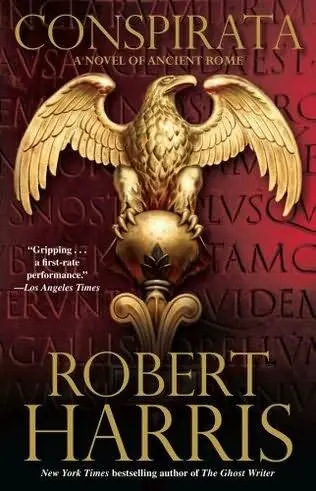
- Название:Lustrum
- Автор:
- Жанр:
- Год:неизвестен
- ISBN:нет данных
- Рейтинг книги:3 / 5. Голосов: 1
-
Избранное:Добавить в избранное
- Отзывы:
-
Ваша оценка:
Lustrum: краткое содержание, описание и аннотация
Предлагаем к чтению аннотацию, описание, краткое содержание или предисловие (зависит от того, что написал сам автор книги «Lustrum»). Если вы не нашли необходимую информацию о книге — напишите в комментариях, мы постараемся отыскать её.
Lustrum — читать онлайн бесплатно полную книгу (весь текст) целиком
Ниже представлен текст книги, разбитый по страницам. Система сохранения места последней прочитанной страницы, позволяет с удобством читать онлайн бесплатно книгу «Lustrum», без необходимости каждый раз заново искать на чём Вы остановились. Поставьте закладку, и сможете в любой момент перейти на страницу, на которой закончили чтение.
Интервал:
Закладка:
When Nero had finished, Cicero asked, 'Does anyone else wish to speak against an immediate sentence of death?'
That was when Caesar slowly uncrossed his legs and rose to his feet. Immediately a great cacophony of shouts and jeering rang out, but Caesar had obviously anticipated this and had prepared his response. He stood with his hands behind his back, patiently waiting until the noise had died down. 'Whoever, gentlemen, is pondering a difficult question,' he said in his quietly threatening voice, 'ought to clear his mind of all hatred and anger, as well as affection and compassion. It isn't easy to discern the truth if one gives way to emotion.' He uttered the last word with such stinging contempt, it had the effect of briefly silencing his opponents. 'You may ask why I oppose the death penalty-'
'Because you're also guilty!' someone shouted.
'If I were guilty,' retorted Caesar, 'how better to hide it than to clamour for death with all the rest of you? No, I don't oppose death because these men were once my friends – in public life one must set aside such feelings. Nor do I oppose it because I regard their offences as trivial. Frankly, I think that any torture would be less than these men deserve. But people have short memories. Once criminals have been brought to justice, their guilt is soon forgotten, or becomes a matter of dispute. What's never forgotten is their punishment, especially if it's extreme. I'm sure Silanus makes his proposal with the best interests of his country at heart. Yet it strikes me – I won't say as harsh, for in dealing with such men nothing could be too harsh, but as out of keeping with the traditions of our republic.
'All bad precedents have their origins in measures that at the time seem good. Twenty years ago, when Sulla ordered the execution of Brutus and other criminal adventurers, who among us did not approve his action? The men were villains and trouble-makers; it was generally agreed that they deserved to die. But those executions proved to be the first step on the path to a national calamity. Before long, anyone who coveted another man's land or villa – or in the end merely his dishes and clothes – could have him killed by denouncing him as a traitor. So those who rejoiced in the death of Brutus found themselves being hauled off to execution, and the killings didn't stop till Sulla had glutted all his followers with riches. Of course I'm not afraid that any such action will be taken by Marcus Cicero. But in a great nation like ours there are many men, with many different characters, and it may be that on some future occasion, when another consul has, like him, an armed force at his disposal, a false report will be accepted as true. If so, with this precedent set, who will there be to restrain him?'
At the mention of his own name, Cicero intervened. 'I have been listening to the remarks of the chief priest with great attention,' he said. 'Is he proposing that the prisoners simply be released to join Catilina's army?'
'By no means,' responded Caesar. 'I agree that they have forfeited the right to breathe the same air and see the same light as the rest of us. But death has been ordained by the immortal gods not as a means of punishment but as a relief from our toil and woe. If we kill them, their suffering ceases. I therefore propose a harsher fate: that the prisoners' goods shall be confiscated and that they shall be imprisoned, each in a separate town, for the remainder of their lives; against this sentence the condemned shall have no right of appeal, and any attempt by any person to make an appeal on their behalf shall be regarded as an act of treason. Life, gentlemen,' he concluded, 'will mean life.'
What an astonishing piece of effrontery this was – but also how clever and effective! Even as I wrote Caesar's motion down and handed it up to Cicero, I could hear the excited whispers running around the senate. The consul took it from me with a worried expression. He sensed his enemy had made a cunning move but was not quite sure of all its implications, or how to respond. He read Caesar's proposal aloud and asked if anyone wished to comment upon it, whereupon who should stand up but consul-elect and cuckold-in-chief Silanus.
'I have been deeply moved by the words of Caesar,' he declared, with an unctuous rubbing of his hands. 'So moved, in fact, that I shall not vote for my own proposal. Instead of death, I too believe that a more appropriate punishment would be imprisonment for life.'
That provoked a low exclamation of surprise, followed by a kind of rustling along the benches, which I recognised immediately as the wind of sensible opinion changing its direction. In a choice between death and exile, most senators favoured death. But if the choice became one between death and incarceration for life, they were able to adjust their calculation. And who could blame them? It seemed to offer the perfect solution: the conspirators would be punished horribly, but the senate would escape the odium of having blood on its hands. Cicero looked around him anxiously for supporters of the death penalty, but now speaker after speaker rose to urge the merits of perpetual imprisonment. Hortensius supported Caesar's motion; so, surprisingly, did Isauricus. Metellus Nepos declared that execution without the right of appeal would be illegal, and echoed Nero's demands for Pompey to be recalled. After this had gone on for another hour or two, with only a few voices now hankering after death, Cicero called a brief adjournment before the vote to allow some senators to go outside and relieve themselves and others to take refreshment. In the meantime, he held a quick private conclave with Quintus and me. It was already starting to get gloomy again and there was nothing we could do to alleviate it – lighting a fire or any kind of lamp within the walls of a temple was of course forbidden. Suddenly I realised there was not much time left. 'Well,' Cicero asked us softly, leaning out of his chair, 'what do you think?'
'Caesar's motion will pass,' answered Quintus in a whisper, 'no question of it. Even the patricians are weakening.'
Cicero groaned. 'So much for their promises…'
'Surely this is good for you,' I said eagerly, for I was all in favour of a compromise. 'It lets you off the hook.'
'But his proposal is a nonsense!' hissed Cicero, with an angry glance in Caesar's direction. 'No senate can pass a law that will bind its successors in perpetuity, and he well knows it. What if a magistrate lays a motion next year to say that it isn't treason to agitate for the prisoners' release after all, and it passes through a public assembly? He just wants to keep the crisis alive for his own ends.'
'Then at least it will become your successors' problem,' I answered, 'and not yours.'
'You'll look weak,' warned Quintus. 'What will history say? You'll have to speak.'
Cicero's shoulders sagged. This was precisely the predicament he had dreaded. I had never seen him in such an agony of indecision. 'You're right,' he concluded, 'although I can see no outcome from this that isn't ruinous to me.'
Accordingly, when the adjournment ended, he announced that he would give his view after all. 'I see that your faces and eyes, gentlemen, are all turned upon me, so I shall say what as consul I must say. We have before us two proposals: one of Silanus – though he will no longer vote for it – urging death for the conspirators; the other of Caesar for life imprisonment – an exemplary punishment for a heinous crime. It is, as he says, far worse than death, for Caesar removes even hope, the sole consolation of men in their misfortune. He further orders that their property be confiscated, to add poverty to their other torments. The only thing he leaves these wicked men is their life – whereas if he had taken that from them, he would in one painful act have relieved them of much mental and bodily suffering.
Читать дальшеИнтервал:
Закладка:
Похожие книги на «Lustrum»
Представляем Вашему вниманию похожие книги на «Lustrum» списком для выбора. Мы отобрали схожую по названию и смыслу литературу в надежде предоставить читателям больше вариантов отыскать новые, интересные, ещё непрочитанные произведения.










Обсуждение, отзывы о книге «Lustrum» и просто собственные мнения читателей. Оставьте ваши комментарии, напишите, что Вы думаете о произведении, его смысле или главных героях. Укажите что конкретно понравилось, а что нет, и почему Вы так считаете.