Thomas Keneally - Schindler's Ark
Здесь есть возможность читать онлайн «Thomas Keneally - Schindler's Ark» весь текст электронной книги совершенно бесплатно (целиком полную версию без сокращений). В некоторых случаях можно слушать аудио, скачать через торрент в формате fb2 и присутствует краткое содержание. Город: London, Год выпуска: 1982, ISBN: 1982, Издательство: Hodder and Stoughton, Жанр: Историческая проза, на английском языке. Описание произведения, (предисловие) а так же отзывы посетителей доступны на портале библиотеки ЛибКат.
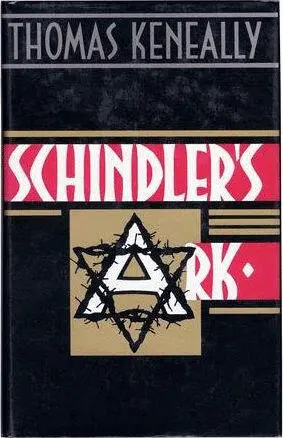
- Название:Schindler's Ark
- Автор:
- Издательство:Hodder and Stoughton
- Жанр:
- Год:1982
- Город:London
- ISBN:0-340-27838-2
- Рейтинг книги:4 / 5. Голосов: 1
-
Избранное:Добавить в избранное
- Отзывы:
-
Ваша оценка:
Schindler's Ark: краткое содержание, описание и аннотация
Предлагаем к чтению аннотацию, описание, краткое содержание или предисловие (зависит от того, что написал сам автор книги «Schindler's Ark»). Если вы не нашли необходимую информацию о книге — напишите в комментариях, мы постараемся отыскать её.
Schindler’s List
Working with the actual testimony of Schindler’s Jews, Thomas Keneally artfully depicts the courage and shrewdness of an unlikely savior, a man who is a flawed mixture of hedonism and decency and who, in the presence of unutterable evil, transcends the limits of his own humanity. From From
A mesmerizing novel based on the true story of Oskar Schindler, a German industralist who saved and succored more than 1000 Jews from the Nazis at enormous financial and emotional expense. How the German Oskar Schindler came to save more than one thousand Polish Jews during the Holocaust is one of the most fascinating stories of the century. Although millions are now learning about Schindler through Steven Spielberg’s recent Academy Award-winning film, his achievement first gained prominence with Keneally’s 1982 “facticious” novel (which is also the basis for the film). Keneally’s account is less melodramatic than the motion picture, and although he does not fully explain how a hedonistic German could have been so altered by the plight of the Jewish workers in his factory, he does make Schindler less enigmatic than the big-screen version. Ben Kingsley, one of the film's stars, reads in a calculatedly matter-of-fact tone, letting the story's power alone convey its complicated emotions. Highly recommended.
Michael Adams, Fairleigh Dickinson Univ. Lib., Madison, N.J.
Schindler's Ark — читать онлайн бесплатно полную книгу (весь текст) целиком
Ниже представлен текст книги, разбитый по страницам. Система сохранения места последней прочитанной страницы, позволяет с удобством читать онлайн бесплатно книгу «Schindler's Ark», без необходимости каждый раз заново искать на чём Вы остановились. Поставьте закладку, и сможете в любой момент перейти на страницу, на которой закончили чтение.
Интервал:
Закладка:
“There is one problem, Herr Sedlacek,” he growled. “It’s this. What they are doing to people in this country is beyond belief.”
“You mean,” said Dr. Sedlacek, “that you’re concerned my principals won’t believe you?”
Schindler said, “Since I scarcely believe it myself.” He rose, went to the liquor cabinet, poured two snifters of cognac and brought one for Dr. Sedlacek. Returning to his own side of the desk with the other, he took a swallow, frowned at an invoice, picked it up, went to the door on the balls of his feet and swung it open as if to trap an eavesdropper. For a while he stood there framed. Then Sedlacek heard him talking calmly to his Polish secretary about the invoice. In a few minutes, closing the door, he returned to Sedlacek, took a seat behind the desk, and after another deep swallow, began to talk.
Even among Sedlacek’s own small cell, his Viennese anti-Nazi club, it was not imagined that the pursuit of the Jews had grown quite so systematic. Not only was the story Schindler told him startling simply in moral terms: one was asked to believe that in the midst of a desperate battle, the National Socialists would devote thousands of men, the resources of precious railroads, an enormous cubic footage of cargo space, expensive techniques of engineering, a fatal margin of their research-and-development scientists, a substantial bureaucracy, whole arsenals of automatic weapons, whole magazines of ammunition, all to an extermination which had no military or economic meaning but merely a psychological one. Dr. Sedlacek had expected mere horror stories—hunger, economic strictures, violent pogroms in this city or that, violations of ownership—all the historically accustomed things.
Oskar’s summary of events in Poland convinced Sedlacek precisely because of the sort of man Oskar was. He had done well from the Occupation; he sat at the heart of his own hive, a brandy snifter in his hand. There were both an impressive surface calm and a fundamental anger in him. He was like a man who had, to his regret, found it impossible to disbelieve the worst. He showed no tendency to be extravagant in the facts he relayed.
If I can arrange your visa, said Sedlacek, would you come to Budapest and pass on what you just told me to my principals and the others? Schindler seemed momentarily surprised. You can write a report, he said. And surely you’ve heard this sort of thing from other sources. But Sedlacek told him no; there had been individual stories, details of this incident and that. No comprehensive picture. Come to Budapest, said Sedlacek. Mind you, it might be uncomfortable traveling.
Do you mean, asked Schindler, that I have to cross the border on foot?
Not as bad as that, said the dentist. You might have to travel in a freight train.
I’ll come, said Oskar Schindler.
Dr. Sedlacek asked him about the other names on the Istanbul list. At the top of the list, for instance, stood a Cracow dentist. Dentists were always easy to visit, said Sedlacek, since everyone on earth has at least one bona fide cavity. No, said Herr Schindler. Don’t visit this man. He’s been compromised by the SS.
Before he left Cracow to return to Mr.
Springmann in Budapest, Dr. Sedlacek arranged another meeting with Schindler. In Oskar’s office at DEF, he handed over nearly all the currency Springmann had given him to bring to Poland. There was always some risk, in view of Schindler’s hedonistic taste, that he would spend it on black-market jewelry. But neither Springmann nor Istanbul required any assurances. They could never hope to play the auditor.
It must be stated that Oskar behaved impeccably and gave the cash to his contacts in the Jewish community to spend according to their judgment. Mordecai Wulkan, who like Mrs.
Dresner would in time come to know Herr Oskar Schindler, was a jeweler by trade. Now, late in the year, he was visited at home by one of Spira’s political OD. This wasn’t trouble, the OD man said. Certainly Wulkan had a record. A year before, he had been picked up by the OD for selling currency on the black market. When he had refused to work as an agent for the Currency Control Bureau, he had been beaten up by the SS, and Mrs. Wulkan had had to visit Wachtmeister Beck in the ghetto police office and pay a bribe for his release.
This June he’d been seized for transport to Bełżec, but an OD man he’d known had arrived to pick him up and led him straight out of the Optima yard. For there were Zionists in the OD, however small their chances of ever beholding Jerusalem might be.
The OD man who visited him this time was no Zionist. The SS, he told Wulkan, urgently needed four jewelers. Symche Spira had been given three hours to find them. In this way Herzog, Friedner, Grüner, and Wulkan, four jewelers, were assembled at the OD station and marched out of the ghetto to the old Technical Academy, now a warehouse for the SS Economic and Administrative Main Office.
It was obvious to Wulkan as he entered the Academy that a great security operated here. At every door stood a guard. In the front hall, an SS officer told the four jewelers that should they speak to anyone about their work here, they could expect to be sent to a labor camp. They were to bring with them, he said, every day, their diamond-grading kits, their equipment for assessing the karat value of gold.
They were led down into the basement. Around the walls stood racks laden with suitcases and towering layers of briefcases, each with a name studiously and futilely printed on it by its past owner. Beneath the high windows stood a line of wooden crates. As the four jewelers squatted in the center of the floor, two SS men took down a suitcase, labored across the cellar with it, and emptied it in front of Herzog. They returned to the rack for another, which they emptied in front of Grüner. Then they brought a cascade of gold for Friedner, then for Wulkan. It was old gold—rings, brooches, bracelets, watches, lorgnettes, cigarette holders.
The jewelers were to grade the gold, separate the gold plate from the solid. Diamonds and pearls were to be valued. They were to classify everything, according to value and karat weight, in separate heaps.
At first they picked up individual pieces tentatively, but then worked faster as old professional habits asserted themselves. As the gold and jewelry went into their piles, the SS men loaded the stuff into its appropriate crate. Every time a crate was filled, it was labeled in black paint—SS REICHSFüHRER BERLIN. The SS Reichsführer was Himmler himself, in whose name the confiscated jewelry of Europe was deposited in the Reichsbank. There were quantities of children’s rings, and one had to keep a cool rational control of one’s knowledge of their provenance. Only once did the jewelers falter: when the SS men opened a suitcase and out of it tumbled gold teeth still smeared with blood. There in a pile at Wulkan’s knees, the mouths of a thousand dead were represented, each one calling for him to join them by standing and flinging his grading stone across the room and declaring the tainted origin of all this precious stuff. Then, after the hiatus, Herzog and Grüner, Wulkan and Friedner commenced to grade again, aware now, of course, of the radiant value of whatever gold they themselves carried in their mouths, fearful that the SS would come prospecting for it.
It took six weeks for them to work through the treasures of the Technical Academy. After they had finished there, they were taken to a disused garage which had been converted to a silver warehouse. The lubrication pits were filled to spilling over with solid silver—rings, pendants, Passover platters, yad pointers, breastplates, crowns, candelabra. They separated the solid silver from the silver plate; they weighed it all. The SS officer in charge complained that some of these objects were awkward to pack, and Mordecai Wulkan suggested that perhaps they might consider melting them down. It seemed to Wulkan, though he was not pious, that it would be somehow better, a minor triumph, if the Reich inherited silver from which the Judaic form had been removed. But for some reason the SS officer refused. Perhaps the objects were intended for some didactic museum inside the Reich. Or perhaps the SS liked the artistry of synagogue silverware.
Читать дальшеИнтервал:
Закладка:
Похожие книги на «Schindler's Ark»
Представляем Вашему вниманию похожие книги на «Schindler's Ark» списком для выбора. Мы отобрали схожую по названию и смыслу литературу в надежде предоставить читателям больше вариантов отыскать новые, интересные, ещё непрочитанные произведения.








Обсуждение, отзывы о книге «Schindler's Ark» и просто собственные мнения читателей. Оставьте ваши комментарии, напишите, что Вы думаете о произведении, его смысле или главных героях. Укажите что конкретно понравилось, а что нет, и почему Вы так считаете.