Kathryn Davis - Versailles
Здесь есть возможность читать онлайн «Kathryn Davis - Versailles» весь текст электронной книги совершенно бесплатно (целиком полную версию без сокращений). В некоторых случаях можно слушать аудио, скачать через торрент в формате fb2 и присутствует краткое содержание. Год выпуска: 2003, Издательство: Back Bay Books, Жанр: Историческая проза, на английском языке. Описание произведения, (предисловие) а так же отзывы посетителей доступны на портале библиотеки ЛибКат.
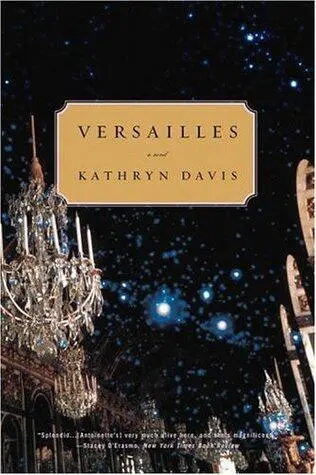
- Название:Versailles
- Автор:
- Издательство:Back Bay Books
- Жанр:
- Год:2003
- ISBN:нет данных
- Рейтинг книги:4 / 5. Голосов: 1
-
Избранное:Добавить в избранное
- Отзывы:
-
Ваша оценка:
Versailles: краткое содержание, описание и аннотация
Предлагаем к чтению аннотацию, описание, краткое содержание или предисловие (зависит от того, что написал сам автор книги «Versailles»). Если вы не нашли необходимую информацию о книге — напишите в комментариях, мы постараемся отыскать её.
Versailles — читать онлайн бесплатно полную книгу (весь текст) целиком
Ниже представлен текст книги, разбитый по страницам. Система сохранения места последней прочитанной страницы, позволяет с удобством читать онлайн бесплатно книгу «Versailles», без необходимости каждый раз заново искать на чём Вы остановились. Поставьте закладку, и сможете в любой момент перейти на страницу, на которой закончили чтение.
Интервал:
Закладка:
Wicked men, monsters! What had I done that they should hate me so?
A proper Queen would stay in her apartment doing needlework, everyone said. A proper Queen would never have gotten mixed up in the Diamond Necklace Affair in the first place.
No smoke without fire, everyone said, except Goethe, who said the affair filled him with as much terror as the head of Medusa; or Napoleon, who referred to it years later as the gateway to my tomb.
Generally speaking, men are more melodramatic than women.
Meanwhile the Dauphin was dying. He was getting thinner by the day, his poor little spine more and more twisted and his poor little face pinched with pain, every single breath costing him the greatest effort. Lying flat on his stomach on the green felt billiard table in the Chamber of the Pendulum Clock, reading history, philosophy. Reading Hume's History of England, like his father. Our expectation that the sun will rise tomorrow has no basis in reason, but is a matter of belief, which is why it should have come as no surprise to Charles I to wake up one fine day to find his head chopped off.
The two beautiful clocks tick tick ticking away.
Even the surviving Mesdames, Adélaïde and Victoire (Sophie died in 1782) couldn't remember a worse winter. Paris was in chaos; things weren't much better at Versailles. We handed out food to the poor; we built bonfires at the crossroads near the Grand Canal. Food and bonfires, just as Louis's cousin Philippe, the Due d'Orléans, was doing in Paris, though unlike him we didn't try suggesting that no one else was doing anything to help.
But Philippe was busy becoming ringleader of the opposition, turning the Palais Royal, his Paris residence, into its headquarters. The Due d'Orléans — a true Prince of the Blood but otherwise Colonel in Chief of the Emptyheads, a man best known for enjoying rabbit hunting in the nude. "I'm stunned by the pleasure of doing good!" he exclaimed, though that was merely that devil Laclos, who also happened to be his private secretary, speaking through him.
Did I say frozen solid? Did I say reeking of smoke? Did I say four walls do not a prison make?
With a polite nod of the head this footman or that would indicate that hidden door or this; we still thought things weren't so bad. We still thought we had choices. I'll tell you a secret. We ran out of wax candles and had to use tallow; the whole palace smelled like sheep.
You can either refuse to give up hope or you can sink into the deepest of depressions. Eventually the horrible winter will turn to spring, no matter what. Your beautiful clocks will keep marking the hours, days, weeks, months, movements of the stars. Also, your bosom will get bigger, forty-four inches. Your husband will develop eczema. He will become increasingly despondent, unable to decide anything.
"It is the doom of our great ruling line to rest inert at some poor halfway house," said the Austrian playwright Grillparzer, "deaf to the call for strenuous endeavor." Which is why even though I knew that Charles I's fatal mistake was to listen to his wife, I also knew it was time to interfere.
Eventually the horrible winter was over. Everyone was in a better mood because Louis had taken my advice and brought Necker back as Minister of Finance. Liverish, self-satisfied Jacques Necker, with his prissy pursed lips and his understated cravats and his sanctimonious wife, Suzanne. "Savior of France he shall be," everyone was singing, " Alléluia! " As if he could actually turn back the clock. Late spring, the days mild and sweet. White asparagus, red fraises des bois. Lent had come and gone, making " alléluia " once again permissible.
The dying Dauphin sat propped on cushions by his window, eating the jujube lozenges I'd sneak to him against the doctors' orders and watching the twelve hundred deputies to the Estates-General march in procession across the three toes of the goosefoot, from one side of town to the other. Blue sky and white clouds, a fresh spring breeze. The parish priests wore black wool robes, the noblemen black silk outer coats, the Third Estate plain black suits and black tricorn hats. I had a circlet of diamonds around my head, a little heron feather in my hair.
Twelve hundred deputies. Twelve hundred and one, if you counted both faces of the Due d'Orléans. Robes pierre, Mirabeau, Talleyrand. Of course you had no way of knowing who would emerge as a hero or a villain before it was over.
Of course, then, you had no way of knowing there was going to be an "it."
After the sun had gone down the air grew chill; the Swedish stove kept burning all night long. Through the open windows came the sound of inflamed oratory, songs, cheering. Kill the rich! Liberty! Democracy! Axel described the swamps of the New World to me, tree trunks like elephant legs caparisoned in lacy green moss. In America they were wearing steel buttons and steel shoe buckles, a Republican fad that was just beginning to catch on here at Versailles, along with no wigs, no panniers, no jewels, and clothes the color of goose droppings. In Paris you could see me and Louis and the Dauphin sitting under a baldaquin at the Wax Museum, dining with Voltaire, Rousseau, and Benjamin Franklin.
Axel, my knight-errant from the north. Axel, with his brown eyes and heart of fire. He wasn't especially witty, unlike everyone else at Versailles; it was a great relief, really. When urged to plight his troth with Necker's ugly daughter Germaine (the future Madame de Stael), he said it was impossible. He'd never marry, he said, since the one he loved was already taken. I always wore dark colors in his rooms, deep red, deep green.
Were we sexually intimate? What difference could it possibly make to you?
I wrote a song for him: He is my friend, give him back to me. I have his love, he has my trust; I have his love, he has my trust.
The Estates-General continued to meet. The Third Estate convinced most of the clergy and noblemen to put aside their separate identities and join in a National Assembly that would draft a Constitution and keep meeting even if the King ordered it not to, which, as it turned out, he didn't, but instead issued a proclamation ordering all the deputies to join the National Assembly.
Happy days in Versailles! Music! Fireworks! We made an appearance on the balcony, the whole royal family, and only the wife and mother was seen to look a bit the worse for wear, letting her white hair hang loose to her shoulders, like a citizeness.
Whereas in Paris the bread was getting worse and worse. It was made from bad-smelling yellowish flour and had lumps in it you needed an axe to cut, and when you ate it it tore your throat and made your stomach twist with pain. Even so, people fought for the scraps like dogs. In Paris the doors of the nobility were marked with a big black P, meaning "proscribed" or condemned to death, though, really, it was the nobles and not the peasants who were the spearhead of the Revolution.
If the canaille can't have any bread, let them eat straw. That was Laclos.
Mirabeau, a confirmed Orléanist, said that to depend on the Due d'Orléans was like building on mud. Chateaubriand said that I had a beautiful smile. Talleyrand said that no one knew what pleasure meant who hadn't lived before 1789.
To arms!!! yelled Camille Desmoulins. People were setting the customs barriers on fire, breaking into the gunsmiths' shops, looting the stores of grain. They broke into the cellars of the Hotel des Invalides and stole twenty-eight hundred muskets and ten cannon.
That was in Paris.
On July 14, when the citizens of Paris were storming the Bastille, Louis once again wrote Rien in his journal, just as he had on our wedding night so many years earlier.
Everyone was leaving Versailles. Sneaking out side doors and windows, dressed as nobodies.
Читать дальшеИнтервал:
Закладка:
Похожие книги на «Versailles»
Представляем Вашему вниманию похожие книги на «Versailles» списком для выбора. Мы отобрали схожую по названию и смыслу литературу в надежде предоставить читателям больше вариантов отыскать новые, интересные, ещё непрочитанные произведения.











Обсуждение, отзывы о книге «Versailles» и просто собственные мнения читателей. Оставьте ваши комментарии, напишите, что Вы думаете о произведении, его смысле или главных героях. Укажите что конкретно понравилось, а что нет, и почему Вы так считаете.