Kathryn Davis - Versailles
Здесь есть возможность читать онлайн «Kathryn Davis - Versailles» весь текст электронной книги совершенно бесплатно (целиком полную версию без сокращений). В некоторых случаях можно слушать аудио, скачать через торрент в формате fb2 и присутствует краткое содержание. Год выпуска: 2003, Издательство: Back Bay Books, Жанр: Историческая проза, на английском языке. Описание произведения, (предисловие) а так же отзывы посетителей доступны на портале библиотеки ЛибКат.
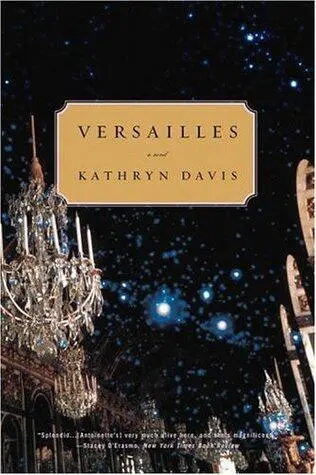
- Название:Versailles
- Автор:
- Издательство:Back Bay Books
- Жанр:
- Год:2003
- ISBN:нет данных
- Рейтинг книги:4 / 5. Голосов: 1
-
Избранное:Добавить в избранное
- Отзывы:
-
Ваша оценка:
Versailles: краткое содержание, описание и аннотация
Предлагаем к чтению аннотацию, описание, краткое содержание или предисловие (зависит от того, что написал сам автор книги «Versailles»). Если вы не нашли необходимую информацию о книге — напишите в комментариях, мы постараемся отыскать её.
Versailles — читать онлайн бесплатно полную книгу (весь текст) целиком
Ниже представлен текст книги, разбитый по страницам. Система сохранения места последней прочитанной страницы, позволяет с удобством читать онлайн бесплатно книгу «Versailles», без необходимости каждый раз заново искать на чём Вы остановились. Поставьте закладку, и сможете в любой момент перейти на страницу, на которой закончили чтение.
Интервал:
Закладка:
ROHAN: No. Wait. Go back to the part about the planets. The true colors.
CAGLIOSTRO, irritated: When you interrupt like that I lose contact with the Seventh House.
ROHAN: The Adored One. The Queen. Antoinette. Go back to that.
CAGLIOSTRO: If only you hadn't interrupted. He returns his gaze to the ceiling, clears his throat, waits. I'm sorry, it's no use.
Rohan puts a hand in the pocket of his frock coat and jingles some coins, lightly at first, and then, when there's no immediate response, more loudly.
CAGLIOSTRO: Perhaps I was too hasty. He shakes his head, again clears his throat. Unhappy lover! Take heart! Glory will come to you from a correspondence.
He stands and exits, stage right, as the woman called La Motte enters, stage left. The room is no longer candlelit but sunlit, the wallpaper monkeys plainly visible, swinging from palm tree to palm tree or hanging by their tails. Rohan remains seated in his wing chair; La Motte perches on a low stool at his feet. She is a small-boned woman with masculine features and masses of chestnut hair.
LA MOTTE, swatting Rohan's outthrust hand: Not so fast! How about some refreshment first? It was hot enough today to poach a trout, the carriage was packed to the gills, and all there was to breathe was the breath of a dozen crapulous Goths.
ROHAN: Spare me the details. He rings for his manservant.
LA MOTTE: Ah, I forgot. The curse of the oversensitive nature — it must be a great burden. She sighs, reaching deep into her bodice and extracting a blue envelope bordered in gold which she regards with feigned surprise. But what have we here?
ROHAN: What? What is it? Don't tease. Give it over. Besides, you know I'll make sure you get what you deserve.
LA MOTTE: That's what I'm afraid of. She sniffs the envelope. You'd think by now she'd be sick of the smell of heliotrope. You'd think she'd have moved on to something a little more subtle, a little less cloying — goodness knows I've dropped enough hints. Though while we're on the subject of teasing, for some reason I was under the impression you liked being teased.
Rohan rings again, without result.
MALE VOICE, offstage, singing: "I may not be handsome, yet I know how to play. When the night gets dark as jet, every cat looks gray."
FEMALE VOICE, offstage: "How sweet the breeze will seem this evening in the pine grove…"
ROHAN: Servants! You can't do a thing with them. They've all fallen under the spell of Beaumarchais, that smooth-tongued scoundrel.
LA MOTTE: It must be a great burden, servants. She tears open the envelope and begins reading. "My Darling Jeanne, sweetest of friends, best of confidantes—" And blah blah blah on and on in that vein. The poor dear can hardly get enough of me. Of course that's not what… Let's see. "One in whom I can put my trust—" No. Wait. Ah, here we go. "Of all the mistakes I've made in my life, and I admit to having made quite a few, I suspect my harsh treatment of R. is perhaps the worst."
ROHAN: R.?
LA MOTTE: Ramses, King of Egypt. Who do you think?
Rohan grabs the letter and takes it into a corner, where he stands reading it to himself, as meanwhile a sullen yet good-looking young man suddenly appears in the doorway, shirt untucked and powdered wig askew.
LA MOTTE: Your master's not exactly a quick study.
FEMALE VOICE, offstage, singing: "When a man cheats on his wife—"
MALE VOICE, offstage: No no no! Just try to remember it's not a dirge, chérie. Try it again, only lighter this time.
FEMALE VOICE, offstage: You try it. It's an impossible tune.
YOUNG MAN: Perhaps I could be of some service?
LA MOTTE: As a matter of fact, I'm dying of thirst.
ROHAN, waving the letter; An assignation! The Queen suggests an assignation!
LA MOTTE: Why am I not surprised?
ROHAN: The Grove of Venus. Wednesday next.
The young man winks, reaching lewdly into his trousers while pretending to tuck in his shirt.
They all exit, stage right.
A scrim descends, stage rear, concealing the dancing monkey wallpaper. Though it's been painted to look like a formal garden in the moonlight, the room is brightly lit; a rehearsal of the last act of Beaumarchais's Marriage of Figaro is in progress. Enter Antoinette, in the part of Suzanne, masquerading as the Countess Almaviva in a long white cloak, together with Artois, dressed as Figaro.
ANTOINETTE, singing: "When a man cheats on his wife, the world says he's a champ, but let his wife do likewise, and the world calls her a tramp. Who can possibly explain why the world is so insane? Because the men make up the rules, the men make all the rules."
ARTOIS: Better. Much better. But you're going to have to sing louder if you want to reach the back row. And at some point you've got to remove that cloak so everyone can see who you really are.
ANTOINETTE: Suzanne, you mean? Or Marie Antoinette, Queen of France? She lets the cloak fall to the floor, singing: "But let his wife do likewise—"
ARTOIS: Your secret's safe with me, chérie.
ANTOINETTE: I have no secrets.
ARTOIS: Just as I said.
They exit, arm in arm, laughing, stage right.
The lights dim and darken. In place of the scrim, an actual grove of pine trees, their branches forming a vault through which patches of moonless, starless sky can be seen, within which night birds hover and roost. The musical sound of nearby fountains, a statue of Venus visible, stage rear, pouring water from a ewer. Enter Rohan, stage right, his body enveloped in a dark blue cloak, his face hidden by a broad-brimmed hat; when he reaches the center of the grove he is approached by a woman wearing a white lawn dress identical to the one worn by Antoinette in Élisabeth Vigée-Lebrun's most recent portrait and holding a single long-stemmed red rose. Though the woman has the Queen's ash blond hair, blue eyes, and remarkably good figure, she is in fact a Palais Royal streetwalker who goes by the name of Oliva.
ROHAN, kneeling to kiss the hem of her skirt: Dearest!
OLIVA, handing him the rose: You know what this means.
She races off into the shadows, stage right, and the curtain falls.
Necklace
It was hideous, an abomination. It looked like a collar a circus horse would wear, a huge clanking thing in four tiers (not counting the knotted tassels and pendants), consisting of 647 diamonds the size of robins' eggs. It weighed more than the Dauphin. The Queen wouldn't have been caught dead in it.
Created for Madame Du Barry by the court jewelers, Böhmer and Bassenge, the necklace in question was of a type called rivière, as in river of diamonds, and was the discerning benefactor's gift of choice for his Palais Royal whore. " Rivières flow very low," sneered the pamphleteers, "because they're returning to their source."
Unfortunately Louis XV died before he had a chance to pay for the necklace, and despite Böhmer's best efforts to interest Marie Antoinette — even threatening to hurl himself in the Seine if she refused to buy it — for a while it looked as if the jewelers were going to be stuck with the thing. The diamonds in it were worth over one and a half million livres, not to mention the time that had gone into its creation. Böhmer and Bassenge were desolate, desperate. They were two nice Belgian men, getting on in years, alone in the world, without a leg to stand on.
And then, melodrama!
And then, a miracle!
Jeanne de La Motte, who was a very shrewd woman, managed to convince Cardinal Rohan, who was a very silly man, that the Queen secretly loved him, even though everyone knew she'd despised him for years. La Motte conjured a heady mix of romance and the occult, of love letters and a starlit assignation — finally tricking the Cardinal into authorizing the purchase of the necklace on behalf of his Queen.
Читать дальшеИнтервал:
Закладка:
Похожие книги на «Versailles»
Представляем Вашему вниманию похожие книги на «Versailles» списком для выбора. Мы отобрали схожую по названию и смыслу литературу в надежде предоставить читателям больше вариантов отыскать новые, интересные, ещё непрочитанные произведения.










Обсуждение, отзывы о книге «Versailles» и просто собственные мнения читателей. Оставьте ваши комментарии, напишите, что Вы думаете о произведении, его смысле или главных героях. Укажите что конкретно понравилось, а что нет, и почему Вы так считаете.